Motivation and rewards
How to motivate a reluctant kid, and when rewards build a habit versus when they backfire.
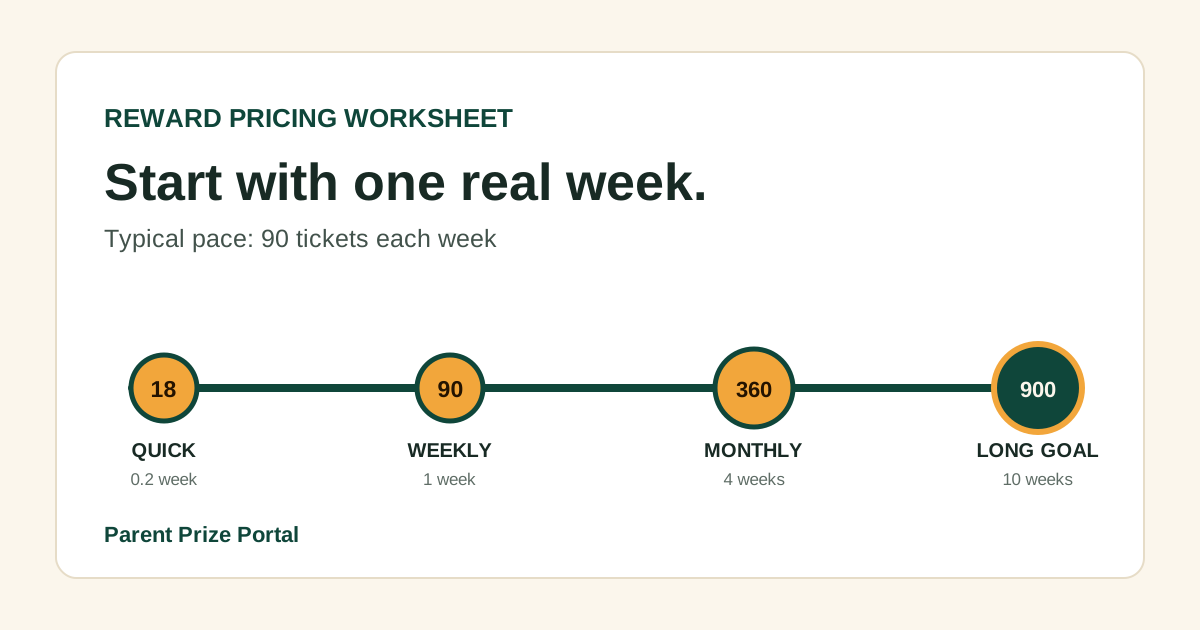
How Many Points Should a Kid's Reward Cost? A Worksheet
A transparent worksheet that turns one child's typical weekly ticket earnings into fair daily, weekly, monthly, and long-term reward prices.
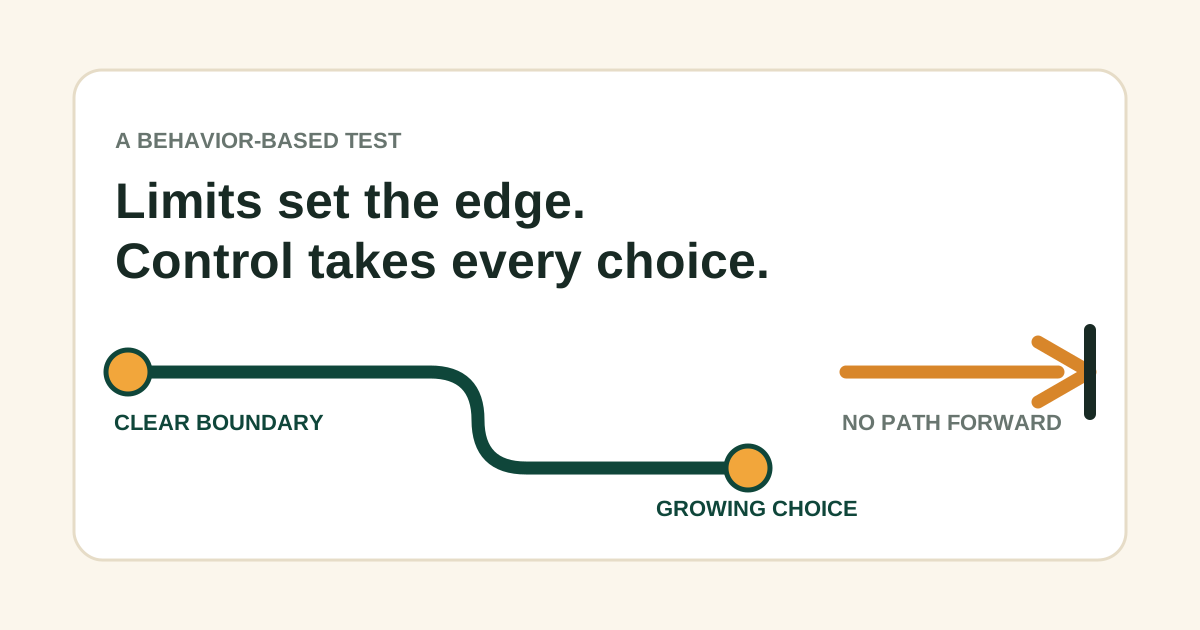
Parental Limits or Controlling Parenting? A Clear Test
A behavior-based test for separating ordinary family limits from patterns that leave a child with too little voice or age-appropriate responsibility.
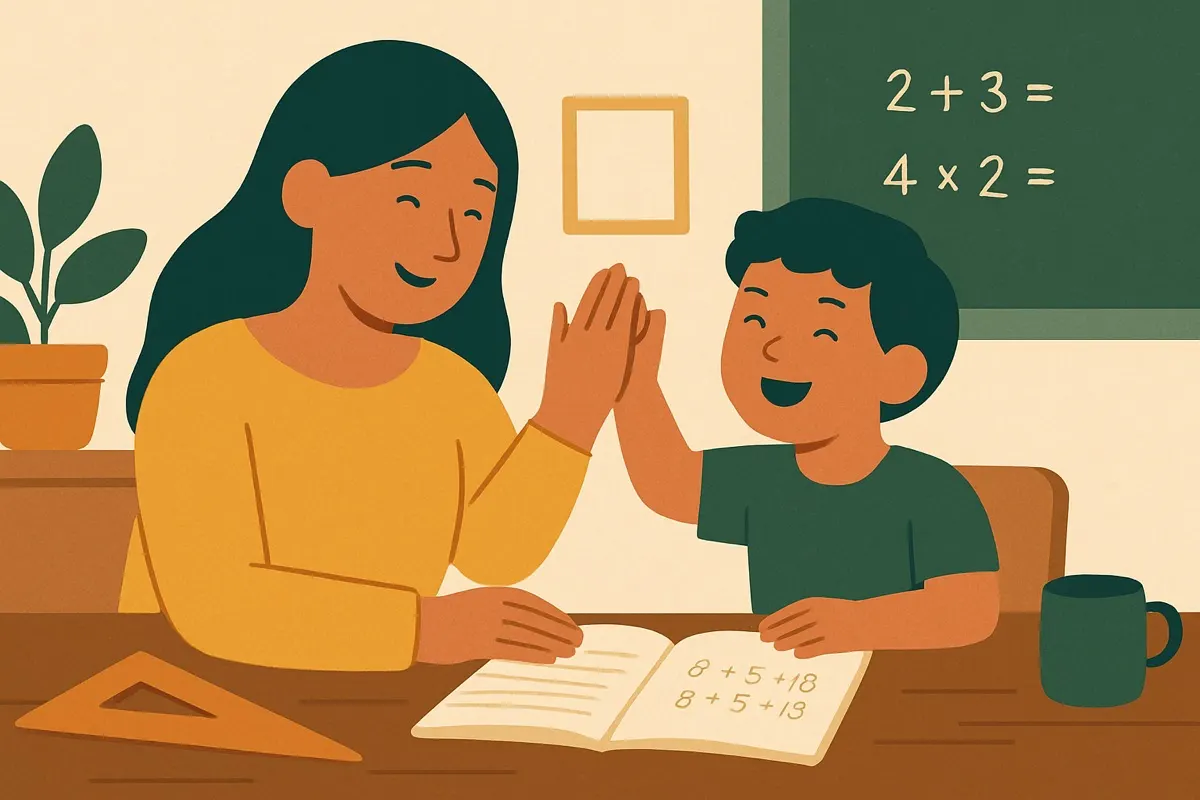
Math Anxiety in Elementary Kids: Spotting It Early and Calming It Down
The signs of math anxiety show up long before the tears do. Here is what to watch for in an elementary kid, and how to bring the fear back down.
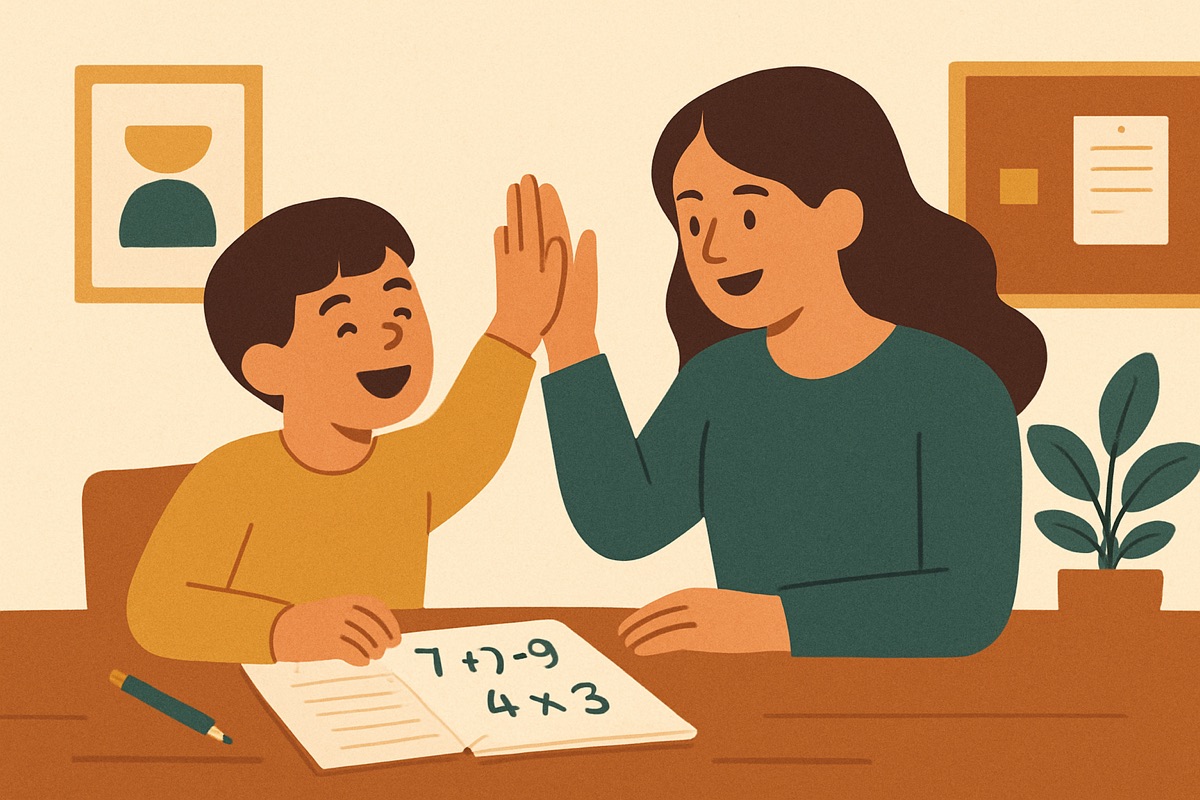
The Problem With Speed: Why Timed Math Tests Demotivate Some Kids
The kid who freezes on a timed drill often understands the math fine. Here is why timed math tests demotivate some kids and what actually builds fluency.

The Quiet Power of Letting Your Kid Teach You Math
The fastest way to find out what your kid actually understands is to hand them the marker and ask them to teach you. Here's why it works so well.

How to Keep Math Motivation Alive Over Summer Break
How to keep math from dying over summer break without turning July into a worksheet slog your kid will fight you on every single day.
Why Your Kid Says Math Is Boring (and Five Fixes That Aren't Bribes)
When a kid calls math boring, they usually mean something more specific. Here's what the complaint hides and five ways to fix it without handing over screen time.
Praise, Points, and Prizes: Layering Rewards Without Overdoing It
A reward system for kids that works isn't about bigger prizes. It's about layering praise, points, and prizes so effort gets noticed and nothing gets cheapened.
How to Motivate a Perfectionist Kid Who Won't Try Unless They'll Ace It
Some kids refuse to try a math problem unless they already know they'll get it right. Here is how to make trying feel safe enough to do again.
The Right Way to Use Prizes So They Fuel Learning, Not Replace It
Choose what you want to recognize before offering a prize. Consider small rewards for effort and practice, then review how the arrangement is working.
When Your Kid Gives Up the Second Math Gets Hard
The pencil goes down, the eyes go glassy, and you hear 'I can't do this.' Here's what that moment actually means and how to work through it without a fight.
How to Turn a Grocery Trip Into a Math Motivation Win
The cereal aisle is a better math classroom than most worksheets. Here's how to turn a normal grocery run into practice your kid actually cares about.

Sibling Comparisons Are Killing Your Kid's Math Motivation
The younger brother had already decided he was the dumb one in the family, and he was seven. Here is how sibling comparisons quietly wreck math motivation.
The Growth Mindset Talk That Doesn't Feel Like a Lecture
Skip the motivational poster. Here's how to build a real growth mindset for kids in math with a few honest phrases and one small change in how you praise.
How to Rebuild Math Confidence After a Rough Report Card
A bad math grade hits a kid harder than parents realize. Here is how to rebuild math confidence without piling on more drills or more pressure.

Should You Reward Effort or Results? A Teacher Settles the Debate
Reward effort and you might teach kids that trying is enough. Reward results and you might crush the strugglers. A teacher on the trap in both, and the way out.

Small Wins, Big Motivation: How to Break Math Into Steps Kids Can Beat
Kids don't quit math because it's hard. They quit because the first step feels impossible. Here's how to shrink that step until they can beat it.

What to Say When Your Kid Cries Over Math Homework
The words that actually calm a kid down mid-meltdown over math, the ones that make it worse, and how to end the night without a fight.
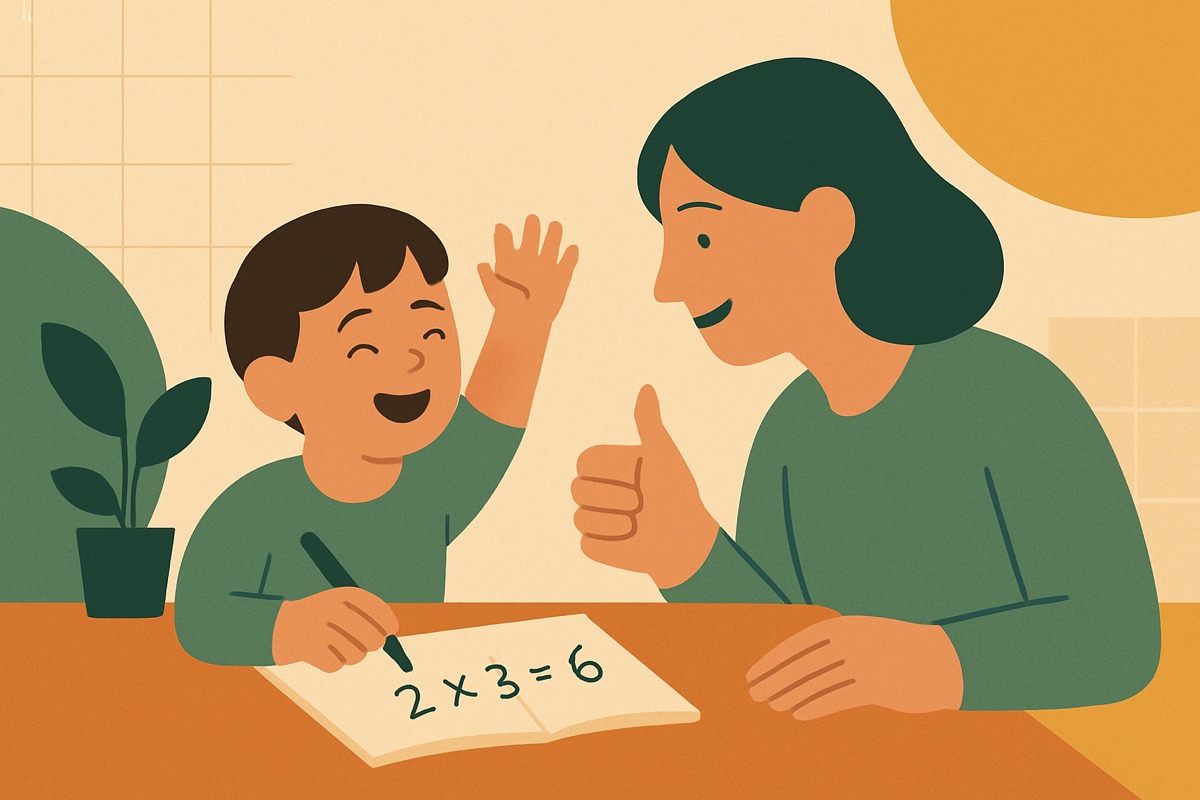
How to Get a Reluctant Kid to Practice Math for 10 Minutes a Day
Ten honest minutes beats an hour of arguing. Here is how to get kids to practice math at home without the nightly standoff at the table.
Building a Love of Math in a Kid Who Only Loves Screens
If your kid lights up for a tablet and shuts down for math, the fix isn't more math. It's borrowing what the screen does right and pointing it somewhere real.
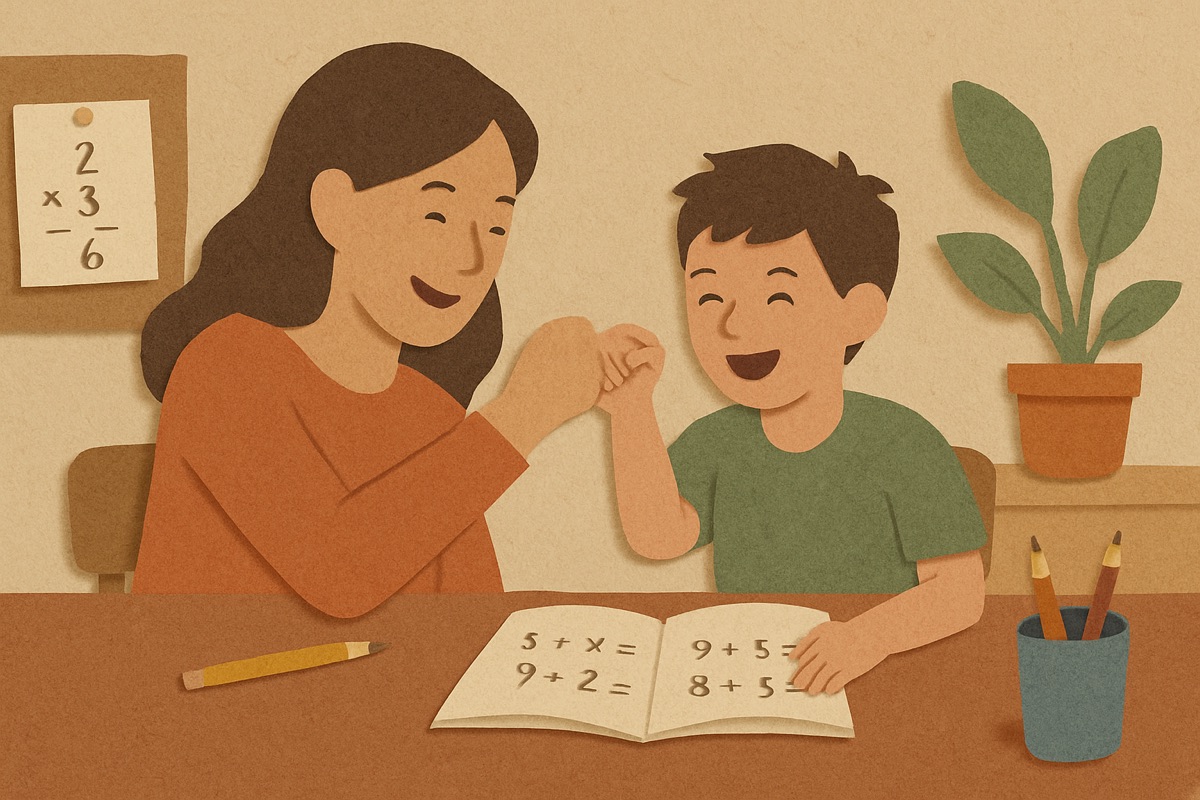
How to Celebrate Effort When the Answer Is Still Wrong
A wrong answer is not a failure if the thinking underneath it was real. Here is how to honor the work without pretending 6 times 7 equals 48.

When Bribes Backfire: A Teacher's Honest Take on Paying Kids for Grades
Twenty dollars for an A sounds fair. Here is what actually happens to a kid's motivation when the money shows up, and what works better.
Reward Charts for Math Practice: What Works After the First Two Weeks
When interest in a math practice reward chart changes, review the goal and payoff together. An illustrative family example and practical options for adjusting the plan.
The Praise That Actually Builds Math Confidence (and the Kind That Doesn't)
Telling your kid they're smart at math feels kind. It also quietly teaches them to quit the second a problem gets hard. Here's what to say instead.
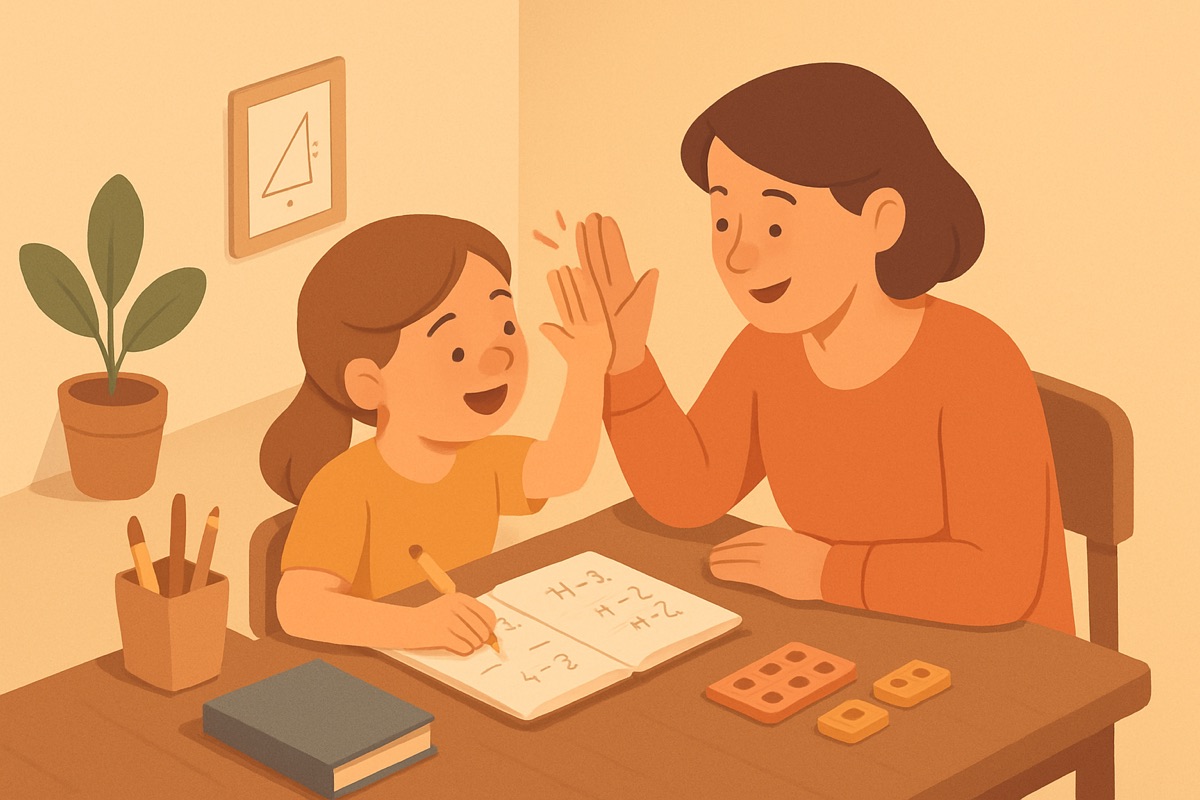
Intrinsic vs Extrinsic Motivation in Math, Explained for Regular Parents
Sticker charts work until they don't. Here is the difference between the two kinds of motivation, and how to use rewards so they actually build a math kid.

Why Rewards for Grinding Backfire, and What to Reward Instead
Paying a kid per worksheet teaches them to race through math, not learn it. Here is what to reward instead so effort actually turns into understanding.

How to Motivate a Kid Who Says I Hate Math Without Making It Worse
When a kid says I hate math, arguing back never works. Here is what actually shifts a reluctant learner, from a teacher who has watched it happen for years.
Give the math a reason.
Kids earn tickets for real practice and trade them for prizes you set at home.
Set up a free parent account