How to Rebuild Math Confidence After a Rough Report Card
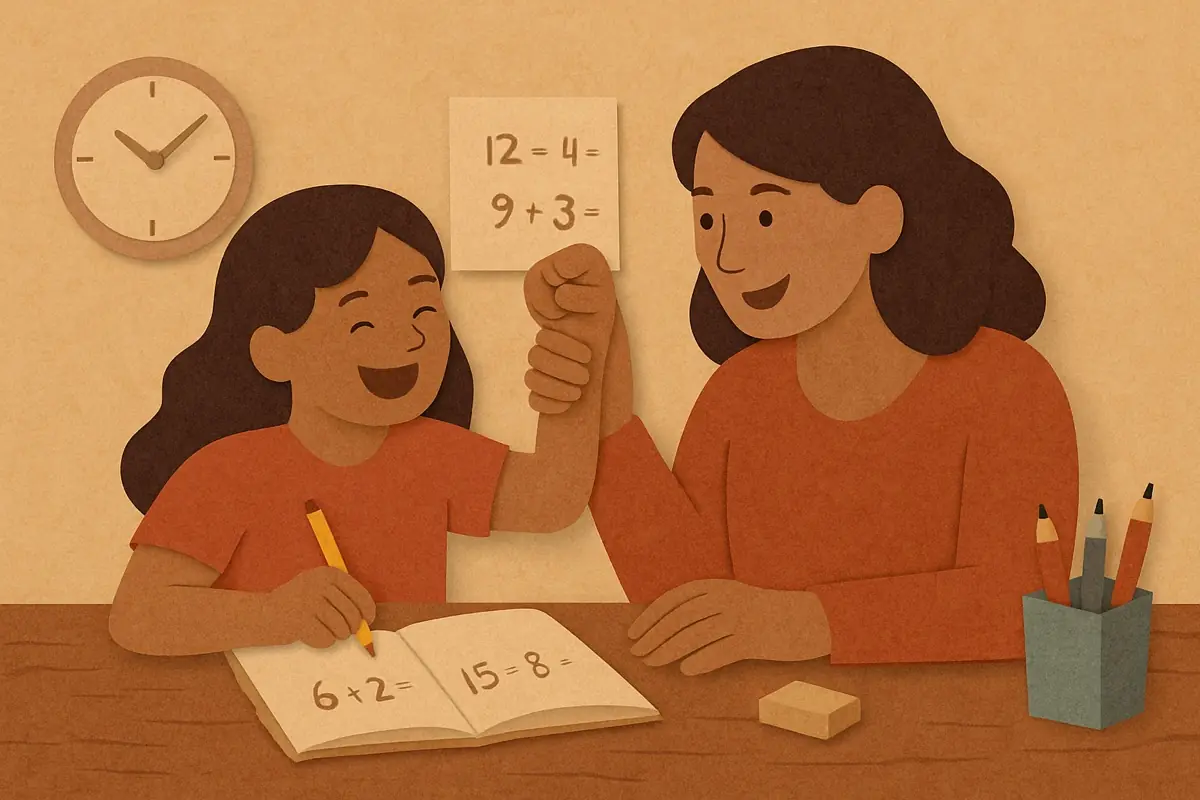
The report card said "below grade level" in math, and my student read it upside down across my desk before I could turn it over. He was nine. He didn't cry. He just went quiet and said, "So I'm the dumb one." That sentence is the real problem, and it is why the first job after a rough report card is not more math. It is undoing that sentence.
If you want to rebuild math confidence after a bad grade, you have to treat the confidence and the skills as two separate repairs. A kid who believes he is bad at math will sabotage every practice session, because in his head the ending is already written. Fix the belief first, or the drilling just confirms what he already thinks about himself.
Read the grade before you react to it
A grade is a snapshot, not a verdict. Before you say a word to your kid, figure out what actually went wrong. Pull the tests and the worksheets if you can get them.
- Was it one topic, like fractions or long division, that dragged everything down?
- Were the answers right but the work missing, so it got marked off?
- Did he run out of time on tests but do fine on homework?
- Is it careless slips, or does he genuinely not understand the idea?
These four situations need four different responses. A kid who understands fractions but rushes and drops negative signs does not need more fraction lessons. He needs to slow down. A kid who freezes on timed tests but nails the same problems at the kitchen table has an anxiety problem, not a math problem. Guess wrong about which one you are dealing with and you will spend a month fixing something that was never broken.
Say the thing that separates the grade from the kid
The most useful sentence I know for this moment is short. "This grade tells me what to teach you next. It does not tell me how smart you are." Say it plainly, once, and mean it. Then stop talking about the report card. Kids do not need a lecture. They need to hear that the number measured a set of skills on a Tuesday, not their worth.
What you want to avoid is the accidental message. "We'll get this fixed, I promise" sounds supportive, but a nervous kid hears "something is wrong with me and my parent is worried." Keep your own face calm. If you treat the grade like a small, fixable thing, he is far more likely to believe it is one.
Start where he can already win
Here is the mistake almost everyone makes. The grade was bad, so they hand the kid harder work to catch up. That is exactly backward. A kid rebuilding confidence needs a stretch of easy wins first, problems he can do without help, so his brain relearns that math and success can happen in the same room.
I had a fourth grader who was two years behind on multiplication. We did not start with multiplication. We started with addition facts she already knew cold, twenty of them, fast, and I made a small deal about how quick she was. For three days she just felt good at math. Then we crept into the twos and fives, which she half-knew. By the time we hit the sevens, the hard ones, she had enough momentum to push through them instead of shutting down. If we had opened with the sevens, she would have quit on day one.
Build a short ramp. Ten minutes a day. Start below where he struggles and climb slowly. Every session should end on a problem he got right, not one he missed.
Make progress something he can actually see
Confidence grows when a kid can watch himself get better, and most kids cannot see it on their own. The gap between where he was and where he is now is invisible to him unless you make it visible.
Keep it simple. A sheet of paper on the fridge where he tallies the facts he has mastered works fine. So does a jar with a marble for every day he practiced. The point is that the reward tracks real progress, not just time served. Ten minutes of staring at a worksheet is not progress, and kids know the difference even when we pretend they don't. If you use a practice app, pick one that ties its rewards to genuine improvement instead of just handing out points for showing up. That distinction is the whole reason we built Math Prizes the way we did.
Do not tie the tracking to the next report card. That just moves the pressure to a different date. Track the practice and the small skills, and let the grade take care of itself.
Protect the practice from turning into a fight
The fastest way to undo all of this is to let math become the thing you argue about every night. A kid who dreads the daily blowup will start dreading math again by association, and you are back where you started.
Keep the sessions short and boring in the best way. Same time, same place, ten minutes, done. When he gets one wrong, say "let's look at that one together" instead of "you knew this yesterday." The goal is not a perfect session. The goal is that tomorrow he sits down without a fight. If a session is going sideways, end it early and cheerful. One calm ten-minute stretch beats a tense forty-minute grind every single time.
And watch your own math talk. If you say "I was terrible at math too" to make him feel better, he hears that being bad at math runs in the family and is therefore permanent. You can be honest that it was hard for you without handing him a life sentence.
Give it a few weeks before you judge it
Confidence does not come back on a schedule. Some kids turn around in two weeks. Others take a couple of months, especially if the fear has been building for a while. What you are watching for is not a grade. It is smaller than that. It is the day he tries a hard problem before deciding he can't do it. It is the shrug instead of the meltdown when he misses one. Those moments come before the grades do, and they are the real sign the repair is working.
My nine-year-old who called himself the dumb one is in middle school now. He is not a math prodigy and never will be. But somewhere in that stretch of easy wins and quiet ten-minute sessions, he stopped believing the worst thing about himself. That was the whole point. The grades came up later, which was nice, but it was never really about the grades.