Parental Limits or Controlling Parenting? A Clear Test
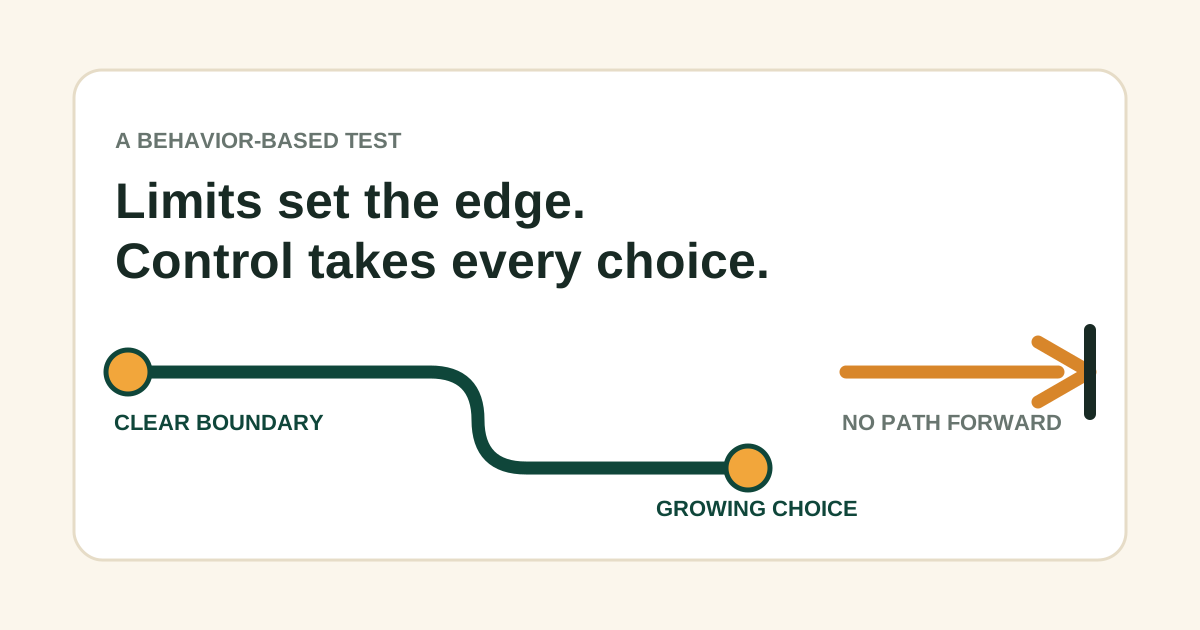
Being controlled by parents feels different from living with ordinary parental limits: healthy limits protect safety, health, money, or family functioning while leaving room for a child's voice and growing independence. Controlling parenting repeatedly uses pressure, guilt, intrusion, or decisions the child is ready to practice making. Judge the pattern by purpose, method, flexibility, and whether responsibility expands with age, rather than by a loaded label.
This is a practical explainer, not a diagnosis of a parent or child. Words such as "helicopter parent" or "narcissist" can describe a reader's frustration, but they cannot tell you what happened in a particular family.
What is a normal parental limit?
A normal parental limit is a clear boundary tied to a responsibility the adult still owns. A parent decides that an eight-year-old cannot buy apps without permission because the parent owns the payment account and carries the financial risk.
The strongest limits answer four questions: what is the rule, why does it exist, when does it apply, and when will it be reviewed? The CDC calls consistency, predictability, and follow-through the three ingredients of useful home structure. A limit can disappoint a child and still be reasonable.
What makes parenting feel controlling?
Parenting feels controlling when the adult manages thoughts, feelings, relationships, or age-appropriate choices mainly to secure obedience or protect the adult from discomfort. Common signs include guilt for disagreeing, affection that seems conditional, private information taken without a safety reason, and rules that change whenever the child gets close to meeting them.
Frequency and power matter. One overreaction on a difficult night differs from a standing pattern in which the child cannot safely express a preference, ask why, or recover trust.
How can I tell structure from control?
You can tell structure from control by asking what the boundary protects and what choice remains with the child. Structure defines the edge; control reaches inside the edge to dictate every move.
| Family moment | Structured limit | Controlling pattern |
|---|---|---|
| Screen use | Device charges outside the bedroom at 8 p.m. | Parent reads every harmless message without a stated safety concern |
| Homework | Work happens before gaming; child chooses order | Parent takes over the assignment and rejects the child's method |
| Rewards | Parent approves a short menu; child chooses a goal | Reward is withheld after it was earned because the parent is unhappy |
| Friends | Parent intervenes for a concrete safety issue | Parent dismisses every friend who reduces the parent's influence |
The table is a reflection aid, not a legal or clinical test. Context can change the answer, especially when a child is very young, unsafe, or needs support that peers do not.
Is a helicopter parent the same as a controlling parent?
A helicopter parent usually refers to an adult who steps in too quickly, solves problems, or removes age-appropriate risk. That can overlap with control, but the terms are not identical: overhelping may come from anxiety, while psychological control concerns pressure on a child's inner life and relationship with the parent.
The distinction becomes visible in a missed assignment. A helpful parent might ask the child to make a repair plan; an overinvolved parent might email the teacher and write the plan before the child tries. Building homework independence grade by grade offers a gradual handoff instead of an abrupt one.
Does strict parenting always mean controlling parenting?
Strict parenting does not always mean controlling parenting, because a firm rule can still be transparent, proportional, and open to review. A family may hold a hard line on helmets, bedtime, or purchases while giving the child wide choice over clothes, hobbies, and the order of homework.
Look for process rather than softness. Can the child ask for the reason, predict the response, tell the truth without humiliation, and gain more freedom after showing readiness?
What about a "narcissist in parents" search or label?
A search about narcissism cannot diagnose a parent, and this article cannot either. A more useful first step is to name observable behavior: "My parent threatens to withdraw affection when I disagree" gives a counselor, pediatrician, or trusted adult something concrete to discuss.
If a child or adult feels afraid at home, faces threats or violence, or cannot meet basic needs, the issue has moved beyond a debate about parenting style. Contact a local emergency service or a qualified support professional who can assess the situation safely.
How can parents set limits without taking every choice?
Parents can set the nonnegotiable boundary, offer two or three real choices inside it, and schedule a review. The choices must be acceptable to the adult and meaningfully different to the child.
For example: "Practice needs to happen before entertainment tonight. Would you rather do ten minutes before dinner or after dishes?" The parent keeps responsibility for the routine; the child controls timing within a workable window. Our guide on when to sit with a child during homework uses the same idea of support that recedes as skill grows.
How can a reward system avoid control dynamics?
A reward system avoids control dynamics when the earning rule is known in advance, the promised reward stays available after it is earned, and the child has a genuine choice of goals. Rewards should not buy affection, silence, physical contact, secrets, or agreement with an adult.
Try this small setup:
- The parent approves three affordable rewards: choose Friday's dessert, pick the family movie, or get 20 minutes of one-on-one game time.
- The child chooses one reward and sees its ticket price before practice starts.
- The family reviews the setup for five minutes each Sunday.
- Either person may ask to change next week's menu, but nobody changes an already-earned promise.
That design gives the parent control over cost and safety while protecting the child's choice. If you use Parent Prize Portal, the parent creates the list and prices, and the child works toward the visible option; the guide to using prizes well covers how to keep the prize from swallowing the learning goal.
What should change as a child gets older?
Parental limits should shift from direct management toward consultation as a child shows skill and judgment. The exact timetable differs by child, but the direction should be visible: more privacy, more problem-solving, and more ownership of ordinary consequences.
A monthly check can make that movement concrete. Choose one responsibility the child will practice alone, define the safety backstop, and agree on the date you will review how it went.
Frequently asked questions
Is checking a child's phone controlling?
It depends on age, the safety concern, and what the family agreed. A transparent check for a stated reason is different from secret, unlimited monitoring with no path toward privacy.
Can a child disagree with a healthy limit?
Yes. A healthy limit does not require the child to like it, and disagreement alone does not make the limit harmful.
Should parents explain every rule?
Parents should give an age-appropriate reason for important standing rules. During an immediate danger, the explanation can wait until everyone is safe.
When should a family ask for outside help?
Ask for help when conflict is constant, fear or humiliation shapes daily life, boundaries trigger threats or violence, or the family cannot reset the pattern alone. A pediatrician, licensed family therapist, school counselor, or local safety service can help identify the right next step.