Math Anxiety in Elementary Kids: Spotting It Early and Calming It Down
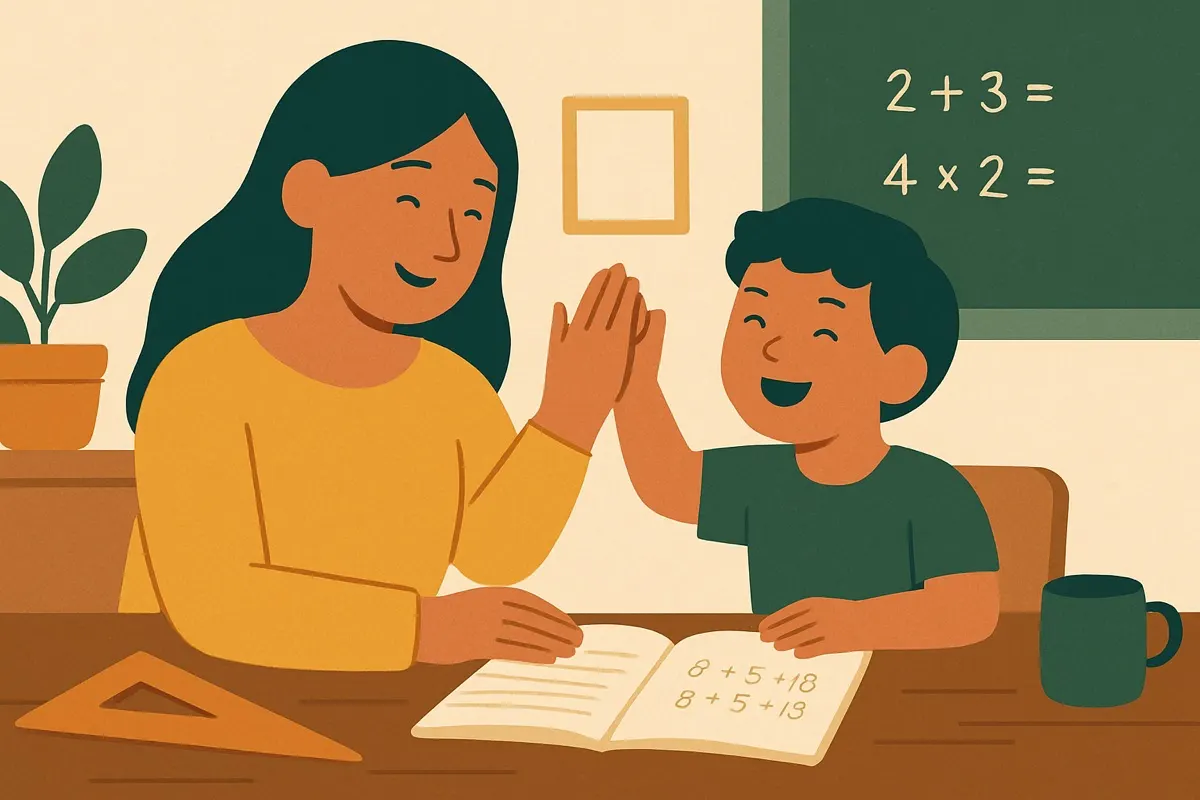
A third grader in my class used to sharpen her pencil three times before every math worksheet. Same routine every day. Up out of the chair, over to the sharpener, back, sit down, then up again. It took me two weeks to understand she wasn't fidgety. She was buying time because the page scared her. That stalling is one of the earliest and most missed signs, and spotting math anxiety in children this young is the whole reason it can be calmed before it hardens into "I'm just bad at math."
Math anxiety isn't the same as finding math hard. Plenty of kids struggle with a concept and shrug it off. Anxiety is the body reacting before the thinking even starts. The stomach tightens, the mind goes blank, and a kid who knew her sevens yesterday can't touch them today. It's real, it's physical, and the good news is that at seven or eight years old it's still soft enough to reshape.
What it actually looks like
The tears and the meltdowns are the loud version, and by then you already know. The early signs are quieter, and they show up as avoidance dressed up as something else.
- Suddenly needing the bathroom, a drink, or a sharper pencil the moment math starts.
- Saying "I don't get it" before reading the problem, sometimes before the page is even in front of them.
- Rushing through to be done, filling in any number just to make the page go away.
- Physical stuff. Complaining of a stomachache on math homework nights but not on other nights. Chewing sleeves. Going very still.
- Big self-labels for small mistakes. "I'm so stupid" over a single wrong answer is a red flag, not a mood.
One thing I watch for specifically: a gap between how a kid does out loud and how they do on paper. I've had kids rattle off answers during a card game and then freeze on the identical problem when it's printed on a worksheet with their name at the top. That gap is anxiety, not ability. The math is in there. The fear is sitting on top of it.
Where it comes from
It's rarely one thing. Timed tests are a big one. When you tell a kid they have three minutes to finish forty problems, you've made speed the point instead of understanding, and a kid who thinks slowly and correctly starts to feel slow and wrong. I've seen strong math thinkers convinced they were bad at it because they weren't fast.
The other big source is us, the grown-ups, and we usually don't mean to. "I was never a math person either" feels like solidarity. To a kid it sounds like permission to give up, and worse, like math ability is a fixed thing you either have or don't. Kids inherit our flinch. If you sigh when the math homework comes out, they file that away.
And sometimes it's a single bad moment that stuck. Getting a problem wrong at the board. A teacher who said "you should know this by now." An older sibling who laughed. Kids remember the feeling long after they've forgotten the problem.
How to bring it down
You can't talk a kid out of anxiety, and telling them to relax has never once worked in the history of children. What works is changing the situation so the fear has less to grab onto.
Take speed off the table first. When you practice at home, say out loud that there's no clock and no rush, and then actually mean it. Wait. Let the silence sit while they think. The pressure to answer fast is often the whole problem, and you removing it is a bigger deal than it looks.
Shrink the problem. A kid staring at a page of twenty problems is looking at a wall. Fold the paper so only one shows. Cover the rest with your hand. One problem is a thing a person can do. Twenty is a threat.
Change what you praise. Stop praising right answers and fast answers, and start praising the thinking. "I like how you tried that another way" tells a kid the goal is figuring things out, not performing. When they get one wrong, treat it like information, not a verdict. "Okay, where did it go sideways? Let's find it." Wrong answers stop being scary when they become something you investigate together instead of something you get judged for.
Watch your own face. This is the hardest one. If math makes you tense, your kid will read it off you in a second. You don't have to fake loving math. Just don't perform dread. Neutral is fine. Curious is better.
Keep the practice small and honest
The instinct when a kid is behind and anxious is to pile on more practice. It backfires. More of the thing that scares them, done in a state of fear, just deepens the association. What actually helps is short, low-stakes practice that ends before the fear shows up. Five or ten minutes, then done, on a day when nobody's tired or hungry.
Tie whatever reward you use to real effort and real progress, not to grinding out minutes or racing a timer. A kid who fills in random answers for ten minutes to earn a treat has learned nothing except how to game you. A kid who works one problem all the way through and understands it has actually moved. That distinction is the whole reason my husband and I built the ticket system in our own app the way we did, around progress instead of speed, because rewarding busywork just teaches kids to produce busywork.
If the anxiety is deep, and sometimes it is, loop in the teacher and be specific. Ask what they see in class, and tell them what you see at home. A kid who freezes on paper but talks math fine out loud needs a different plan than a kid who's genuinely lost on the concept, and the teacher can help you tell which one you've got.
The girl with the pencil sharpener? We stopped doing worksheets for a while and did math on a whiteboard, standing up, erasable, where a mistake wiped away with one swipe. No permanent record, no name at the top. Within a month she was answering out loud again. The math had been there the whole time. We just had to get the fear off of it.