Building a Love of Math in a Kid Who Only Loves Screens
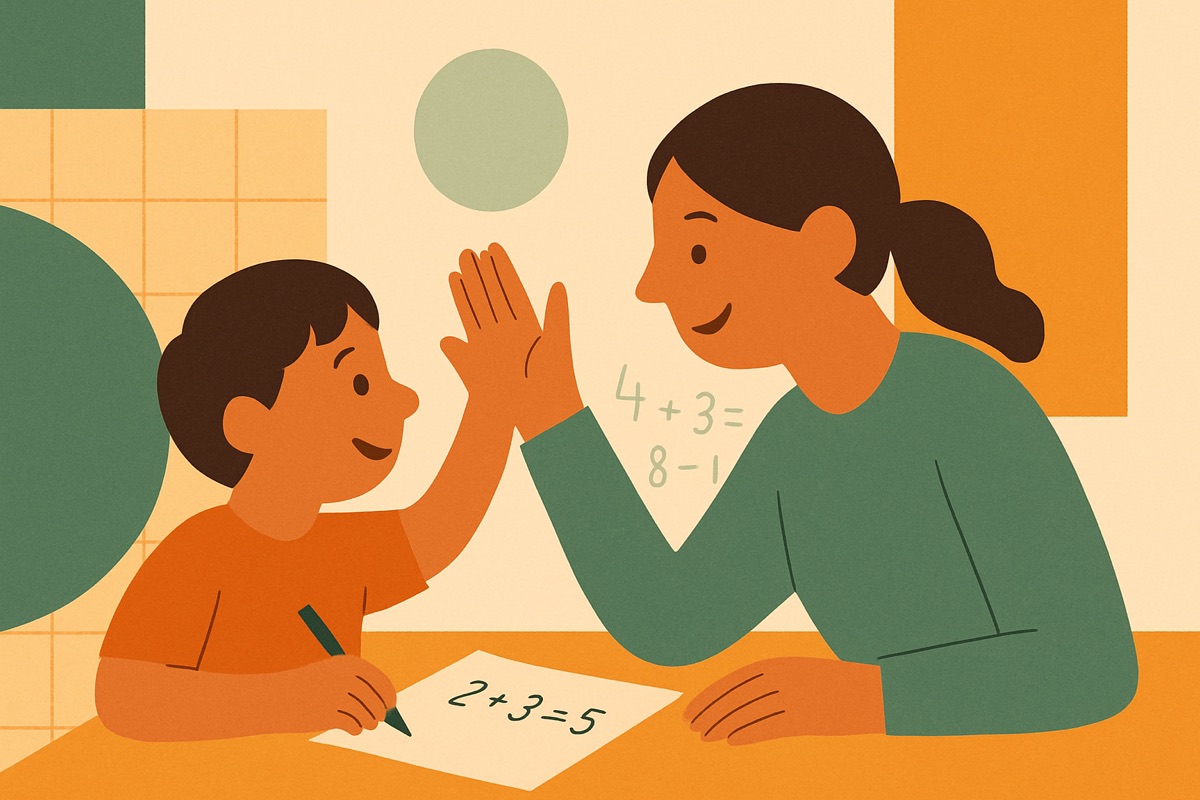
There's a girl I taught who could tell you the health, ammo count, and cooldown timer of every character in her favorite game, down to the decimal. She also told me, with a straight face, that she "wasn't a numbers person." She was tracking more numbers before breakfast than most adults do all day. She just didn't know it was math, because nobody had ever called the fun thing math. If you want to help your child love math and they'd rather be on a screen, that's the crack to work in. The love of numbers is often already there. It's wearing a costume.
I'm not going to tell you to take the tablet away and hand over flashcards. That's how you win the battle and lose the kid. What actually works is slower and sneakier, and it starts with paying attention to what the screen is doing right.
What the screen gives your kid (and math usually doesn't)
Games are built by people whose whole job is making the next thirty seconds feel worth it. Math homework was built by nobody in particular. So the deck is stacked. But the things a screen gives a kid are things you can borrow.
- Instant feedback. In a game you know right away if it worked. Most math practice makes a kid wait until tomorrow to find out they got it wrong, by which point they've stopped caring.
- Difficulty that fits. Good games nudge the challenge up as the kid gets better, so it's never too easy or crushingly hard. A worksheet is the same difficulty for every kid in the class.
- A visible climb. Levels, streaks, a bar that fills. The kid can see they're getting somewhere.
- Permission to fail. You die, you respawn, you try again in two seconds. No shame in it.
Notice that none of those are about the game being flashy. They're about the game respecting how learning actually feels. You can bring all four to the kitchen table without a single pixel.
Start where the interest already is
The fastest way in is through the thing they already love. Don't fight the interest, use it.
If your kid loves a building game, they're already doing area and volume and resource counting. Ask real questions about it. "How many blocks tall is that? If each floor is four blocks, how many for six floors?" Watch them do the multiplication they swore they hated, because now it's about their tower.
My screen-obsessed student and I started keeping a notebook of her game stats. How much damage per second, how many hits to win, whether it was better to upgrade this or that. She was doing multiplication, comparison, and honestly a little bit of algebra, and she thought we were just talking about her game. Weeks later she raised her hand in a lesson about rates and said, "oh, this is like damage per second." That was the whole ballgame. The math had a hook to hang on.
Sports scores, recipe doubling, allowance, the number of days until a birthday. Any of these works if it's a thing your specific kid cares about. Generic word problems about trains fail because no kid on earth cares about the trains.
Make the wins small and real
Here's where a lot of well-meaning parents slip. They try to make a kid love math by making a big deal out of every scrap of effort, and kids can smell a fake. "Great job!" for getting an easy one right just tells them you weren't watching.
What builds a real love of math is a kid feeling themselves get good at something that used to be hard. That means the practice has to be sized right: hard enough to matter, easy enough to win most of the time. And the reward, if you use one, has to be tied to actually getting better, not to grinding through a pile of problems. A kid who earns something for real progress learns that progress is worth chasing. A kid who earns it for mindless repetition just learns to repeat. (This is the one thing I'll say for a well-made math app like the one my own family uses: the good ones size the challenge to the kid and celebrate the climb, not the busywork.)
Keep a simple record of wins where they can see it. Not a chart of gold stars for showing up, but a note when something clicks. "Finally got the 7s today." A kid who can look back and see they used to be stuck on something they now find easy starts to trust that hard things become easy. That trust is most of what love of a subject really is.
Protect the good feeling
One rough night can undo a month of goodwill, so guard the mood harder than you guard the minutes.
Keep sessions short, ten minutes is plenty when you're rebuilding a kid's relationship with math. Stop while it's still going well, not after it falls apart. End on something they can do, so the last taste is a win. And when they get one wrong, treat it like a respawn, not a verdict. "Okay, what happened there?" beats a sigh every time.
The girl who wasn't a numbers person is in middle school now. Her mom told me she picked the advanced math track. I don't think a worksheet ever changed her mind. I think she just found out, one damage-per-second at a time, that the thing she was already good at had a name, and that the name wasn't scary. That's the whole job. You're not installing a love of math. You're clearing away the stuff that was hiding the one they already had.