Intrinsic vs Extrinsic Motivation in Math, Explained for Regular Parents
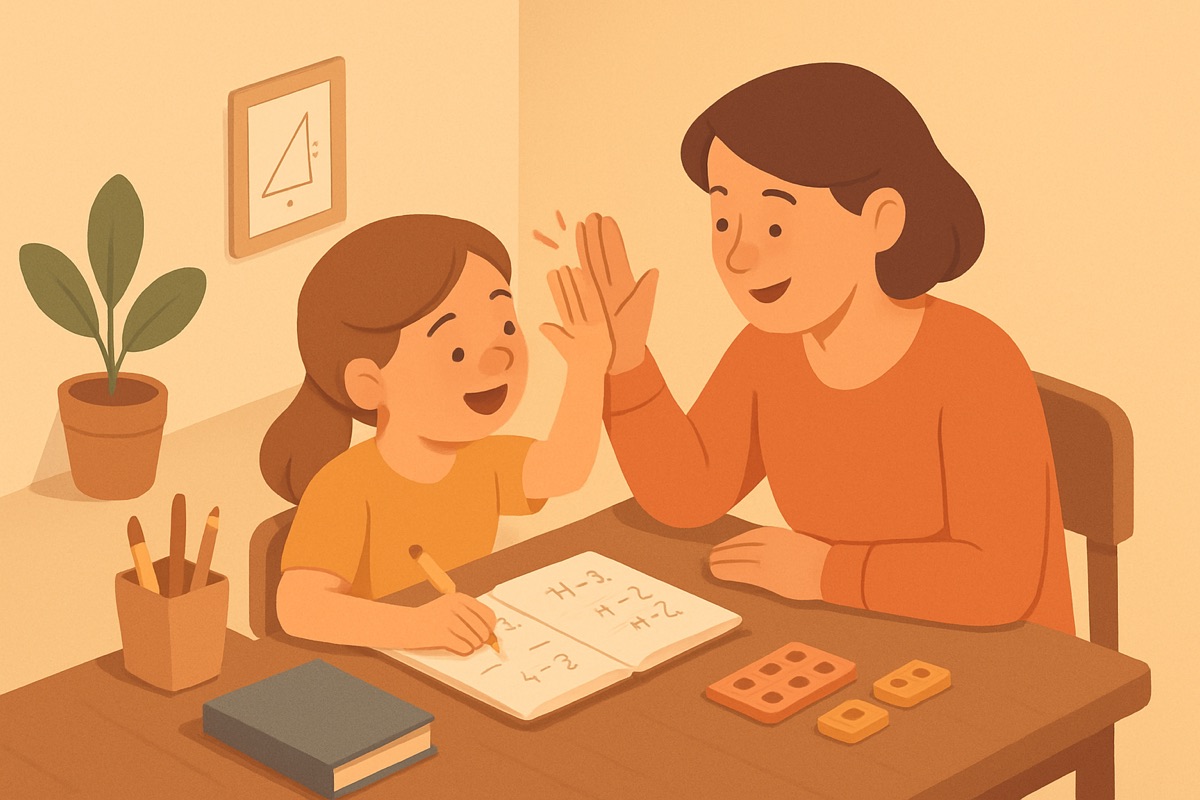
I taught a fourth grader named Priya who would do anything for a scratch-and-sniff sticker. She'd finish her multiplication page in record time, hand it over, get the sticker, and light up. Then one week I ran out of stickers. Her whole engine died. She didn't slow down a little. She just stopped, because the thing she was working for wasn't the math. It was the sticker.
That moment is the whole conversation about intrinsic vs extrinsic motivation for kids in one small human. Extrinsic motivation comes from outside: stickers, screen time, a dollar for every A. Intrinsic motivation comes from inside: the quiet satisfaction of finally getting long division to click. Both are real. Both matter. The trouble is that most of us reach for the outside kind because it's fast, and then we're surprised when it doesn't last.
What the two kinds actually look like at the kitchen table
You can usually spot which engine is running in about thirty seconds.
Extrinsic looks like a kid asking "what do I get?" before they even see the problem. It looks like effort that turns off the instant the reward stops. It looks like fast, careless work aimed at the finish line instead of the thinking.
Intrinsic looks different. It's the kid who reworks a problem she already got wrong because it's bugging her. It's the "wait, let me try one more." It's a kid explaining her method to you without being asked, because she's proud of it. That kind of drive doesn't need a sticker, and honestly it can't be bought with one.
Here's the part nobody tells you. You are not choosing between these two. Every kid runs on a mix, and the mix shifts by the day. Your job isn't to pick a side. It's to keep the outside rewards from crowding out the inside ones.
Why sticker charts fizzle (the research nobody mentions at pickup)
There's a well-known finding that psychologists call the overjustification effect. When you pay a kid to do something they already sort of liked, the reward can actually replace their interest. They start doing it for the prize, and the original spark fades. Priya liked being good at math before the stickers. After a few weeks of stickers, the math had quietly become the price she paid to get one.
This is the trap with reward charts. They work great at the very start, which fools you into thinking you found the answer. Then the returns shrink. You need bigger prizes to get the same effort, and one day you're negotiating with an eight year old over how many minutes of a game two subtraction pages are worth. That's not motivation. That's a labor dispute.
None of this means rewards are bad. It means rewards are a tool with a specific job, and most families use them for the wrong job.
Use rewards to start the engine, not to run it
Think of an extrinsic reward like a push to get a bike rolling. It's genuinely useful for getting a reluctant kid to sit down the first few times. It's terrible as the thing that keeps them pedaling forever.
So point the reward at the right target. A few things that help:
- Reward showing up, not scoring high. "You practiced for ten minutes" is something a kid controls. "You got a 100" is not, and paying for it teaches them to fear hard problems.
- Reward the messy attempt. When my own daughter finally tried a problem she'd been dodging, we made a big deal out of the trying, even though she got it wrong. The trying is the muscle.
- Let the reward fade on purpose. If a kid has done math every day for two weeks, you don't need the chart anymore. Name what they've built. "You didn't even ask for a sticker today. You just did it."
The goal is a handoff. Outside motivation gets them to the table enough times that the inside motivation, the actual pleasure of getting good at something, has a chance to show up. And it does show up, but only if the reward isn't so loud that it drowns out the quieter feeling of "hey, I can do this now."
Tie rewards to real progress, not to busywork
Here's where a lot of good intentions go sideways. Parents reward volume. Twenty problems, thirty problems, a worksheet the size of a phone book. The kid learns that math is a quantity you survive, and speed-grinding through easy problems earns the same prize as wrestling with a hard one. Why would any rational eight year old pick the hard one?
Flip it. Reward the thing you actually want more of, which is real understanding. A kid who can explain why you carry the one has done something worth celebrating. A kid who filled in forty problems she already knew cold has mostly killed time. This is the piece I care most about, and it's baked into how we built our own app, Math Prizes. Tickets come from real progress and honest effort, not from mindless repetition, because a reward tied to busywork just teaches kids to do more busywork.
If you take one thing from all this, make it this. Watch for the days your kid works without asking what they get. Those are gold. Point them out, quietly, and then get out of the way.
Priya, by the way, got there. Not from stickers. One afternoon she cracked a problem that had beaten her the day before, and she turned around with this look on her face like she'd won something. She had. I didn't have a single sticker left, and she didn't ask.