Why Your Kid Says Math Is Boring (and Five Fixes That Aren't Bribes)
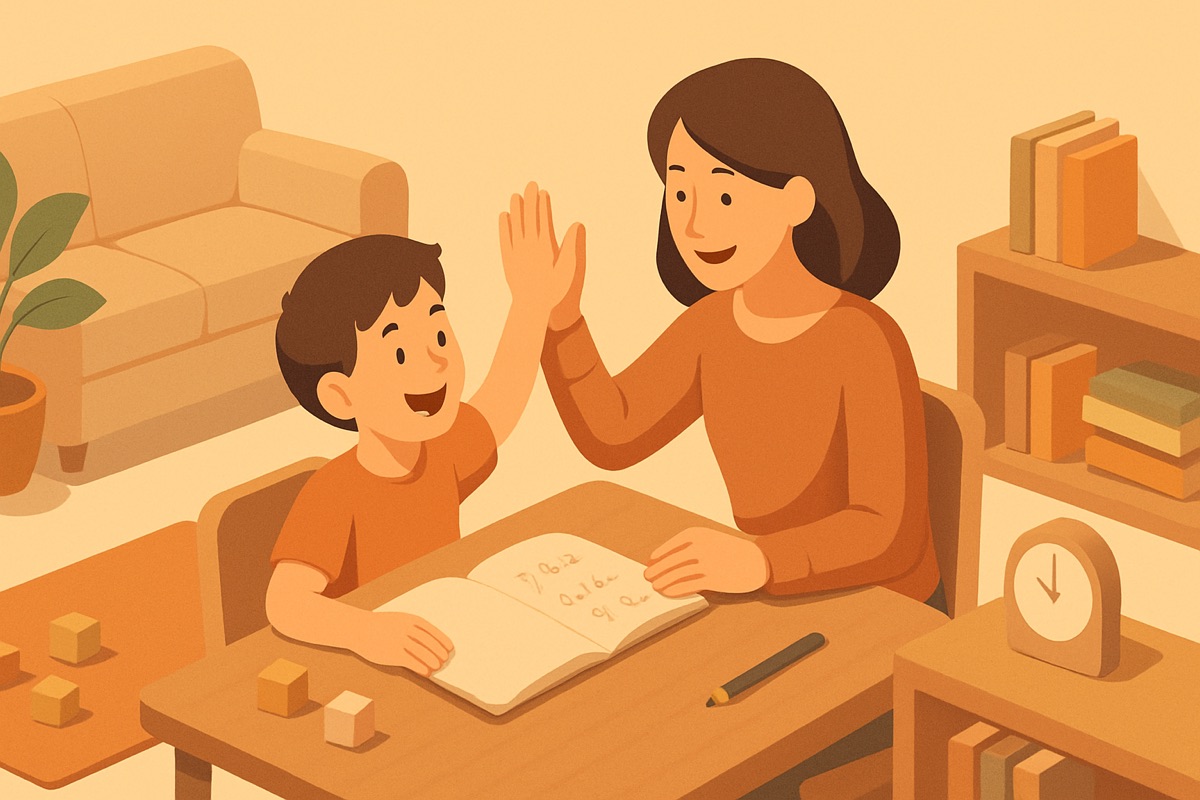
A third grader in my class used to slump over his worksheet and sigh, "This is so boring," about four seconds after I passed it out. He hadn't read a single problem yet. I started keeping track, and I noticed the sigh came fastest on the days the worksheet was thirty of the exact same problem. He wasn't bored by math. He was bored by doing the thing he already knew how to do, over and over, for no reason he could see.
When a child says "math is boring," they're rarely making a comment about math itself. If your child thinks math is boring, the word is usually standing in for something else. Sometimes it means "this is too easy and I feel silly doing it." Sometimes it means "I don't get this and I'd rather look bored than look lost." Once in a while it really does mean bored, as in the task is dull. The fix depends entirely on which one it is, and none of the good fixes are bribes.
First, figure out what "boring" is covering for
Watch the timing. A kid who calls it boring before they've looked at the problem is usually avoiding something. A kid who says it halfway through, after getting three wrong, is frustrated and covering. A kid who breezes through and then says it is genuinely under-challenged.
You can also just ask, but not with "why is it boring?" That gets you a shrug. Try "show me the part that's boring." When they point, you learn a lot. If they point at problem number one, it's avoidance. If they point at the whole page, it's the volume. If they can't point at anything and look a little cornered, it's usually that they're stuck and don't want to say so.
Fix one: cut the volume, raise the stakes a little
Ten problems a kid has to think about beat thirty they can do on autopilot. My third grader perked up the day I gave him five problems and told him three of them had a trick in them, and his job was to find which three. Same math. Suddenly he was reading every problem carefully because he was hunting.
This is the anti-grinding idea in one sentence. Repetition without a point feels like a chore because it is one. Give the practice a reason and the boredom often evaporates without you changing the math at all.
Fix two: let them be the one who's right
Kids love being the authority. Hand your child a problem you "got wrong" and ask them to check your work. Make a real mistake, something like 24 plus 18 equals 32, and let them catch it. The energy in the room changes when the kid is the corrector instead of the corrected.
You can do this at the dinner table with no materials. "I think six times seven is forty-one. Am I right?" Watch how fast a bored kid becomes an interested one when their job is to prove a grownup wrong.
Fix three: connect it to something they actually care about
Not word problems about trains. Real things in their life. A kid who's saving for a nine dollar toy and has four dollars is doing subtraction whether you call it math or not. A kid splitting a pizza with two friends is doing division. A kid keeping score in a card game is adding all night and having fun.
Here are a few that tend to land, depending on the kid:
- Sports stats, if they follow a team. Batting averages are decimals in disguise.
- Cooking, especially doubling a recipe or halving one.
- Money, allowance, saving toward a specific thing they want.
- Any game with a score to keep or cards to count.
The point isn't to trick them into worksheets. It's to show them that math already lives in the stuff they like, so it stops feeling like a separate boring subject that only exists at a desk.
Fix four: make the difficulty fit, and let it move
The kid who's bored because it's too easy needs harder work, not more of the easy work. This is the mistake I see most. A child races through addition, so the response is another whole page of addition. Of course that's boring. They already own it.
Bump them to the next thing. If they've got their addition facts cold, start them on problems that need regrouping, or move to small multiplication. The sweet spot is work that's hard enough to require attention but not so hard it triggers the shutdown. Good practice tools track this and nudge the difficulty as the kid improves, which is the one thing a paper worksheet can't do. It's the main reason I don't mind my own students using an app for drill, as long as the app is actually adjusting and not just serving the same level forever.
Fix five: reward the progress, not the minutes
If you do use a reward, and it's fine to, tie it to something real. Not "sit here for twenty minutes." Twenty minutes of staring is not progress, and kids know it. Reward the thing that actually matters: learning a fact they didn't know yesterday, finishing a hard problem without giving up, catching their own mistake.
A bribe says "get through this awful thing and I'll pay you." A good reward says "you got better at something, and that's worth celebrating." Kids can feel the difference. The first one confirms that math is a chore. The second one connects effort to growth, which is the whole game.
I'll be honest, no single fix works on every kid, and some days a child is just tired and everything is boring. That's allowed. But when "boring" shows up over and over, it's almost always a signal, not a verdict. Figure out what it's covering for, adjust the one thing that matters, and most of the time the sighing stops on its own.