How to Turn a Grocery Trip Into a Math Motivation Win
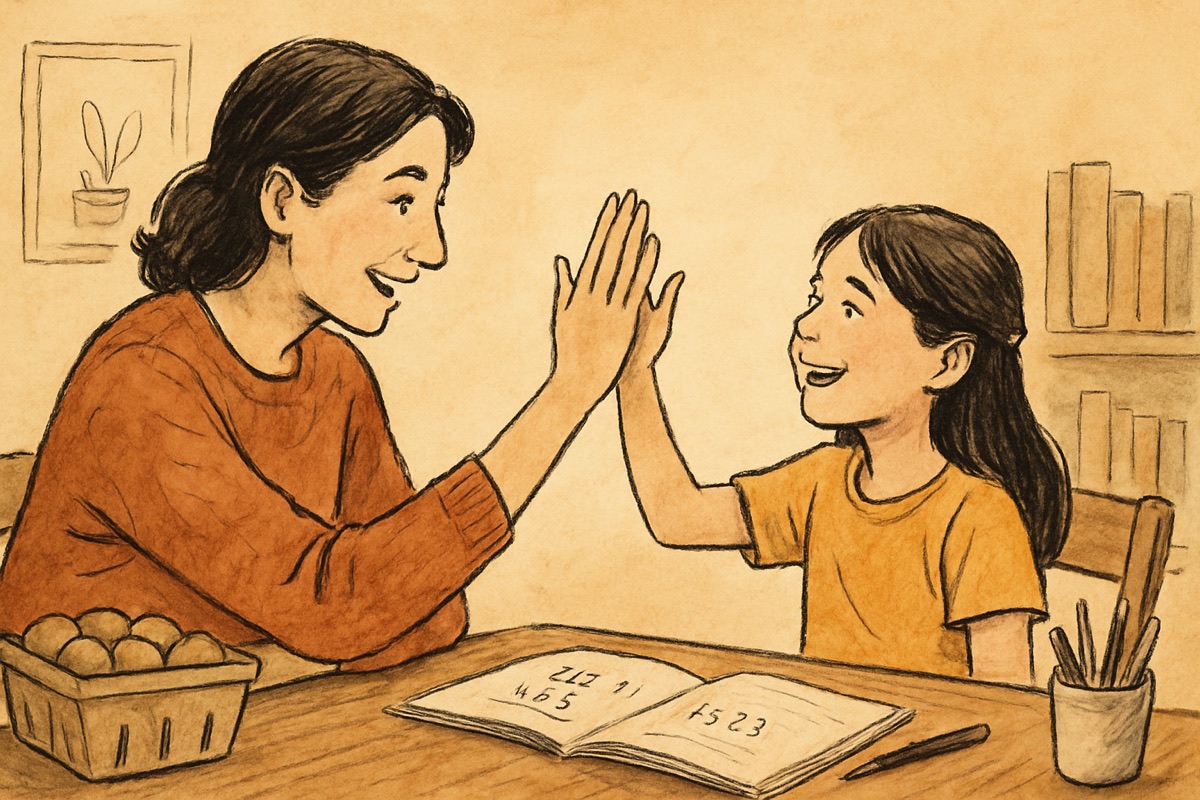
The first time I handed a struggling third grader a calculator and a five dollar budget in the snack aisle of a grocery store, he did more careful math in twenty minutes than he'd done all week on paper. He wanted the fancy cookies. The fancy cookies cost too much. So he stood there working out how many packs of the cheaper ones he could get instead, and whether he'd have enough left for a juice. Nobody assigned that. He just cared about the outcome, and the caring did the teaching.
That's the whole trick with real life math for kids. Motivation isn't something you talk a kid into. It shows up on its own when the math is attached to something they actually want. A worksheet asking "if apples cost 60 cents each, how much for four" is abstract and forgettable. Standing in front of the apples with real money on the line is a different animal entirely. The grocery store just happens to be one of the best places for it, because you're already there every week and the whole place is numbers.
Why the store works when worksheets don't
A worksheet is somebody else's problem. The grocery store is your kid's problem, at least for the length of the trip. There's a real budget, real choices, and a real consequence if the math is off. You don't have to manufacture a reason to care, which is usually the hardest part of getting a kid to practice anything.
There's also no pretending. Kids can smell a fake exercise from across the room. "Pretend you have ten dollars" lands with a thud. Actually holding ten dollars, or being told the cart can't go over a number, is real, and real changes how hard a kid tries. The stakes are small and safe, which is exactly what you want. Nobody gets hurt if the estimate is off by a dollar, but the kid still feels the weight of getting it right.
Match the math to the grade
You don't need a plan. You need one or two prompts that fit where your kid is. Here's roughly how it scales:
- Kindergarten and first grade: Counting and simple comparison. "Grab six oranges." "Which box is heavier, this one or that one?" "How many cans are on this shelf?" Pure number sense, no pressure.
- Second and third grade: Addition, subtraction, and money. Keep a running total in their head as you add items. Figure out the change from a five. "We need three cans at 90 cents each, is four dollars enough?"
- Fourth and fifth grade: Multiplication, division, and the good stuff. Unit pricing. "This bag is 12 ounces for $3, that one's 20 ounces for $4.50. Which is the better deal?" Estimating the whole cart before you hit the register.
The unit price question is my favorite for older kids because it's genuine adult math that adults actually mess up. When your ten-year-old figures out the bigger bag is the better deal, they feel like they cracked something real. Because they did.
Give them a job, then get out of the way
The mistake I see parents make is hovering and correcting. You hand your kid the task, then jump in the second they hesitate. Resist that. The thinking happens in the pause, and if you fill every pause, you've done the math for them and taught them nothing.
Try this instead. Give one clear job for the trip. Maybe they're in charge of the produce budget. Maybe they estimate the total before checkout and see how close they got. Then let them work. If they get stuck, ask a question instead of giving an answer. "How could you figure that out?" beats "it's four dollars." A kid who lands on the answer themselves, even slowly, even with a wrong turn on the way, remembers it. A kid who's handed the answer forgets it before you reach the parking lot.
Keep the stakes low and the mood light
This falls apart the second it starts feeling like a test. If your kid gets a running total wrong and you correct them sharply, or sigh, or turn it into a lesson about paying attention, you've killed it. The next trip they'll refuse the job. Real life math only motivates when it stays low pressure.
So let the estimate be off. "You guessed thirty and it was thirty-four, that's really close, nice work" keeps a kid in the game. The goal isn't a perfect answer at the register. It's a kid who's willing to try the mental math at all, because trying is where the growth is. A close guess made confidently beats an exact answer they were too scared to attempt. Praise the attempt and the reasoning, and the accuracy comes on its own over time.
Let it be small
You don't have to do this every trip, and you shouldn't turn the whole shop into a math marathon. That's how you burn a kid out on it. One good question in the cereal aisle is plenty. Some weeks you skip it entirely because everyone's tired and you just want to get home. That's fine.
The point isn't to squeeze a lesson out of every errand. It's to let your kid see, a little at a time, that the math they do at school is the same math that decides whether the fancy cookies fit in the budget. That third grader with his five dollars didn't end up with the cookies he wanted. He got two packs of the cheaper ones and a juice, and he was proud of the deal he'd worked out. That pride is the motivation. You can't assign it. You can only set up the aisle and let it happen.