How Many Points Should a Kid's Reward Cost? A Worksheet
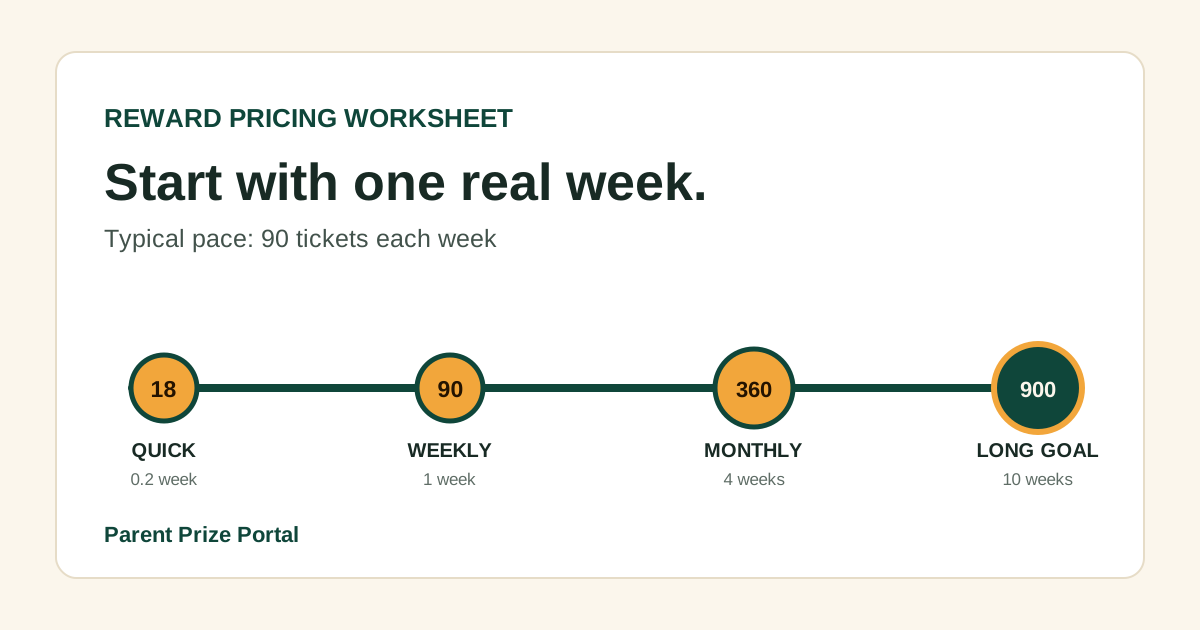
A kid's reward should cost a predictable amount of effort. Estimate what the child normally earns in one week, then multiply that number by the wait you want. A useful starting menu prices a small reward at about 20% of weekly earnings, a weekly reward at 100%, a monthly reward at 400%, and a long goal at 1,000%. Use your child's actual tickets in the worksheet below. A hundred points can mean one afternoon in one family and two months in another.
What is the simplest rule for pricing a kids' reward?
The simplest reward-pricing rule is cost = typical weekly earnings x weeks of effort. This ties every price to the pace the child can actually sustain instead of an arbitrary round number.
The American Academy of Pediatrics tells parents to be clear about how many points, days, or weeks a behavior requires, with small rewards available at the end of a day or week and larger rewards saved for longer periods. That guidance sets the timing; your own weekly earnings supply the number.
Don't start with the prize's dollar value. A free choice such as picking Friday's movie can matter more to a child than a toy. The CDC lists attention and shared activities among rewards that can be powerful and inexpensive. Start with how often the choice should be reachable, then check whether the family can afford to honor it that often.
How do I estimate weekly ticket earnings?
Estimate weekly ticket earnings by recording two ordinary weeks, then choose a conservative typical value. Skip vacation weeks, sick days, and that unusually intense first week of a new chart.
Use this small worksheet:
| Input | Your number |
|---|---|
| Tickets at the start of week 1 | ____ |
| Tickets earned during week 1 | ____ |
| Tickets earned during week 2 | ____ |
| Typical weekly earnings | Lower week, or the two-week average: ____ |
If the two weeks total 84 and 96 tickets, the average is (84 + 96) / 2 = 90 tickets per week. Ninety becomes the pricing unit. Choosing the lower week, 84, is also reasonable for a child whose schedule changes often.
Count earned tickets rather than the account balance. The balance may fall when a prize is redeemed, while earnings show the pace of learning. Parent Prize Portal keeps a ticket ledger and a parent-managed prize list; the worked setup guide explains how those pieces connect before you start measuring a week.
How many tickets should a child earn each week?
A child should earn enough tickets in a normal week to reach one modest reward without needing perfect attendance or perfect scores. No universal target, 50 or 500, solves this. Multiply every earning value and every price by ten and the experience stays the same.
The useful checks are practical:
- Can the child explain how tickets are earned in one sentence?
- Can an ordinary week buy at least one appealing choice?
- Can a missed day still leave visible progress?
- Can the parent deliver the available rewards at the advertised pace?
The CDC recommends giving a reward soon after the behavior for young children and adjusting goals or rewards when the program does not work. In a ticket system, the ticket itself can provide that immediate acknowledgment while a larger family reward takes several days.
What point values work for small, medium, and big rewards?
Small, medium, and big reward values should represent different waiting periods. You don't need to guess what one point is worth. With the 90-ticket weekly pace above, every price in this starter menu has a plain explanation.
| Reward tier | Pricing rule | Price at 90 per week | Expected wait | Example |
|---|---|---|---|---|
| Quick choice | 0.2 x weekly earnings | 18 tickets | About one school day | Pick the music at dinner |
| Weekly reward | 1 x weekly earnings | 90 tickets | About one week | Choose the family movie |
| Monthly reward | 4 x weekly earnings | 360 tickets | About four weeks | Pick a special outing |
| Long goal | 10 x weekly earnings | 900 tickets | About ten weeks | Save toward a larger family experience |
Round to a whole ticket your child can understand. For 73 tickets per week, the quick-choice calculation is 14.6; 15 tickets is clearer. The portal accepts whole-ticket prize prices, so the family can enter the rounded amount directly.
Treat this menu as a starting experiment. Keep at least one reachable choice on the list while the child saves for a larger goal. The guide to rewards after the first two weeks covers what to change when the novelty fades.
How do I price a reward that costs real money?
A reward that costs real money needs a ticket wait and a family budget check. Decide how often you can comfortably provide it, then place it in the matching time tier.
Suppose a $12 book can fit the family budget once a month. At 90 tickets per week, price it near 360 tickets. If the same book is affordable only every ten weeks, 900 tickets fits the budget better. The ticket price reflects access frequency; it does not claim that one ticket equals a fixed number of cents.
Free rewards still deserve intentional prices. Extra one-on-one game time may be scarce on a busy week, while choosing the breakfast playlist costs nothing and can be offered often. Ask the child which options feel valuable before assigning a tier.
What should I do if rewards are reached too fast or too slowly?
If rewards are reached too fast or too slowly, change future prices after reviewing one or two complete weeks. Leave already-earned tickets in place and explain the new menu before it takes effect.
The CDC says never to take away rewards a child has earned. That rule keeps the system credible. If a 90-ticket weekly reward turns out to take three weeks, lower the next price or add a smaller option; if it arrives every two days, raise future prices or reduce unusually high earning values.
Change one variable at a time. If you change the earning rules, prize prices, and available rewards together, you won't know which adjustment helped. This guide to using prizes without swallowing the learning goal offers a useful check before you revise the whole system.
How often should I recalculate reward prices?
Recalculate reward prices after the first two weeks, then only when the child's earning pace or family routine changes. A monthly review is usually enough once the menu behaves as expected.
Write the pricing rule beside the menu: “Our weekly pace is 90 tickets. Weekly choices cost about 90.” That sentence makes later changes easier to explain and protects against quietly moving a goal after the child has started saving.
Frequently asked questions
Should every child in a family have the same reward prices?
No. Use each child's typical weekly earnings and age-appropriate waiting time. Shared rewards can still have one family price when siblings contribute to the same goal.
Should points expire at the end of the week?
Usually no. A running balance lets a child save for a larger goal and avoids erasing completed effort. If you choose a weekly reset, explain it before any points are earned.
Can a reward cost fewer points than a child earns in one day?
Yes. A quick, low-cost choice can prove that the system pays out, especially during the first week. Keep it affordable enough that the family can honor repeated redemptions.
Should I subtract points for mistakes or behavior problems?
Avoid taking away points that were already earned for a different behavior. The CDC specifically advises that earned rewards remain the child's; address the separate problem with a separate, clear response.