Homework help
Calmer math homework: how to help without doing it for them, and how to end the nightly battle.

What to Do When Your Kid Reads the Directions Wrong Every Time
Your kid knows the math but keeps getting it wrong because they read the directions wrong. Here is why it happens and how to actually fix it.

How to Read a Homework Sheet's Directions With Your Kid
Half the wrong answers on a math sheet come from misread directions, not missing skills. Here is how to help kids follow homework directions before they start.
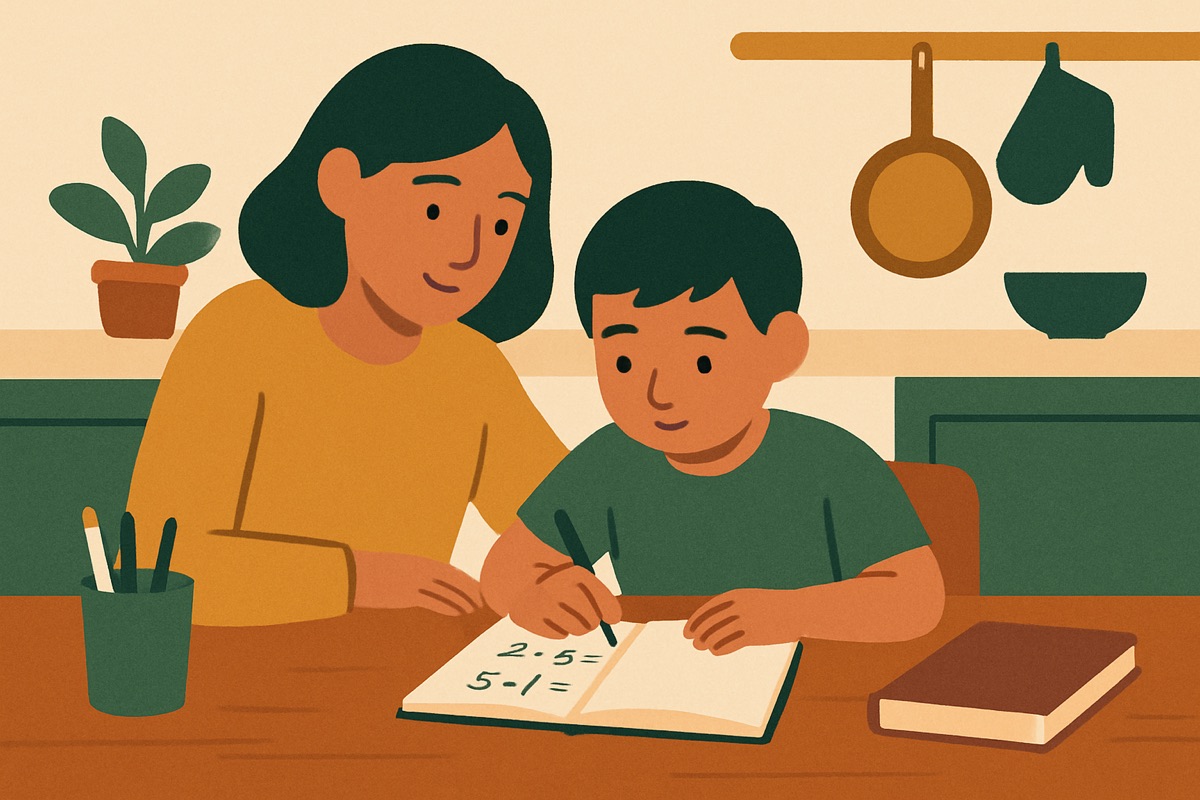
How to Spot When Homework Struggles Are Really a Learning Gap
Some hard homework nights are just hard nights. Others are a warning sign. Here's how a teacher tells a normal struggle from a real learning gap.

Should You Let Your Kid Use a Calculator or Photo-Solver on Homework?
When a calculator actually helps a kid learn, when a photo-solver quietly does the opposite, and how to tell which one is sitting on your kitchen table.
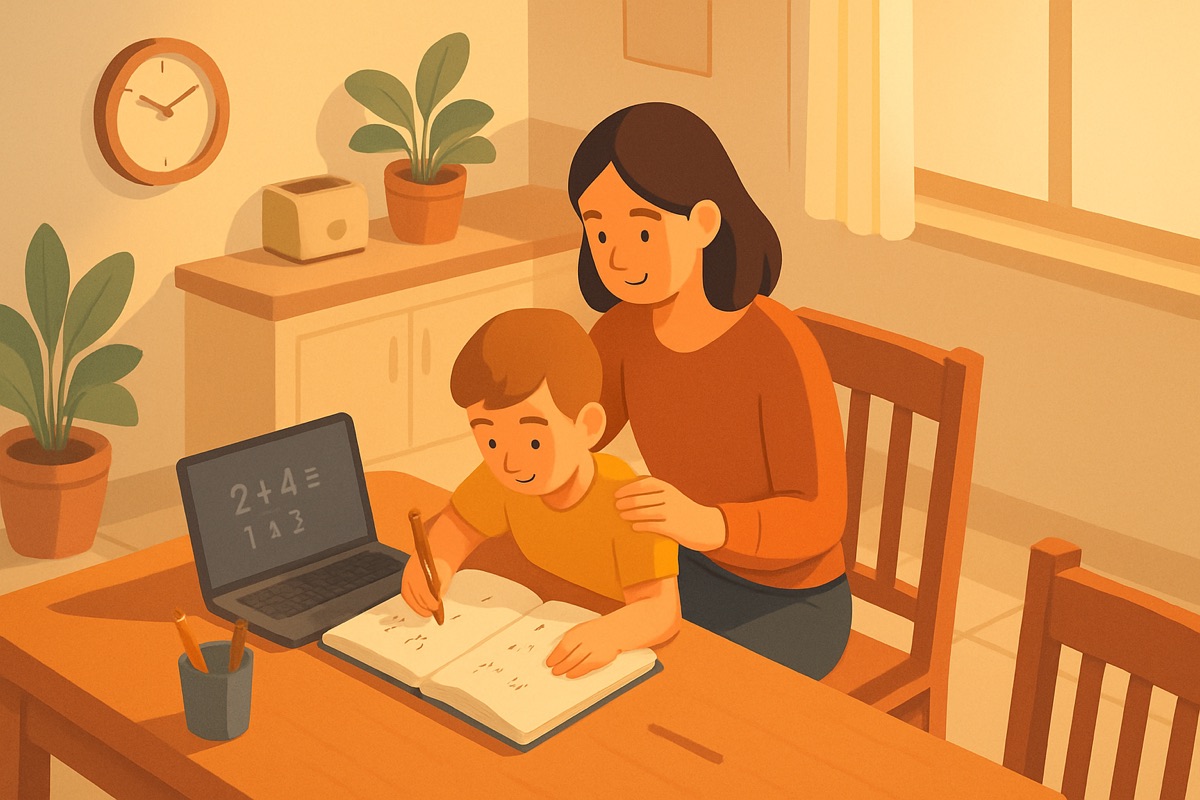
Using Your Kid's Homework App the Right Way (Not as a Babysitter)
A homework app can help your kid learn or quietly do the thinking for them. Here's how to tell the difference and set the thing up so it actually teaches.
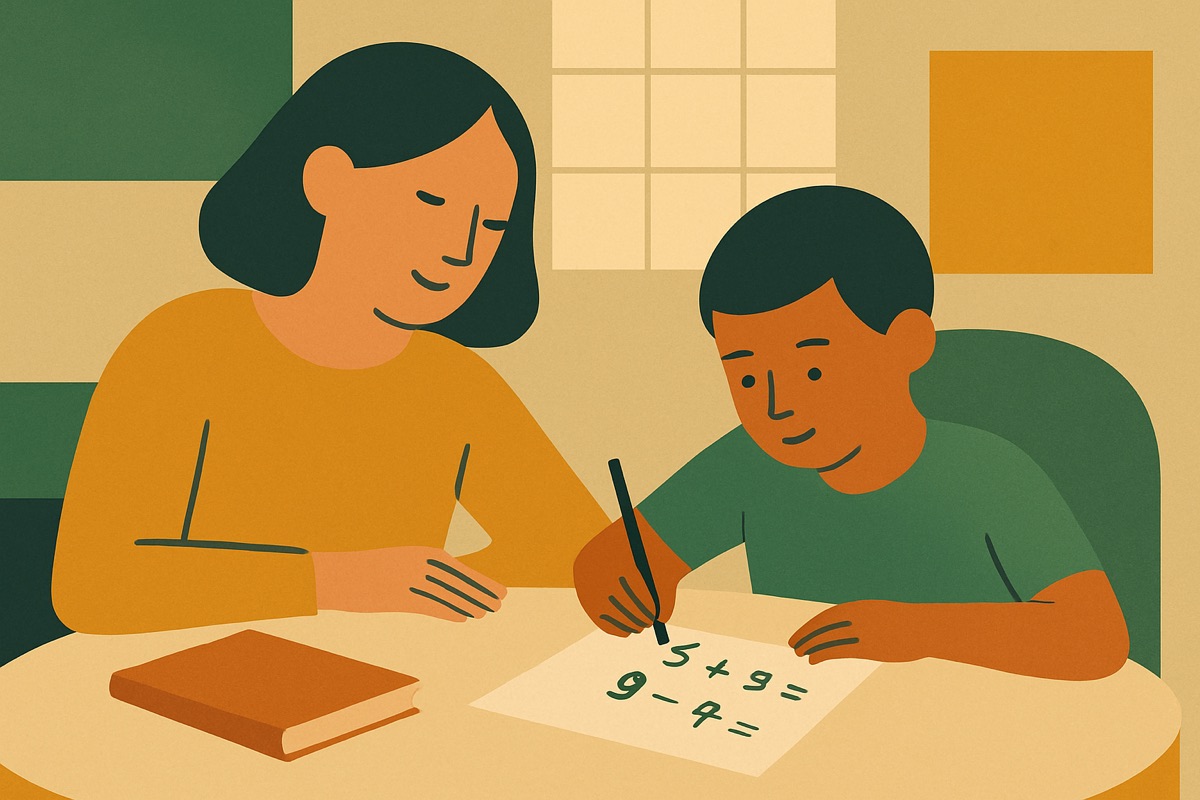
When Homework Turns Into a Power Struggle, Try This
The nightly homework fight isn't really about the homework. Here's how to step off the enemy side of the table and turn it back into ten quiet minutes.
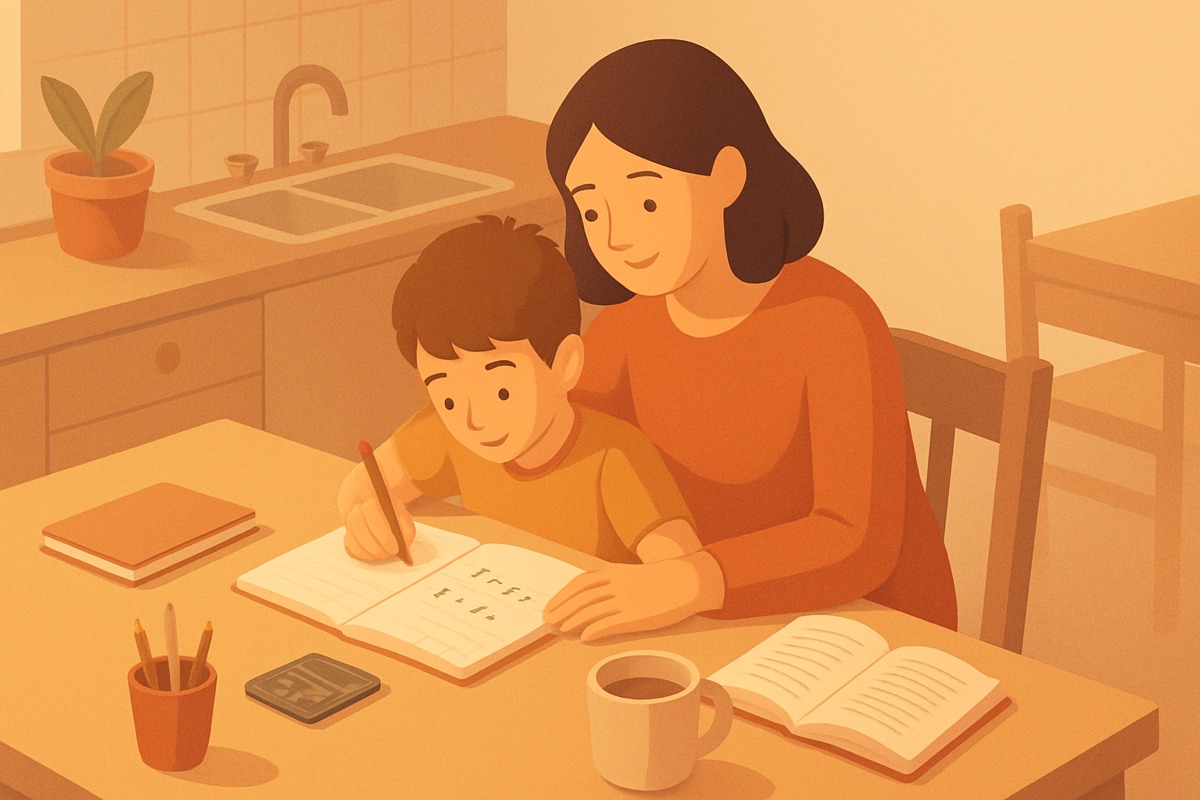
The Trap of Doing the Homework for Them (and How to Catch Yourself)
It rarely starts as doing the homework for them. It starts as one hint, then another, and then you're holding the pencil. Here is how to catch it.
Building Homework Independence Grade by Grade
Homework independence isn't a switch you flip. It's a handoff you do slowly, and the right amount of help looks completely different in first grade than in fifth.
When Your Kid Says 'The Teacher Does It Differently'
You show your kid the way you learned subtraction, and they tell you the teacher does it differently. Here's how to help without starting a small war.

Homework Time Is Not the Time to Teach New Math
Homework is for practicing what a kid already knows, not learning it cold. Here's why teaching new math at the kitchen table backfires, and what works better.
What to Do the Night Before a Math Test Without Cramming
It is 8pm, the test is tomorrow, and the worksheet is a mess of red marks. Here is what to actually do the night before a math test.

Breaking Big Homework Problems Into Steps Your Kid Can Handle
A four-line word problem can look like a brick wall to a nine-year-old. Here's how to break down math problems for kids into steps they can actually handle.
How to Help When You Are Bad at Math Yourself
You do not need to be good at math to help your kid with it. Here is what actually matters, and the one habit that quietly does the most damage.
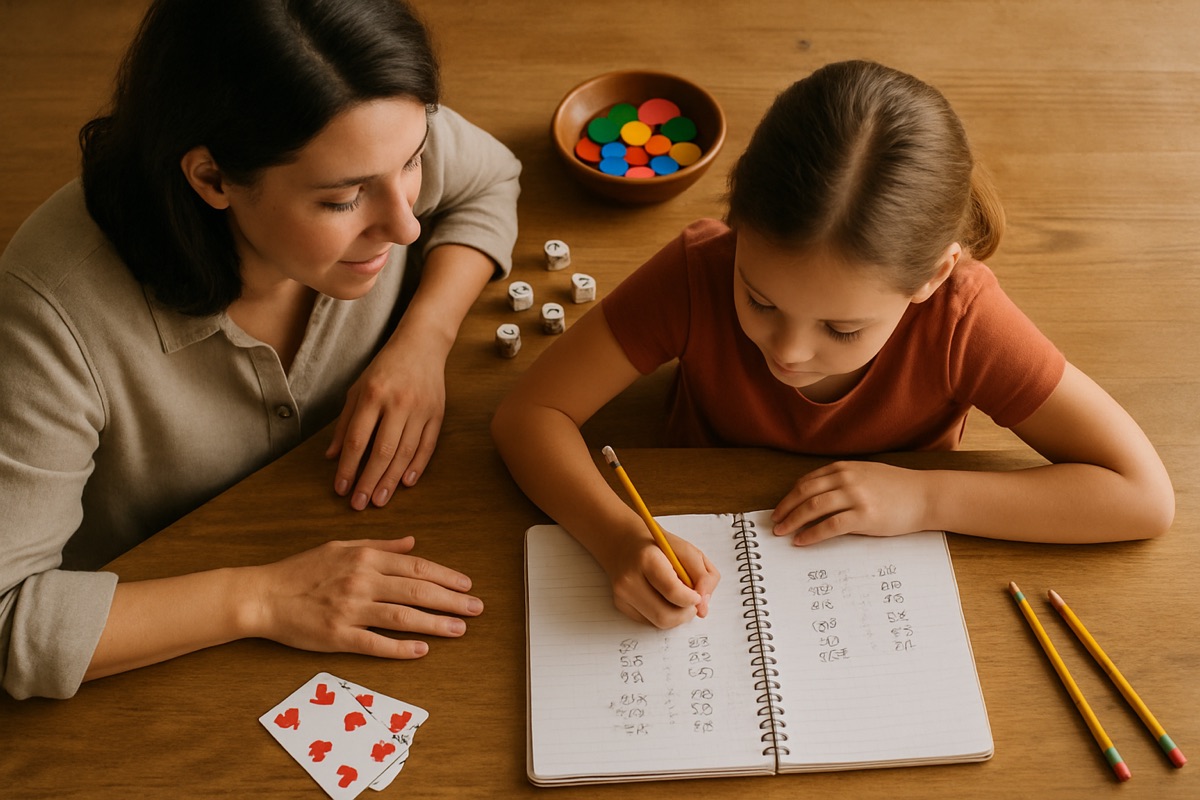
Should You Sit With Your Kid During Homework or Walk Away?
Sit too close and you do the thinking for them. Walk away too soon and they stall. A teacher on when parents should sit with kids during homework, and when not to.

How to Keep Your Cool During Math Homework
The math is fine. It's the fifth time explaining it while dinner burns that gets you. Here's how to stay calm during homework without faking it.

Stop Correcting Every Mistake on Your Kid's Homework
Why fixing every error on your kid's homework quietly teaches the wrong lesson, and the small change that helps them actually learn from mistakes.
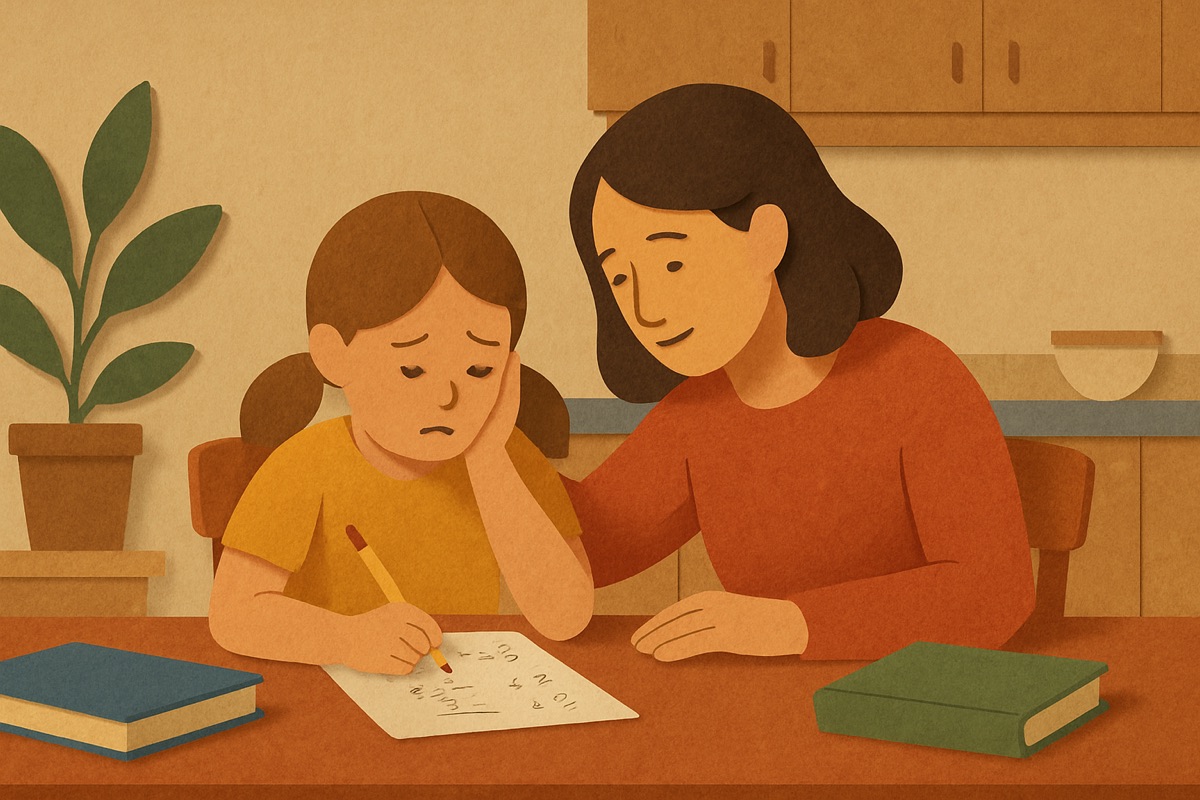
When Math Homework Is Too Much: How to Talk to the Teacher
If math homework is eating your whole evening, you can say so. Here is how to talk to the teacher about too much math homework and get a real fix.
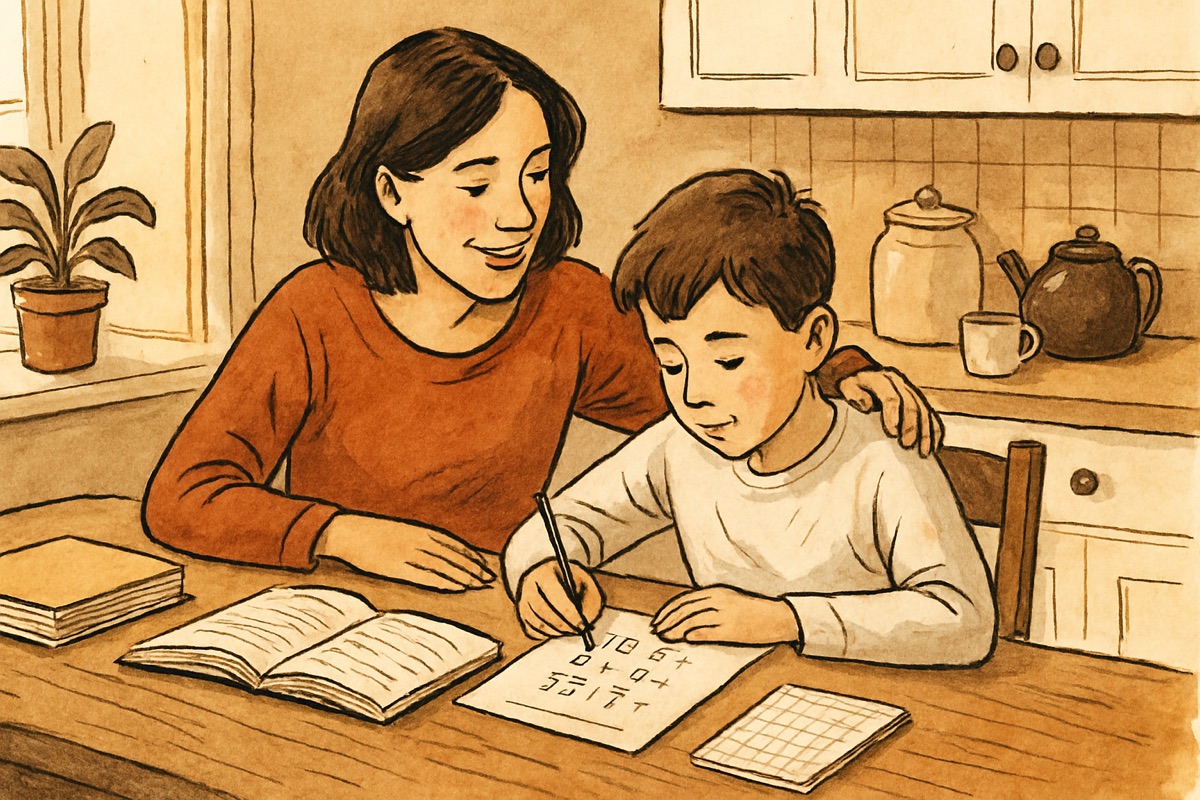
A Simple After-School Homework Routine That Sticks
The routines that last are the boring, simple ones. Here's an after-school homework routine you can actually keep, plus how to fix it when it slips.
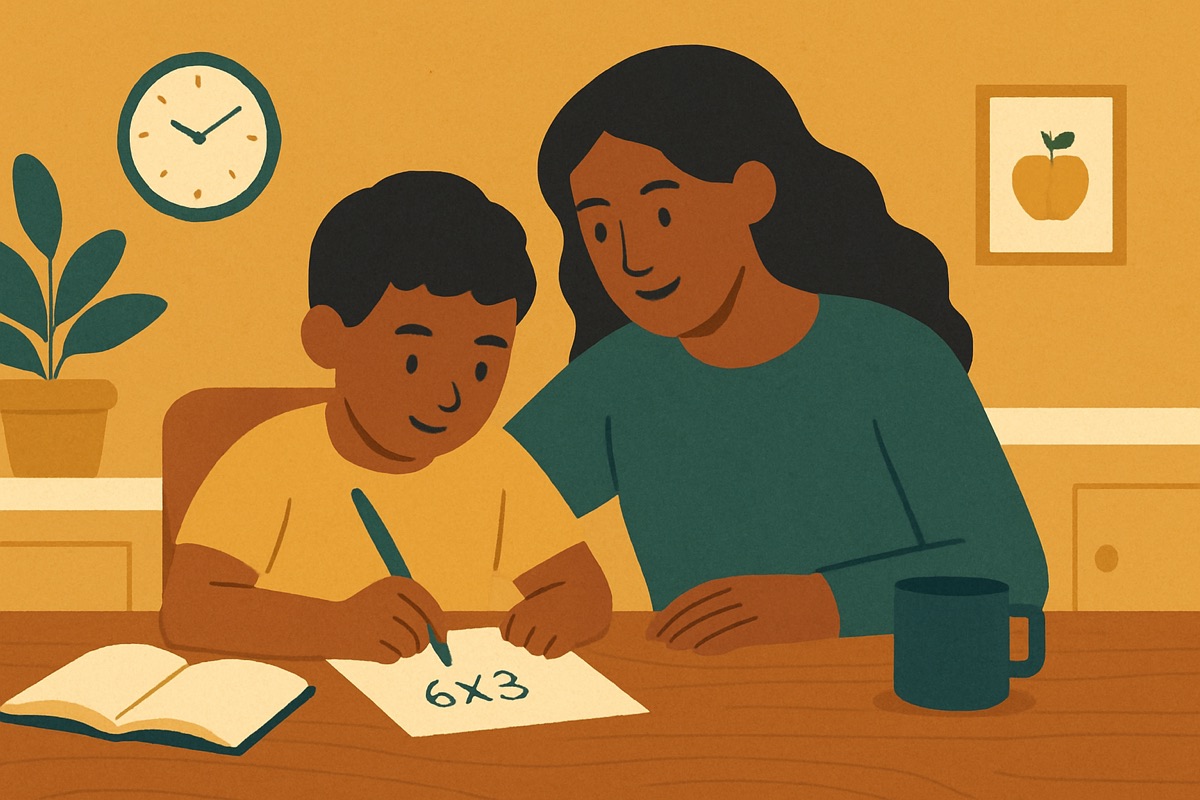
The One Question That Unsticks Almost Any Homework Problem
You do not need to know the math to help a child stuck on a math problem. You need one question, and the patience to wait for the answer.

How to Check Math Homework When You Are Not Sure of the Answer Either
You do not need to remember how to divide fractions to help. Here is how to check your kid's math homework when you are lost too.
Have Your Kid Teach You the Problem: The Best Homework Trick I Know
The fastest way to find where your kid is stuck on a math problem is to stop explaining and ask them to teach it to you instead.
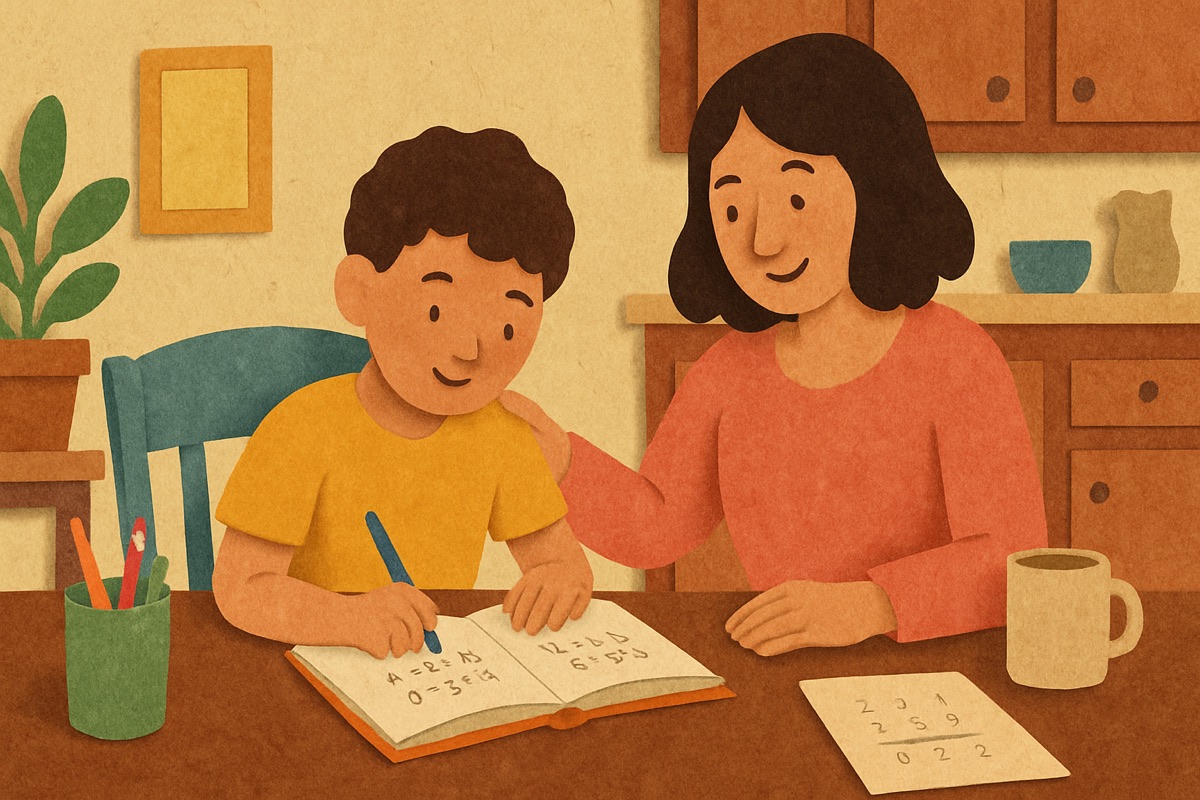
Set Up a Homework Spot That Actually Cuts Down on Battles
Most homework battles aren't about the homework. They're about where and when it happens. Fix the spot and the routine, and half the fight disappears.
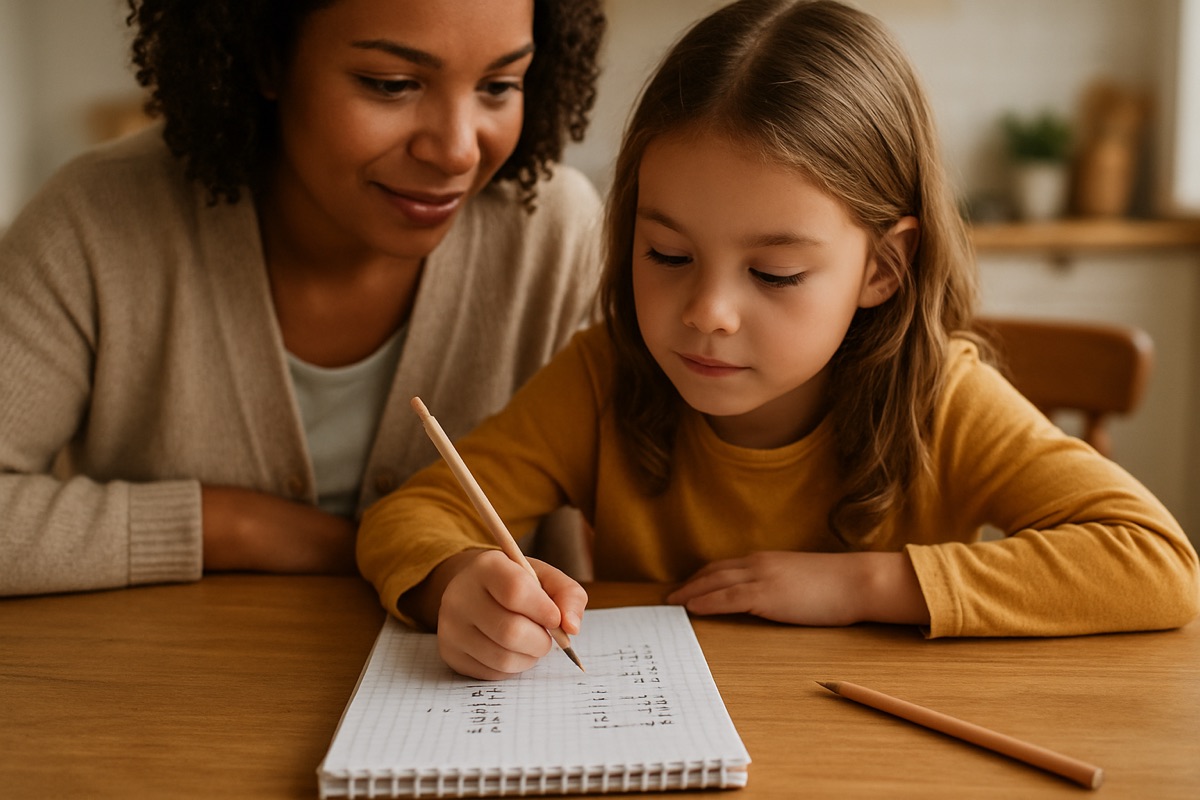
Why New Math Looks Nothing Like Yours, and How to Help Anyway
The homework says 'make a ten' and you have no idea what that means. Here is what new math is actually doing, and how to help even when it looks foreign.

The 20-Minute Rule: When to Stop Fighting a Math Homework Problem
One math problem can eat an entire evening and teach your kid nothing but that they hate math. Here's the rule I give parents to end it.
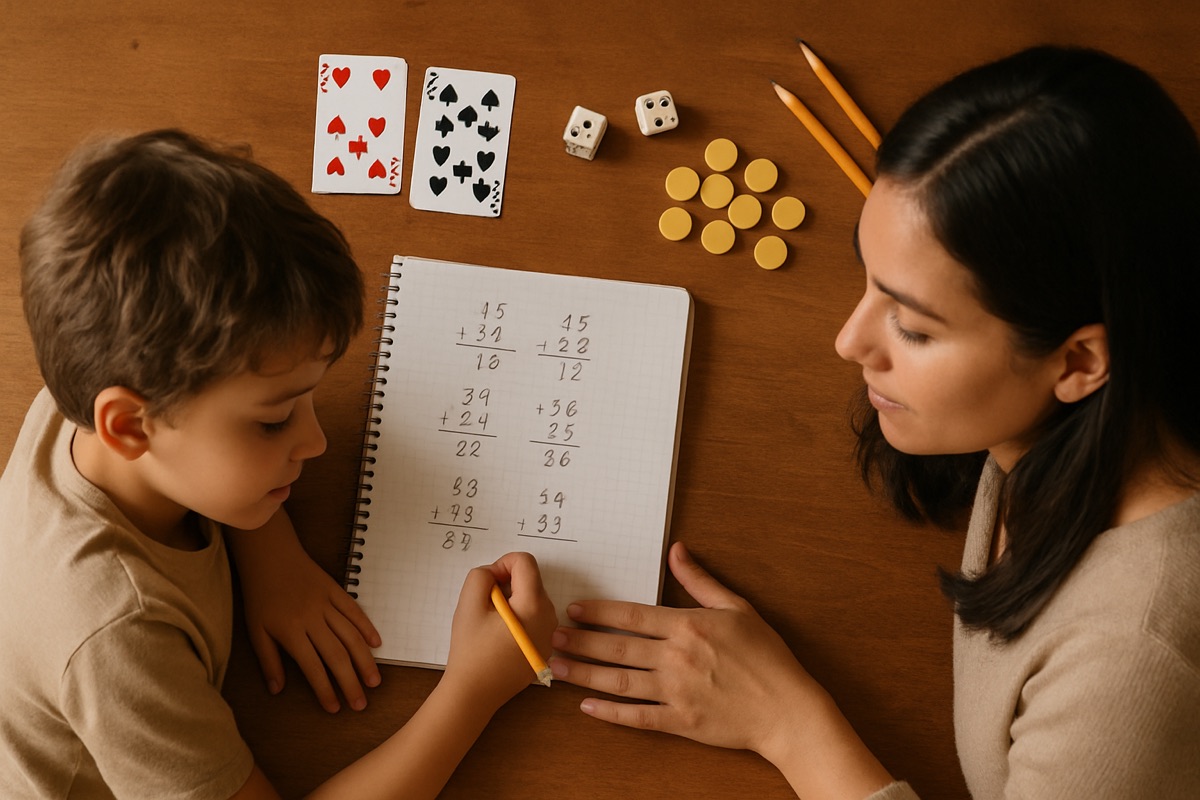
How to Help With Math Homework Without Just Giving the Answer
The hardest part of homework time is watching your kid stall and not just telling them the answer. Here is how to help without doing it for them.
Give the math a reason.
Kids earn tickets for real practice and trade them for prizes you set at home.
Set up a free parent account