Should You Sit With Your Kid During Homework or Walk Away?
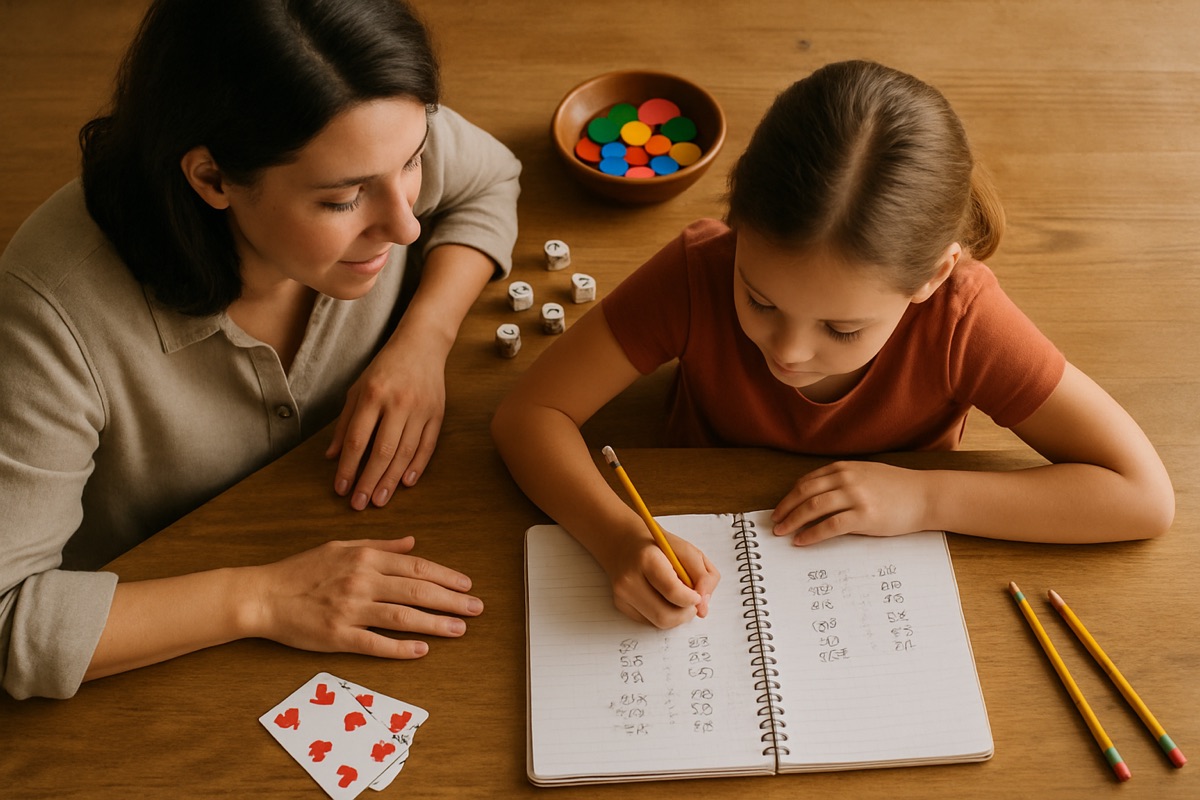
A mom told me at conferences that she sat next to her son every single night for his twenty minutes of math homework, and she couldn't understand why he still froze on the exact same problems at school. I asked her what she did when he got stuck. "I just point to the number he needs," she said. There it was. She was doing the hardest part of the thinking for him, every night, and then wondering why he couldn't do it alone.
Whether parents should sit with kids during homework is one of the most common questions I get, and the answer isn't yes or no. It's about what you do while you're sitting there. You can sit right next to your child and quietly teach them to be helpless, or you can sit across the room and teach them to lean on you the second it's hard. The good version lives in between, and it changes as the kid grows.
What too close does
When you sit shoulder to shoulder and stay locked in on every problem, a few things happen, and none of them are the thing you want.
Your kid stops reading the problem carefully, because they know you'll catch it if they miss something. They stop pushing through the uncomfortable middle of a hard problem, because you'll rescue them before it gets uncomfortable. And they learn, without either of you meaning it, that math is a two-person job that they can't do alone.
That mom's son didn't have a math problem. He had a "he'd never actually done it by himself" problem. The pointing finger felt like help. It was really a crutch he brought to school in his head and then couldn't find.
What walking away too soon does
Now the opposite. Some kids, especially the younger ones and the anxious ones, will just stall out if you leave. They sit, they doodle, twenty minutes becomes an hour, and the page is still blank. Telling a struggling seven-year-old to go do it alone in their room is a great way to build a kid who dreads homework and a nightly fight you didn't need.
So neither extreme works. Constant hovering makes them dependent. Total absence makes them stall or panic. The trick is to be present in a way that hands the thinking back to them.
How to sit there without doing the work
This is the part I actually teach parents, and it's mostly about biting your tongue.
- Get them started, then back off. Sit for the first problem or two to make sure they understand what's being asked, then physically move. Fold laundry nearby. Do the dishes within earshot. You're available, not attached.
- Answer a question with a question. When they say "I don't get it," don't explain. Ask "what do you think the problem wants you to do?" or "what's the first thing you could try?" Nine times out of ten they know, they just wanted you to carry it.
- Let them be stuck for a minute. Stuck is not an emergency. The thirty seconds of productive struggle before the answer arrives is exactly where the learning happens. If you fill that silence, you steal the lesson.
- Never touch the pencil. The moment your hand writes anything, it's your homework. Point with words if you must, but keep the doing in their hands.
- Check at the end, not during. Let them finish a section, then look it over together. "Two of these are off, can you find which ones?" makes them the checker. Fixing their own mistakes teaches more than you catching each one live.
It depends on the age, honestly
There's no single rule because a first grader and a fifth grader need different things.
For kindergarten through second grade, sit closer and longer. They genuinely can't manage the whole routine yet, and part of what you're teaching is how to do homework at all. Read the directions with them. Keep them company. But even here, ask more than you tell.
By third and fourth grade, start pulling back on purpose. This is the stretch where independence gets built, and it's uncomfortable because they'll get things wrong that you could have prevented. Let them. A wrong answer they own teaches more than a right answer you handed over.
By fifth grade and up, the goal is that you're mostly not in the room. You're the person they come find when they're truly stuck, after they've tried, not the person sitting next to them by default. If you're still doing nightly side-by-side homework in middle school, something needs to shift.
The real measure
Here's the test I give parents. The goal of homework help is not tonight's finished page. It's the day your kid doesn't need you for it.
If you sit down every night and the page gets done, but your child couldn't do that same page alone at school, then the help isn't working, no matter how done the homework looks. That's the trap the pointing-finger mom was in. Her son's homework was always complete and he was learning nothing about doing it himself.
We changed one thing. She started sitting for the first problem, then getting up to make dinner, and answering "I'm stuck" with "show me what you tried first." The first week was rough. He complained, he stalled, a couple of pages came in half done. Then something shifted. He started reaching for the answer himself before calling her over, because she'd stopped being the answer.
Sit with your kid when they need the company and the launch. Then get up. The whole point is teaching them they can do the hard thing on their own, and they can't learn that while you're holding the pencil.