Building Homework Independence Grade by Grade
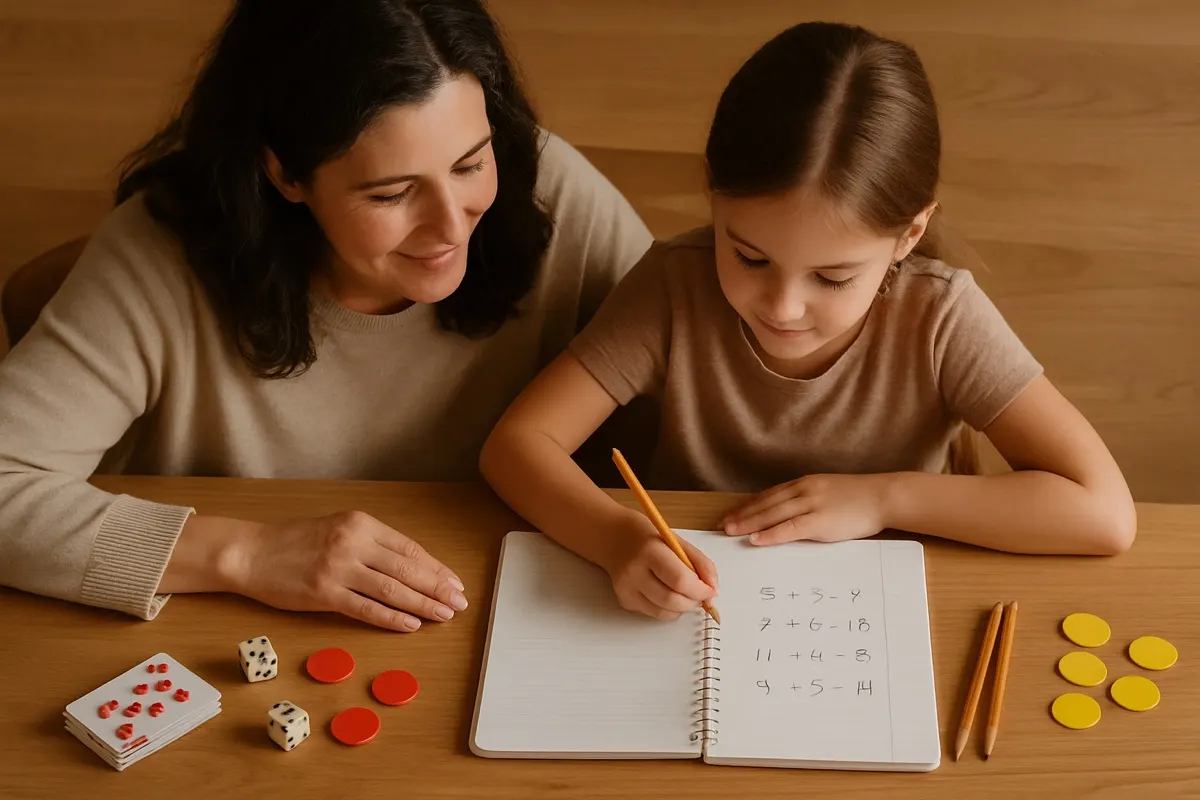
The mom who was still doing fourth grade homework
A mom came to a conference worried her fourth grader "couldn't do anything alone." As we talked it came out that she sat next to him every night, read each problem to him, and checked every answer before he moved on. She'd been doing it since first grade. It worked great in first grade. The trouble was she was running the exact same play three years later, and he'd learned that homework was a two-person job.
She wasn't wrong to sit with him at six. She was wrong to still be doing it at nine, and nobody had told her the job was supposed to change. Building homework independence by grade isn't one big talk about responsibility. It's a slow handoff where you do a little less each year, on purpose, until the kid is holding the whole thing.
First and second grade: you're the scaffolding
Little kids need you right there, and that's fine. At this age you're not being a helicopter, you're being scaffolding on a building that can't stand up yet.
Sit with them. Read the directions out loud, because the reading is often harder than the math. But even now, start planting the seeds of doing it alone.
- Ask instead of tell. When they're stuck, resist saying the answer. Ask "what do you already know here?" It's slower. It's the whole point.
- Let them make small mistakes. If they write 8 for 5 plus 4, don't jump. Let them finish and find it, or catch it when they check. The mistake is the lesson.
- Build the routine, not just the answers. Same spot, same time, same order. The habit is what carries them later, more than any single skill.
The goal by the end of second grade isn't a kid who works alone. It's a kid who has a homework routine and expects it to happen without a fight.
Third grade: move to the next room
Third grade is the handoff year, and most homework battles I hear about come from parents missing it. The work gets more independent by design. Multi-step problems, longer directions, actual reading. This is where you physically change your position.
Stop sitting shoulder to shoulder. Get them started, make sure they understand what's being asked, then move to the next room. Fold laundry. Do dishes. Stay available, stay out of arm's reach.
The magic sentence for this year is "try the ones you can, circle the ones you can't, and I'll come check in ten minutes." That does three things at once. It gives permission to struggle, it makes getting stuck normal instead of scary, and it teaches them that being stuck on one problem doesn't mean stopping on all of them. A kid who learns to skip and come back has learned something most adults still get wrong.
Fourth grade: they run it, you audit
By fourth grade the kid should be running the show, with you as the auditor who signs off, not the manager who does the work. This is exactly where that mom got stuck.
Here's what the shift looks like in practice. They get their own materials out. They read their own directions. They do the whole thing. Then, and only then, you look it over. And you don't fix it. You point.
"Two of these have mistakes. See if you can find them." That sentence is worth more than an hour of you correcting. It hands the checking back to them, which is the last real skill of independent homework. A kid who can find their own errors doesn't need you. A kid who waits for you to find them always will.
It's slower and it's harder to watch. You'll see a mistake and your hand will itch to grab the pencil. Sit on your hand.
Fifth grade: you're barely in the room
By fifth grade you want to be almost invisible on a normal night. They know where to work, when to start, how to get unstuck, and how to check themselves. Your job shrinks to two things: being there if something is genuinely over their head, and keeping an eye on the big picture.
That doesn't mean you disappear. It means your help gets rarer and higher quality. You're the specialist they call in for the hard case, not the assistant who shows up every night. Ask "how's it going with math?" at dinner instead of hovering at 7 pm. When they hit something real, sit down, help, then leave again.
The point of all of it, from the first-grade scaffolding to the fifth-grade check-in, isn't to raise a kid who never needs help. It's to raise one who knows the difference between a problem they can push through and one that actually needs another person, and who isn't scared of either.
If you are unsure whether a homework rule supports independence or crosses into overcontrol, use this clear test for parental limits and controlling parenting.
A few things that hold true at every grade
- Help less than feels comfortable. The itch to jump in is almost always a sign to wait.
- Let mistakes stand long enough to be useful. A wrong answer they find themselves teaches more than a right one you handed them.
- Match your help to the year, not the kid's mood. A rough night isn't a reason to slide back to first-grade mode for a fourth grader.
- Praise the working alone, not just the right answers. "You did that whole page by yourself" is the thing you want more of.
That mom started leaving the room during math homework. The first week was rough and he complained. By the end of the month he was finishing before she'd even finished the dishes, and looking a little proud about it. He hadn't gotten smarter in three weeks. She'd just finally handed him the wheel.