How to Spot When Homework Struggles Are Really a Learning Gap
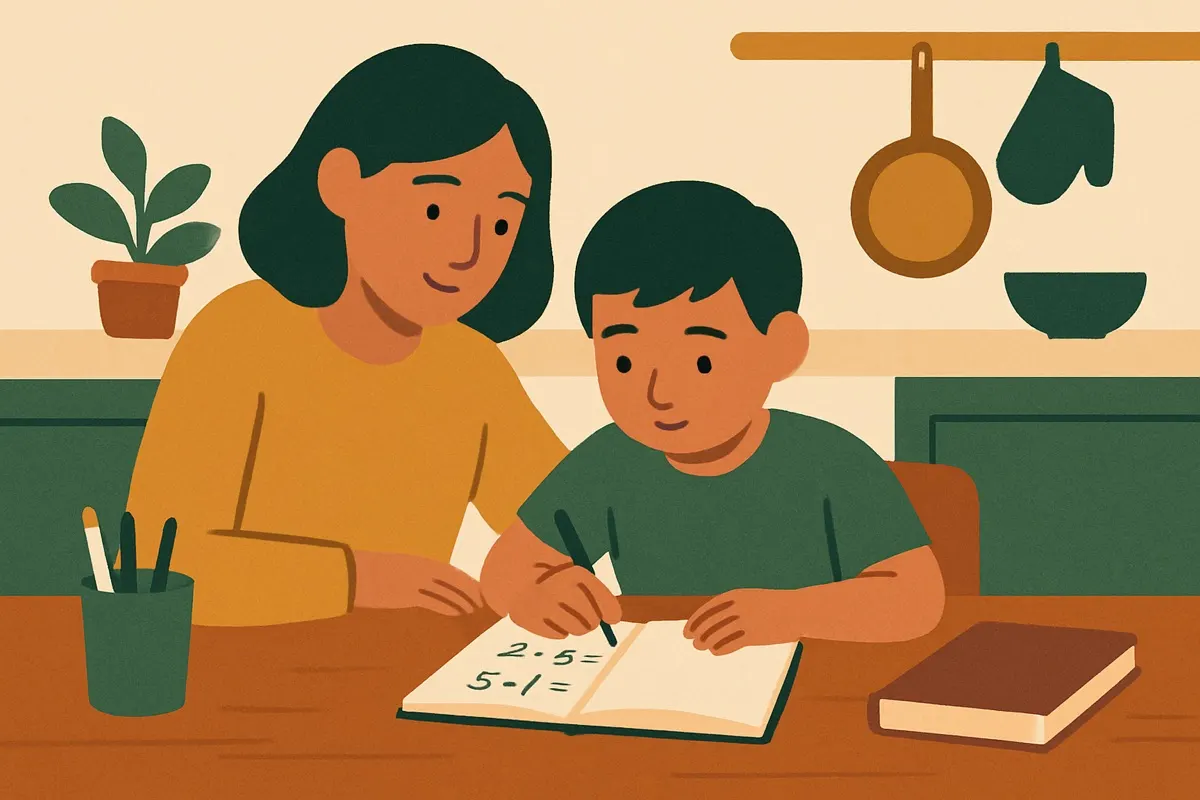
A fourth grader I taught used to melt down over her multiplication homework almost every night. Tears, dropped pencil, the whole thing. Her mom assumed it was attitude, or that the work was just hard, and she wasn't wrong to. Plenty of homework is just hard. But when I watched this kid work, the problem wasn't the multiplication at all. She couldn't reliably add. Every multiplication problem asked her to lean on addition she'd never locked in, so the whole thing collapsed and she looked like she was fighting a subject she was actually missing the floor under.
That's the difference nobody explains to parents. When your kid is having a rough night, you're really asking one question: is this a homework struggle or a learning gap? A struggle is a normal hard evening. A gap is a missing skill that's going to keep breaking things until you find it and fix it. They look almost identical from across the kitchen, and they need completely different responses.
What a normal struggle looks like
Some resistance to homework is just being a kid at the end of a long day. It's real, but it's not a red flag. Here's what the normal version tends to look like:
- The complaining is about doing the work, not about the math itself. "This is boring" and "I want to be done" more than "I don't get it."
- Once they actually start, they can do it, even if slowly and with a sigh.
- A snack, a break, or a shift in the room settles them and they finish.
- The trouble is spread evenly. Some nights are rough, some are fine, and it doesn't cluster around one specific type of problem.
If that's what you're seeing, you mostly need patience, a routine, and maybe a better time of day. This is a motivation and energy problem, not a math problem, and it usually passes with consistency.
What a learning gap looks like
A gap has a different signature. The tell is that the trouble is specific and it repeats. Watch for these:
- The same kind of problem trips them every time. It's always the ones with borrowing, or always the word problems, or always anything with fractions.
- They can do the easy version but fall apart the moment it gets one step harder, which usually means they memorized a procedure without understanding it.
- They get answers that are wrong in a consistent way. My subtract-the-smaller-from-the-larger kids always made the same error in every column. Consistent wrongness is a fingerprint. It points at a specific broken idea.
- They rely on a crutch long after their classmates dropped it, like counting on fingers for facts they should know cold by now.
- The frustration spikes hard and fast, out of proportion to the problem, because they genuinely have no path in. That's not attitude. That's a kid staring at a locked door.
The fourth grader with the multiplication tears was every one of these. Same problems every time. Fell apart when it got harder. Same errors. Deep frustration that looked like defiance. The gap was hiding one level down, in addition, and no amount of multiplication practice was ever going to reach it.
Math builds on itself, which is why gaps compound
Here's the thing that makes gaps urgent. Math is a ladder, and every rung rests on the one below. You can't do multiplication smoothly without addition. You can't do fractions without division. You can't do algebra without the whole stack under it. When a rung is missing, the kid doesn't just struggle with that one thing. They struggle with everything built on top of it, which is everything that comes after.
This is why "just practice more" so often fails. If the gap is in addition and you drill multiplication, you're building on the crack. You'll get frustration and slow progress and a kid who decides they're bad at math, when the real issue is one specific missing skill from two grades back. Piling on more of the hard thing makes it worse. You have to go down and find the broken rung.
How to find the actual gap
You don't need to be a teacher to diagnose this. You need to watch and ask. A few moves:
- Ask them to think out loud. "Talk me through how you're doing this one." The place where their explanation goes fuzzy or stops is usually the gap.
- Back up until it's easy. If multiplication is a disaster, hand them a few plain addition problems. If those wobble too, you've found it. Keep going down until you hit the level where they're solid, then start climbing from there.
- Look for the pattern in the wrong answers. Are they random, or the same mistake every time? Same mistake means a specific misunderstanding you can name and fix.
- Talk to the teacher. Say exactly what you're seeing. "She's fine until there's borrowing, then she's lost." That's gold to a teacher, and it beats "she's struggling with math," which tells us nothing.
Once you find the rung, the fix is usually faster than you'd fear. You go back to where they're solid and rebuild up, in short sessions, with the understanding in place this time and not just the steps. That fourth grader's tears stopped inside a few weeks, not because we drilled multiplication harder, but because we quietly shored up her addition first and then let the multiplication click into the space it needed.
The short version
A homework struggle or a learning gap look the same at nine o'clock on a Tuesday. The difference is in the pattern. Struggle is spread out, is more about energy than the math, and clears with a break. A gap is specific, repeats, clusters around one kind of problem, and shows up as the same wrong answer again and again. When you see the second one, resist the urge to just add more practice on top. Go down, find the missing rung, and build from there. The night your kid's frustration turns out to be a fixable gap instead of a verdict on their ability is a good night, even if it starts with tears.