Set Up a Homework Spot That Actually Cuts Down on Battles
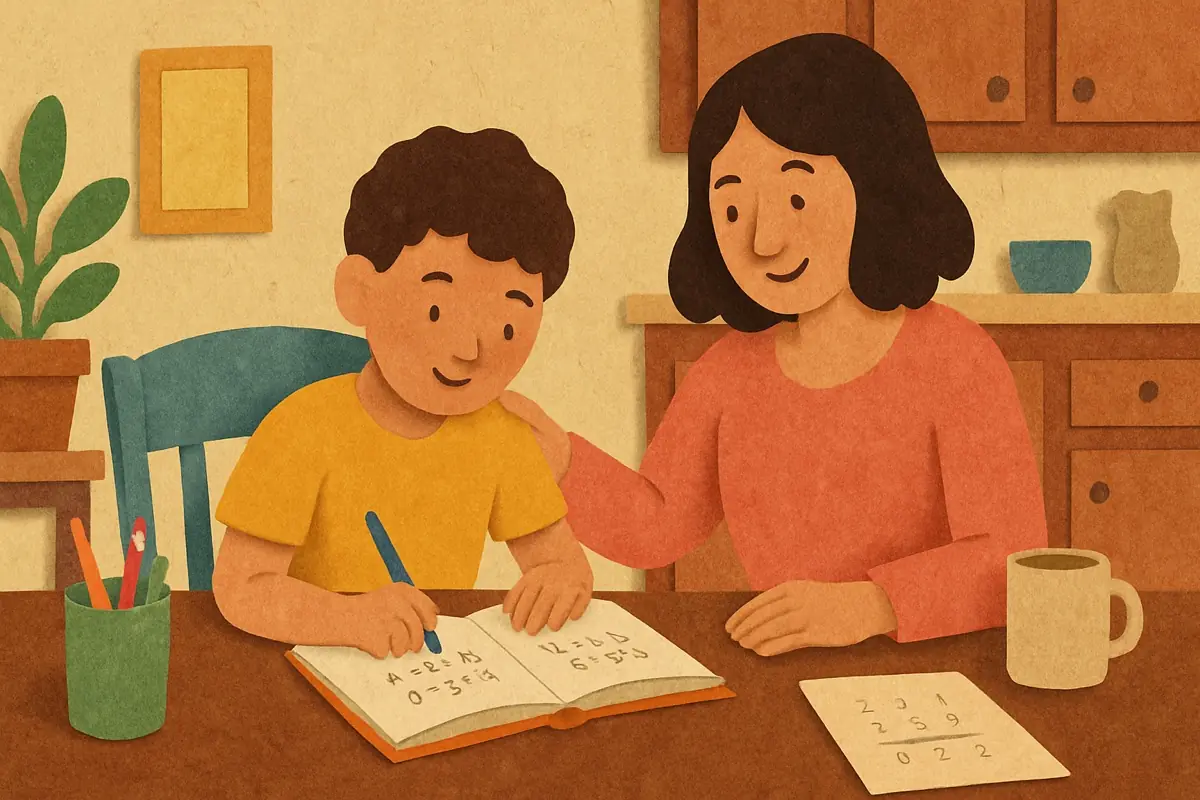
The fight was never really about the worksheet
A mom once told me her nightly homework battle with her third grader lasted longer than the homework itself. Twenty minutes of math, forty minutes of arguing about doing the twenty minutes of math. When I asked where he did it, she said "wherever, usually the couch, sometimes his bed, sometimes the kitchen while I'm cooking." There was the problem, sitting right in the answer. He didn't have a homework spot. He had a homework everywhere, which is the same as nowhere.
The best homework setup at home isn't about a fancy desk or matching supplies. It's about removing the small frictions and decisions that turn a ten-minute task into an hour-long standoff. After sixteen years of teaching, I've watched the same handful of fixes calm the storm in house after house. None of them cost much. Most of them are about subtraction, taking things away, not adding them.
Pick one spot and make it the spot
Kids run on habit and cues. When homework happens in the same place every day, that place starts doing some of the work for you. Sitting down there becomes the signal that it's time to focus, the way your own body knows to wind down when you get into bed. Bounce a kid around from couch to bed to kitchen and their brain never gets that cue, so every session starts cold, with a fresh negotiation.
The spot doesn't need to be a dedicated room. A specific chair at the kitchen table counts. The corner of a desk counts. What matters is that it's the same one, it has a hard flat surface, and it's not the bed and not the couch. Soft furniture tells the body to relax, which is the exact opposite of what you're asking for. I've seen more homework die on a comfy couch than anywhere else.
Strip the spot down
Once you've picked the place, take things off of it. This is the step parents skip and the one that matters most. A kid trying to do subtraction with a tablet, three toys, and a snarl of markers in reach isn't going to do much subtraction.
- Remove the screens that aren't the homework. If the assignment is on paper, the tablet and phone go in another room. Out of sight, not just face down. A visible screen is a running invitation to check it, and kids will take that invitation forty times an hour.
- Clear the surface to only what's needed. Pencil, eraser, the assignment, and whatever specific tool the work calls for. That's it. A cluttered table is a cluttered head.
- Keep supplies within arm's reach. Nothing breaks focus like getting up to hunt for a sharpener. A little cup or box that lives at the spot, stocked with pencils, an eraser, and a sharpener, kills a dozen "I need to go get" escapes before they start.
- Handle the noise. A younger sibling running a toy fire truck past the table every ninety seconds will end any hope of focus. If you can't get quiet, get distance.
The goal is that when your kid sits down, there is nothing to do but the homework and nothing to reach for but the tools. You've removed the exits.
Nail the timing
Where matters, but when matters just as much. The single most common mistake I see is homework right after school, when a kid is fried and hungry and has been holding it together in a classroom for six hours. That's a recipe for a meltdown, and the meltdown isn't defiance, it's an empty tank.
Give a real break first. A snack, some running around outside, twenty minutes of decompression. Then homework, before the evening slides too late and everyone's tired again. Find your kid's window and then protect it. Same time, same place, every day. Consistency turns homework from a nightly decision, which invites a nightly argument, into a fixed part of the day, like brushing teeth. You don't renegotiate brushing teeth. That's the energy you want.
Build the routine, then get out of the way
A routine is just a sequence a kid can predict. When they know exactly what happens, the resistance drops, because there's nothing left to argue about. A simple one that works:
- Snack and break when they get home.
- At the set time, go to the spot and get out the one assignment.
- Work in a focused stretch. For younger kids that's ten to fifteen minutes, and yes, that's plenty. A first grader cannot focus for an hour and shouldn't be asked to.
- A short break if there's more, then finish.
- Homework goes straight into the backpack when it's done, so it isn't lost by morning.
Then here's the hard part for us grownups. Once they're working, back off. Hovering and correcting every line teaches a kid they can't do it without you standing there. Be nearby for real questions, but let them struggle a little. Struggling productively is how the math actually sinks in, and a kid who solves the hard one alone gets a shot of confidence you can't hand them.
Let progress be the reward, not the escape
Watch what your kid is working toward. If the only goal is "get it over with so I can have the tablet," homework becomes a toll to pay on the way to something better, and they'll do it as fast and as thoughtlessly as they can get away with. That's grinding, and grinding doesn't teach.
You want the payoff tied to real progress instead. Notice when they actually understood something, not just when they finished. "You figured out regrouping tonight, that was tricky last week" lands differently than "okay you're done, go play." One says the work meant something. The other says the work was just an obstacle. Screen time and treats are fine as rewards, but tie them to genuine effort and real learning, not to simply enduring the clock.
The quiet payoff
The mom with the forty-minute argument moved her son to the kitchen table, cleared everything off it but a pencil cup, and put homework after a snack and some yard time instead of the second he walked in. The battle didn't vanish overnight. But within two weeks the fight was down to a grumble, and the homework was taking twenty minutes because it was finally just twenty minutes of homework. The setup did what nagging never could. Fix the spot and the timing first, and you'll be amazed how much of the fight was never really about the math at all.