What to Do When Your Kid Reads the Directions Wrong Every Time
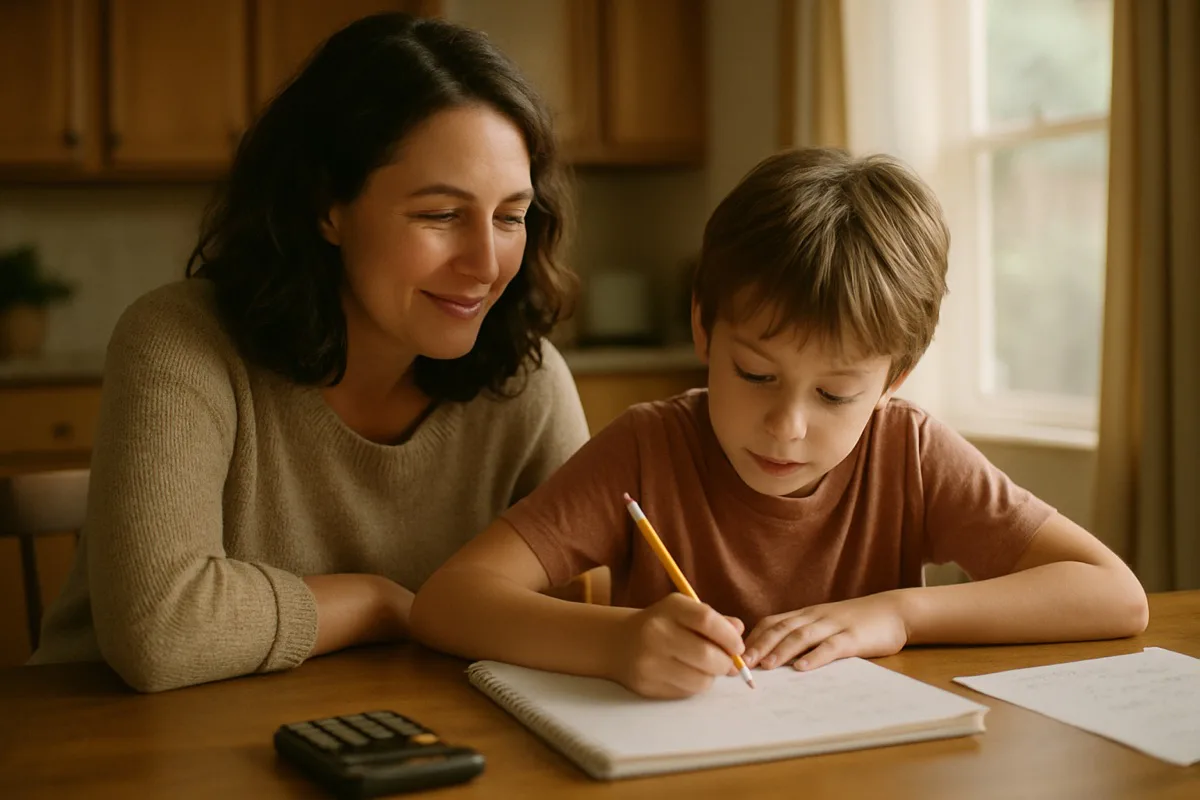
Here's a scene I've watched a hundred times. A kid does a whole page of subtraction beautifully. Every borrow, every regroup, clean work. Then you get to the bottom and see the directions said "round each answer to the nearest ten," and he rounded nothing. The math was perfect. He just never read the top of the page. When a child misreads math directions like this over and over, parents usually assume the problem is math. It almost never is.
This is one of the most common things I deal with, and it's maddening precisely because the kid clearly can do the work. He's not confused. He's not behind. He solved the wrong problem correctly, which somehow feels worse than getting it plain wrong. Before you can fix it, you have to figure out which kind of misreading you're dealing with, because there are a few, and they need different things.
Is it reading, math, or speed?
These look identical on the page. A wrong answer is a wrong answer. But the cause changes what you do about it.
- A reading problem. The kid genuinely can't decode a word in the directions, or the sentence structure loses them. "Which number is three less than the sum" is a lot of words in a row. If reading is hard, math directions are extra hard, because they pack a lot of meaning into few words.
- A math-vocabulary problem. The kid can read the words fine but doesn't know that "product" means multiply, or "difference" means subtract, or "how many more" means find the gap. This is enormously common and totally fixable.
- A speed problem. The kid can read it and knows the words but skips the directions entirely because he's rushing to the numbers. This is the most common one by far, and it's a habit, not a deficit.
You can usually tell which by sitting next to him and asking him to read the directions out loud, then tell you in his own words what the problem wants. If he can't read it, it's reading. If he reads it fine but explains it wrong, it's vocabulary. If he reads it and explains it perfectly but had ignored it thirty seconds ago, it's speed.
The rushing kind, and how to slow it
Most kids who blow past directions are chasing the feeling of being done. Finishing feels good. Reading feels like a speed bump between them and finishing. So they skip it.
The fix that works best in my classroom is embarrassingly simple. Before touching the numbers, the kid underlines the direction words that tell you what to do. Circle "round." Underline "estimate." Box "how many more." It slows the hand down for two seconds, which is exactly long enough for the brain to register what's actually being asked. I've turned kids around with nothing but a pencil and this one habit.
Another one: have him say what the problem wants before he solves it. Out loud, in his own words. "This one wants me to find how many are left after she gives some away." If he can say it, he'll do it. If he can't say it, he was about to guess, and you just caught it before it cost him.
And when he does rush and gets it wrong, resist the urge to point at the answer and correct it. Instead point at the directions and say "read me the top again." Let him find the mismatch himself. That moment where his face changes because he sees what he missed is worth more than you telling him ten times.
The vocabulary kind
If it turns out he doesn't know that "sum" means add, no amount of slowing down will help, because he's reading carefully and still heading the wrong way. This one you fix by building the vocabulary directly.
Make a running list on the fridge or the inside of his math folder. Sum means add. Difference means subtract. Product means multiply. Quotient means divide. "In all" and "altogether" usually mean add. "How many more" and "how many fewer" mean find the difference. Keep it short and add to it as new words show up.
Then, and this matters, use those words when you talk about ordinary things. "What's the difference between your allowance and your brother's?" "If we buy three packs of six, what's the product?" The words stop being test words and start being real words. A kid who hears "difference" at dinner won't panic when it shows up on a worksheet.
Build the habit before the pressure
The reason this is worth fixing now, in elementary school, is that word problems only get wordier. Fourth grade word problems are novellas compared to first grade, and a kid who never learned to read the directions carefully hits a wall exactly when the reading load spikes. Fix the habit while the problems are still short.
Practice this on purpose, not just when it goes wrong. A few problems a day where the whole point is reading the directions, not the arithmetic. Give him a problem, cover the numbers, and ask what it's asking. He's not even doing math. He's just practicing the part he keeps skipping. Ten minutes of that beats an hour of redoing wrong pages.
Keep the stakes low while you build it. If every misread direction turns into a lecture, he'll get anxious, and anxious kids rush more, not less, which is the exact thing you're trying to stop. When you reward the practice, tie it to careful, correct thinking rather than to how fast he clears the page. A kid rewarded for speed learns to go faster and read even less. That was one of the things my husband and I were careful about when we built our own math app, keeping the rewards pointed at getting it right for real, not at racing.
The subtraction kid who never rounded? We spent one week doing nothing but reading directions out loud before solving. That's it. By the end he was catching the "round to the nearest ten" himself, sometimes with a little groan because he saw it coming. The groan was the sign it was working. He was reading the top of the page.