Why Your Fluent Reader Might Still Count on Fingers, and When to Worry
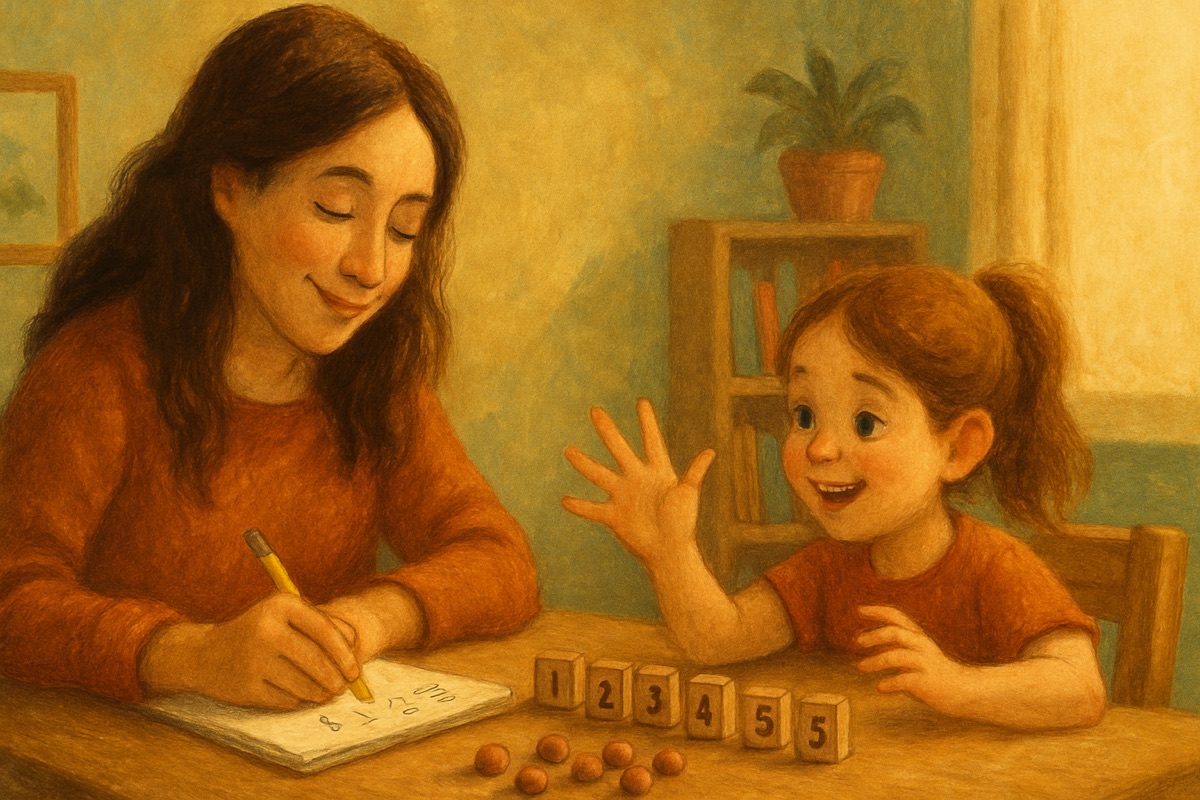
A dad stopped me at pickup last spring, genuinely puzzled. His daughter was reading two grades ahead, plowing through thick chapter books, and yet she still counted on her fingers to figure out six plus five. It did not add up to him. How could a kid that sharp with words be stuck on baby math?
I hear a version of this all the time, and it deserves a real answer. When a child still counts on fingers well past the point you expected, it is easy to read it as a red flag or a sign the reading brain and the math brain got wired unevenly. Usually it is neither. But there is a line where it stops being fine, and knowing where that line sits is the whole point.
Reading and math are not the same engine
The dad's assumption, reasonable as it sounds, is that being smart is one general thing. It is not. Reading and math lean on different systems, and they develop on their own clocks. A kid can absorb language like a sponge and still need more time to build the number sense that makes facts automatic. One does not predict the other nearly as much as parents expect.
Reading also gets a lot more airtime. Most families read to their kids every night for years. That is thousands of hours of practice before school even starts. Number talk at home is usually a fraction of that. So a strong reader who is slower on facts is often just a kid who got way more reps in one area than the other. That gap is about practice, not wiring.
Finger counting is a stage, not a defect
Here is what I tell worried parents first: counting on fingers is a normal, healthy step, not a problem to stamp out. It is how young kids bridge from counting real objects to holding numbers in their heads. The fingers are a visible, reliable tool, and using them means the child understands what the numbers mean, which is exactly what you want.
The goal is not to ban fingers. The goal is for facts to slowly become automatic, so the child reaches for memory before they reach for their hands. That shift happens gradually, and it happens at different ages for different kids. A first grader counting fingers for six plus five is right on track. A second grader doing it for the small facts is common and usually fine. Somewhere in there, for most kids, the everyday facts start to just come.
What you do not want to do is shame it. A kid who gets told to stop counting on their fingers before they are ready does not suddenly know the facts. They just hide the counting, do it under the desk, and get slower and more anxious. Forcing the tool away does not build the memory underneath it.
The point where it is worth a closer look
So when do you actually pay attention? Watch for a cluster of these, not any single one:
- By the end of second grade or into third, your child still counts every single small fact, like three plus four, with no facts coming automatically at all.
- The counting is slow and effortful, and they often lose track and land on the wrong answer even with the fingers.
- They count up for everything, including things they have practiced a lot, with no sign of it getting faster over months.
- It comes packaged with other struggles: trouble telling which of two numbers is bigger, mixing up which way to count, real confusion about what numbers mean rather than just slow recall.
One of those on its own is usually just a kid who needs more practice. Several of them together, holding steady with no improvement over a full school year, is the point where I would talk to the teacher and ask whether a closer look makes sense. Persistent, effortful finger counting is one of the things we watch for when we screen for deeper number struggles, so it is a fair question to raise, not an alarm to panic over.
How to help without a fight
For the far more common case, the strong reader who just needs more number reps, the fix is not drills that punish the finger counting. It is gentle, regular practice that builds the facts into memory.
Play with the ten-friends, the pairs that make ten, because those unlock a huge amount of mental math. Six and four, seven and three, eight and two. Once a kid owns those, six plus five becomes "six plus four is ten, plus one more is eleven," and the fingers quietly retire on their own. Work with real objects too. Dried beans, buttons, the coins in your pocket. Building six plus five physically a few times does more than a page of worksheets.
Keep it short and steady, five or ten minutes, most days. And aim for real understanding over speed. A kid who gets why the facts work will land on automatic recall on their own schedule. A kid drilled only for speed, before the understanding is there, tends to fall back on the fingers the second the pressure lifts. That is the difference between practice that sticks and practice that just fills time.
The reassuring part
The dad's daughter, the chapter-book reader, was completely fine. We played a few ten-friends games, her teacher wove more number talk into the day, and by fall the finger counting had mostly faded on its own. She was never behind. She just needed the number reps to catch up to the reading reps, and once they did, the facts came.
If your fluent reader still counts on fingers, take a breath before you worry. Look at the whole picture, over months, not one frustrating homework night. Most of the time you are watching a normal stage that is a little slow to finish, and a little steady practice is all it needs to close.