Division Facts Are Just Multiplication in Disguise, and Kids Should Know That
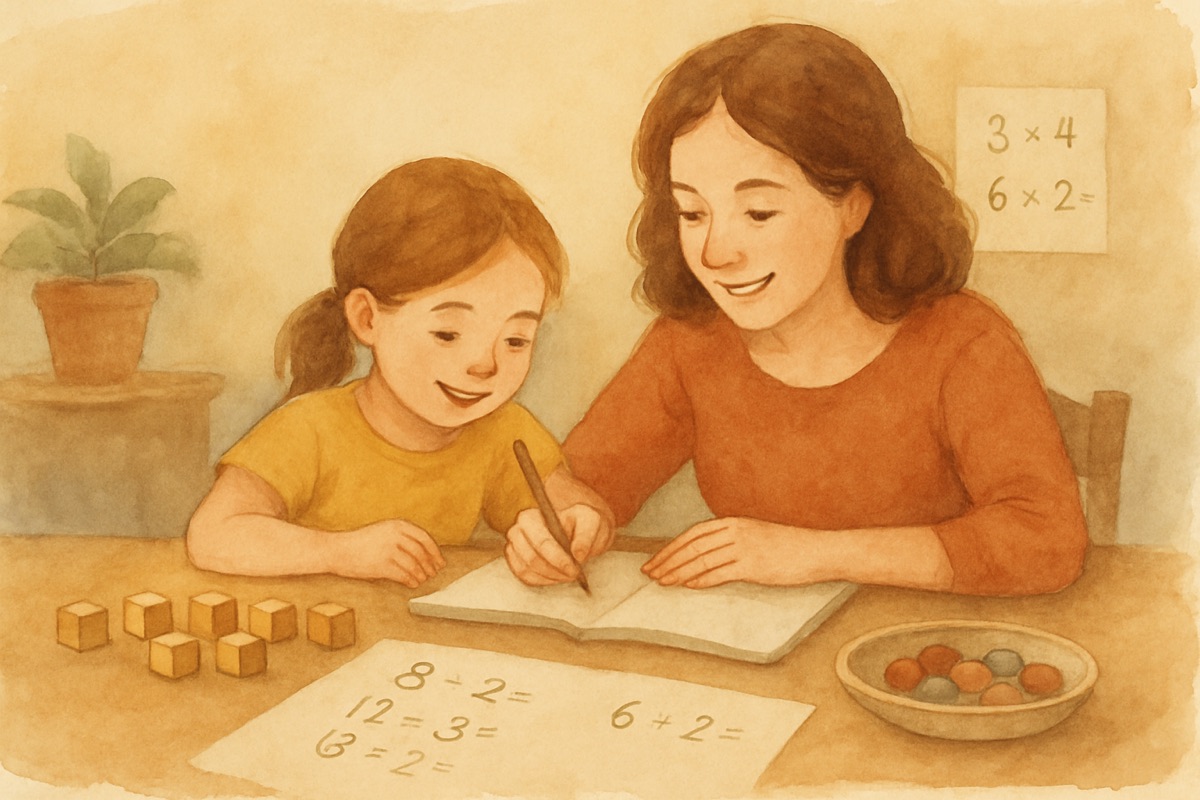
A girl in my class groaned when I wrote "56 ÷ 8" on the board. Loudly. She'd made her peace with multiplication over the fall, put in the work, and now here was a whole new operation to be scared of. So I asked her one question. "What times eight gives you fifty-six?" She said seven almost instantly. I told her she'd just done division. She looked genuinely annoyed that it had been that simple.
That's the thing kids don't get told clearly enough. Division isn't a new mountain. It's the same mountain, walked backward. If you want to teach division facts using multiplication, you're not teaching a second skill on top of the first. You're showing a kid that the facts they already fought for cover both operations at once. Do that well, and division stops being a source of dread.
Why division feels scary when it isn't
Multiplication gets taught first, drilled hard, celebrated. Then division shows up months later with new symbols and new vocabulary, dividend and divisor and quotient, and it gets presented like a fresh subject. Kids reasonably conclude it's a fresh subject, and one that comes with long division looming behind it.
But underneath, 56 ÷ 8 is asking the exact question the kid already answered when they learned 7 × 8 = 56. The division problem is just, "one of the numbers in that multiplication fact is hidden. Find it." A child who has forty multiplication facts locked in already knows forty division facts. Nobody told them. That's the reframe worth handing over.
Fact families do the heavy lifting
The cleanest way to make this click is fact families. A fact family is a small group of numbers that make each other, written out in all their forms. Take 6, 7, and 42:
- 6 × 7 = 42
- 7 × 6 = 42
- 42 ÷ 6 = 7
- 42 ÷ 7 = 6
Four facts, one relationship. Once a kid sees that these are the same three numbers rearranged, division stops looking like new information. Write out a few of these on paper together and let your child fill in the missing forms. When they've done 6, 7, and 42, hand them 8, 9, and 72 and let them build the whole family themselves.
I keep a stack of these for my students, and the moment I love is when a kid finishes the two multiplication lines and then goes, "oh, I already know the division ones, they're just backward." Yes. Exactly that. That's the whole idea and they found it themselves.
Teach the "what times" question
The practical trick that turns this into fluency is a question your kid can ask on any division problem. Faced with something like 63 ÷ 9, they shouldn't reach for repeated subtraction or start drawing groups. They should ask: "what times nine gives me sixty-three?"
That question routes the problem straight into the multiplication facts they've already memorized. The answer, seven, is right there. Practice this out loud until it's automatic. Point at a division problem, and instead of "solve it," say "what times." The kid learns to translate division into a multiplication question by reflex, and once that reflex is built, division facts come as fast as multiplication facts do.
This matters more than it looks, because that reflex is exactly what long division leans on later. A kid who can instantly find "what times seven gets me closest to fifty" sails through the estimation step that trips everyone else up.
Practice the two together, not apart
A mistake I see is treating multiplication and division as separate units with a wall between them. Kids do a month of multiplication, take a test, move on, then do a month of division as if the first month never happened. That wastes the connection.
Better to mix them once the multiplication facts are decent. When you're practicing, flip between the two forms:
- Ask 8 × 6, then right after, ask 48 ÷ 6
- Show a fact family and cover a different number each time
- Use the same set of facts for both, so the kid feels them as one thing
You're not looking for volume here. Grinding through a hundred mixed problems isn't the point, and it usually just burns kids out. A short daily set that forces the brain to switch between multiplying and dividing the same numbers builds the real understanding, that these two operations are one relationship seen from two sides.
When the multiplication isn't solid yet
Here's the honest caveat. This whole approach rests on the multiplication facts being genuinely known. If a kid doesn't actually have 7 × 8 memorized, then "what times eight gives fifty-six" is not a shortcut. It's just a second problem they can't do.
So if division is falling apart, check the layer underneath before you drill division harder. Nine times out of ten, shaky division is really shaky multiplication wearing a costume. Go back, get the tables automatic, and division tends to repair itself, because you were never missing a division skill. You were missing the multiplication it's built on.
The girl who groaned at 56 ÷ 8 spent the rest of that year quietly smug about division, because she'd decided it was a trick and she was in on it. That's the attitude you want. Not a kid bracing for a new hard thing, but a kid who looks at a division problem and thinks, I already know this one, it's just hiding.