Reading the Reviews: How to Read App Store Ratings Without Getting Fooled
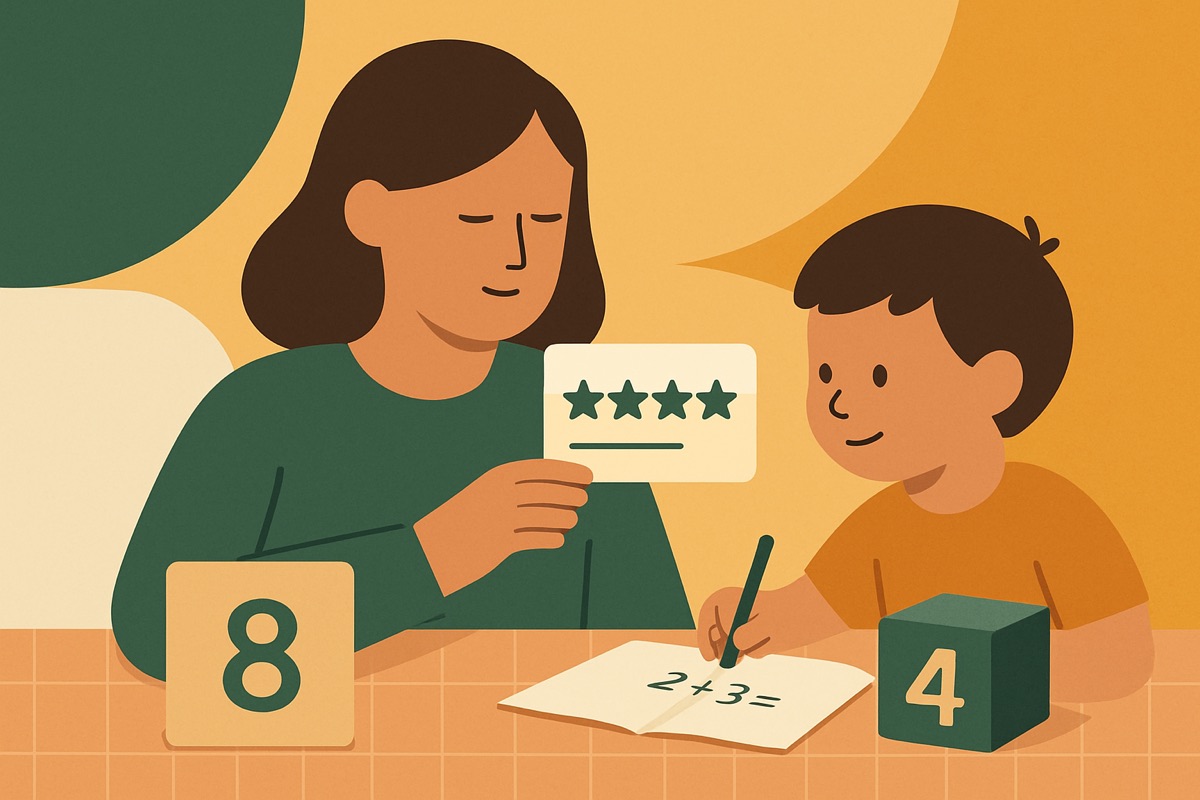
The 4.8 stars are not what you think they are
A parent I know downloaded a math app with 4.8 stars and 60,000 ratings. Her daughter used it twice and quit. When we looked closer, most of those glowing ratings had nothing to do with whether kids learned anything. They came from a pop-up that fired right after a child unlocked a shiny reward, at the exact moment they felt happy. That is a good time to ask for five stars. It is a terrible time to ask whether the app actually taught long division.
I have shipped software for fifteen years and I build a math app for my own kids, so I have seen how this machinery works from the inside. Knowing how to read app store reviews for kids apps is less about reading faster and more about knowing which numbers are real signals and which are theater.
How the rating number gets made
The star average on the store is not a survey of thoughtful parents. It is the output of a prompt, and the prompt is engineered.
Apple and Google both let developers trigger a rating request in code. So the studio decides the moment you get asked. A well-run team asks after a win. They wait until a kid finishes a level, earns a badge, or hits a streak, then the little box slides up. You are not rating the curriculum. You are rating the dopamine hit that just happened.
A few things follow from that:
- High rating counts often mean the app is good at picking the moment to ask, not that it is good at teaching.
- The written reviews are a self-selected crowd: people delighted enough or angry enough to type. The quiet middle, the kids who just drifted away, leave no trace.
- A brand new app with 30 reviews can be far more honest than a polished one with 30,000, because nobody has optimized the prompt yet.
None of this is illegal or even shady, exactly. It is just product design. But it means the top-line number tells you how the app feels in the first ten minutes, not what it does over ten weeks.
Read the one-star and three-star reviews first
The five-star reviews are mostly noise. "My son loves it!!" tells you the app is fun, which almost every one of them is. Fun is the easy part.
Go straight to the one-star and three-star reviews. That is where the specific complaints live, and specific is what you want. There is a real difference between these two:
- "Boring, uninstalled." (useless, tells you nothing about your kid)
- "After the free week it locked every topic behind a subscription, and the 'free' version just repeats twenty addition problems forever." (extremely useful)
The second one is a fact you can act on. Sort by most recent, too. An app that had a great year in 2023 may have been sold, stuffed with ads, or gutted by a subscription change since then. Reviews from eight months ago describe a different app than the one you would download today.
I also scan for repeated words. If nine separate people say the word "ads," that is not a coincidence, that is the actual experience. One angry reviewer can be a bad day. A pattern is the truth.
Spot the reviews that were never written by a parent
Fake and incentivized reviews are common enough that you should assume some are in the pile. You do not need to be a detective. You just need to recognize the smell.
Clusters of five-star reviews posted within a day or two of each other, all short, all vague, all praising the app in the same cheerful register, are usually bought or seeded. Real parent reviews are lumpy. They ramble. They mention a specific kid, a specific grade, a specific frustration. "My 7 year old was scared of subtraction and now she asks to play, though I wish the timer were optional" reads like a human because it is one. "Best educational app ever, highly recommend, amazing for learning!" reads like a template because it probably is.
Another tell: reviews that praise the price or the subscription. Real parents almost never thank a company for charging them. When a review sounds like it is doing the marketing team's job, treat it that way.
The signals that actually predict a good fit
After you strip out the theater, a handful of things genuinely help you judge a kids app:
- Does it teach or does it just quiz? Look for reviews that mention explanations, worked examples, or "showing the steps." An app that only tests what a kid already knows is a flashcard deck with a soundtrack. My own bias, and the whole reason I built Math Prizes the way I did, is that understanding has to come before the drill, and rewards should follow real progress instead of just time spent tapping.
- What happens after the free trial? The most honest reviews spell out exactly what you keep and what you lose.
- Can a parent see what the kid actually did? Apps with a real parent view tend to be built by people who expect adults to pay attention.
- How often does it ask for money mid-play? If reviewers mention pop-ups interrupting a lesson, that is the business model talking, and your kid will feel it.
Ratings are a starting point, not a verdict. The number gets you a shortlist. The specific, recent, lumpy human reviews get you the truth. And nothing beats sitting next to your kid for the first fifteen minutes and watching whether they are learning something or just collecting stickers. You will know the difference within one sitting, which is faster than any five-star average will ever tell you.