Multiplication facts that finally stick (without flashcard misery)
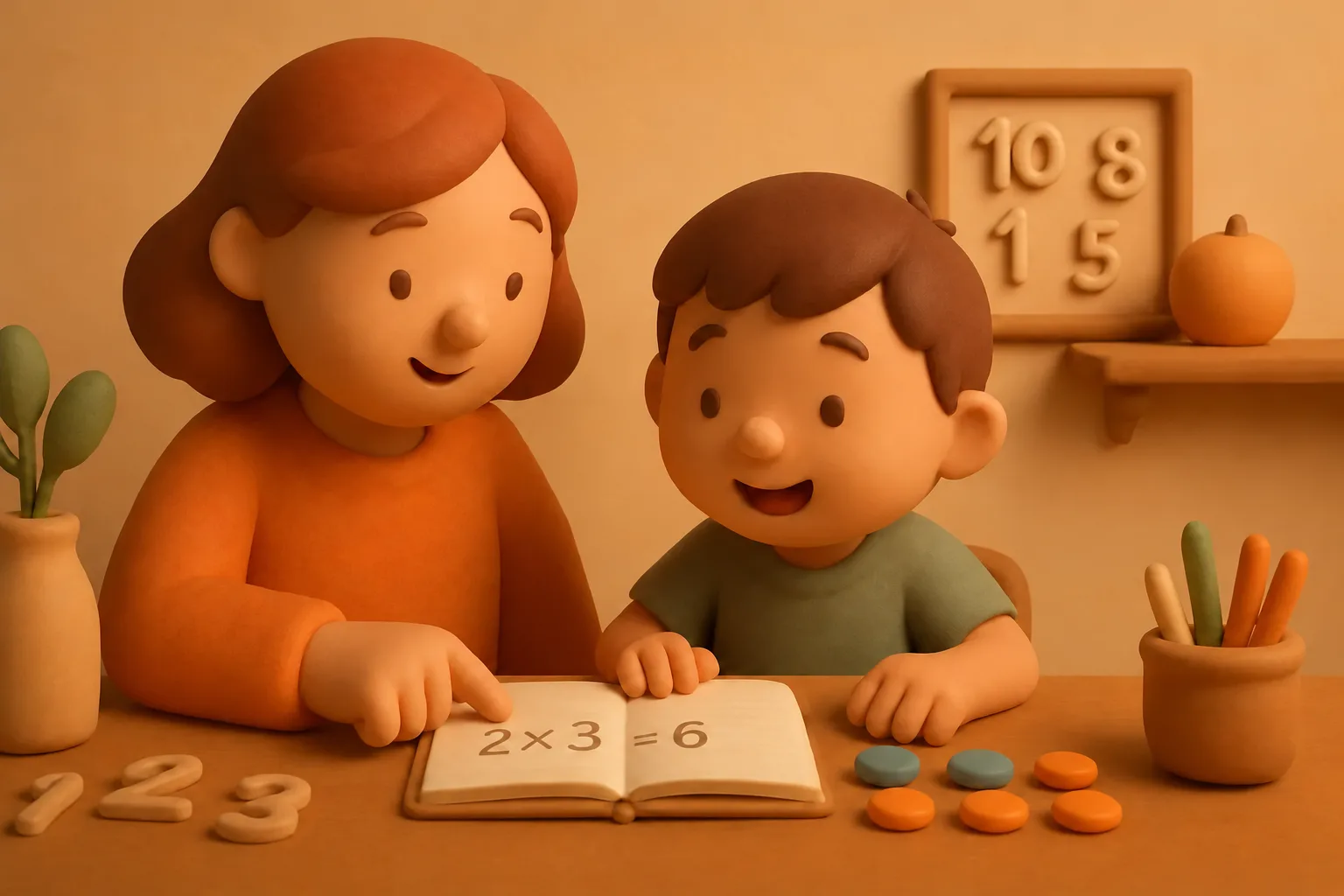
Every year a parent tells me their kid "just cannot memorize the times tables." Almost every time, the problem is not the kid and it is not their memory. It is that they are trying to memorize one hundred separate facts as if they were random, and they are doing it in long, joyless flashcard sessions that make the whole thing feel like punishment. There is a better way, and it is faster.
You are not learning one hundred facts
The times table looks like one hundred facts. It is really about a dozen you have to know cold, and the rest fall out of a few patterns. If a kid feels like they are staring down a hundred strangers, they give up. If they see that most of it is stuff they already have, they lean in. So teach the order, not the whole grid at once.
The order that works
Learn the easy facts first, then use them to reach the hard ones. This is exactly how I sequence it in class.
- Tens. Free. Count by ten. Done.
- Fives. Count by five, and notice they end in five or zero. Kids get these fast.
- Twos. Just doubling, which they already do with addition.
- Ones and zeros. A rule, not a memory job. Times one stays the same, times zero is nothing.
- Squares. Three times three, four times four, and so on. Kids like these because they feel special, and they anchor the middle of the table.
- Nines. Show them the finger trick or the pattern that the digits add to nine. It feels like a magic trick, so they remember it.
Count up what is left after all that. It is a handful: mostly the sixes, sevens, and eights times each other. That short list is the only part that needs real repetition, and now it feels doable instead of endless.
Build the hard ones from the easy ones
When a kid is stuck on a fact, do not just tell them the answer. Show them how to get to it from something they know. Six times seven feels hard. But five times seven is thirty five, and six times seven is just one more seven, so forty two. Four times eight is hard, but it is double of two times eight. This is not a crutch. This is what fluency actually is: knowing the facts, and being able to rebuild the ones you blank on. Kids who can do this stop panicking, because a forgotten fact is no longer a dead end.
Short and daily beats long and rare
Ten focused minutes a day will crush a forty minute session once a week, every time. Memory is built by frequent, spaced recall, not by marathons. A long session mostly teaches your kid that multiplication is exhausting.
So keep it short. Pick one fact family for the week. Practice it in tiny bursts: in the car, before dinner, on the way up the stairs. Mix in the ones they already know so the session feels mostly like winning. End before they are sick of it. Come back tomorrow.
Why timed drills can backfire
Speed has its place, but leading with the stopwatch is how you manufacture math anxiety. When a kid feels the clock, the part of their brain that does math gets crowded out by the part that panics, and they blank on facts they actually know. Build accuracy and confidence first with untimed practice. Bring in speed later, gently, as a game against their own past time rather than against the kid next to them.
Make it a game, or give it a reason
The facts that stick are the ones a kid practices willingly, and kids practice games. Roll two dice and multiply. Flip two cards and multiply. Play a quick round while dinner cooks. The skill hides inside the play, which is exactly where you want it.
When willing play is not enough on its own, a reward they care about carries them through the boring reps. That is how the ticket system in Math Prizes works for multiplication: correct facts earn tickets, tickets buy something real that you set. The point is not the app. The point is that a small, honest reason gets a kid to show up for the daily practice that actually builds the facts.
The routine, in one paragraph
Pick one fact family. Practice it in short bursts through the day, mixing in facts they already own. Teach them to rebuild a forgotten fact from a nearby one instead of freezing. Keep it untimed until it is accurate. Make it a game or give it a reason so tomorrow happens too. Move to the next family when this one is easy. That is it. No flashcard misery, and it works faster than the marathon ever did.