Screen time that is actually productive: how to tell a learning app from a slot machine
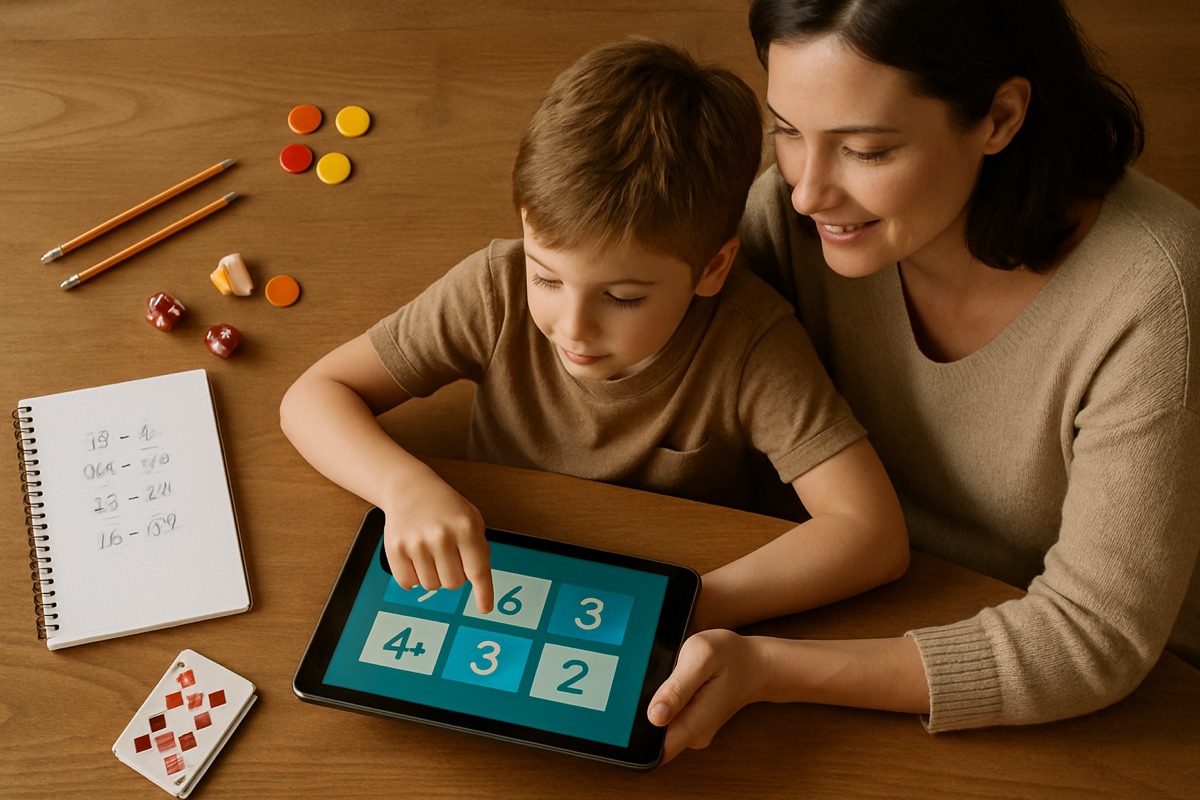
I have written software for fifteen years, and I build a kids math app. So I want to be honest about something the industry does not say out loud: a lot of "educational" apps are built by the same playbook as slot machines. The goal of that playbook is not to teach your kid. It is to keep your kid tapping. Once you can see the difference, you can tell in about five minutes whether an app is worth your child's time.
The two goals an app can have
Every app is built toward a goal, and the goal shapes every decision inside it. A learning app is built so your kid ends the session knowing something they did not know before. An attention app is built so your kid keeps going, and keeps coming back, because more time equals more ad views or more in-app purchases. Both can look colorful and fun on the surface. Underneath, they are opposites.
You do not have to guess which one you are holding. The design gives it away.
The tells of a slot machine
- Rewards for tapping, not for thinking. Coins and confetti rain down no matter what the kid actually did. If the celebration is the same for a right answer, a wrong answer, and random screen taps, the app is training the tap, not the skill.
- Ads between the learning. A video ad after every couple of problems means the content is bait and the ads are the product. Your kid is the thing being sold.
- Pay to win, aimed at your kid. Locked characters, gems, and "upgrade to keep your streak" pop ups pointed straight at a seven year old. A tool built to teach does not need to upsell a child.
- Endless streaks and pressure. Streaks that punish a kid for missing a day are engagement tricks borrowed from adult apps. They create anxiety, not learning.
- Easy forever. If the app never gets harder as your kid improves, it is not adapting to them. It is just keeping them comfortable enough to stay.
The tells of a real learning tool
- The reward follows the learning. Something good happens when the kid gets it right, and it is quieter or absent when they do not. The feedback teaches, it does not just fire dopamine.
- It gets harder as they get better. Good practice lives just past what a kid can already do. An app that adjusts to your child is trying to teach them.
- Mistakes are handled well. A wrong answer leads to a hint, a second try, or a small reteach, not just a red X and a new question. What happens after a mistake tells you whether the app cares if your kid learns.
- The adult is in control. Real limits, real settings, and no store trying to sell to the child. A tool for families gives the parent the wheel.
- You can tell what your kid actually did. If the app can show you accuracy by topic, not just "level 12," someone built it to teach and expected you to check.
The five minute test
Two questions cut through all of it. First, sit with your kid for one session and watch the screen. Are the rewards landing on correct thinking, or on any tap at all? Second, when it is over, ask your kid: "what did that make you do?" If the answer is about the math ("I had to figure out the nines"), good. If the answer is about winning ("I got a hundred coins and a new pet"), the rewards are louder than the learning. That is the whole test.
Screen time is a quality question, not just a quantity one
Parents get handed a single number for screen time, as if a minute is a minute. It is not. Ten focused minutes on a tool that adapts to your kid and rewards real thinking is worth more than an hour of a game farming their attention. The pediatric guidance on total limits still matters, especially around sleep and outdoor time. But once your kid is on a screen, what the screen is doing to them matters at least as much as how long.
So spend your limits on purpose. Put the good tools inside the time you allow, and cut the ones that failed the five minute test. That is what makes screen time productive: not a smaller number, but a better use of the number you pick.
Where I land
I build one of these apps, so treat this as a builder telling you how the sausage is made rather than a neutral referee. We built Math Prizes to pass its own test: the reward follows correct math, the practice gets harder as the kid improves, there are no ads, nothing is sold to your child, and you can see exactly what they practiced. You do not have to take my word for it. Run the five minute test on whatever your kid is using, including ours. The apps worth keeping are the ones that pass it.