Flashcards Done Wrong vs. Done Well: A Teacher's Rules
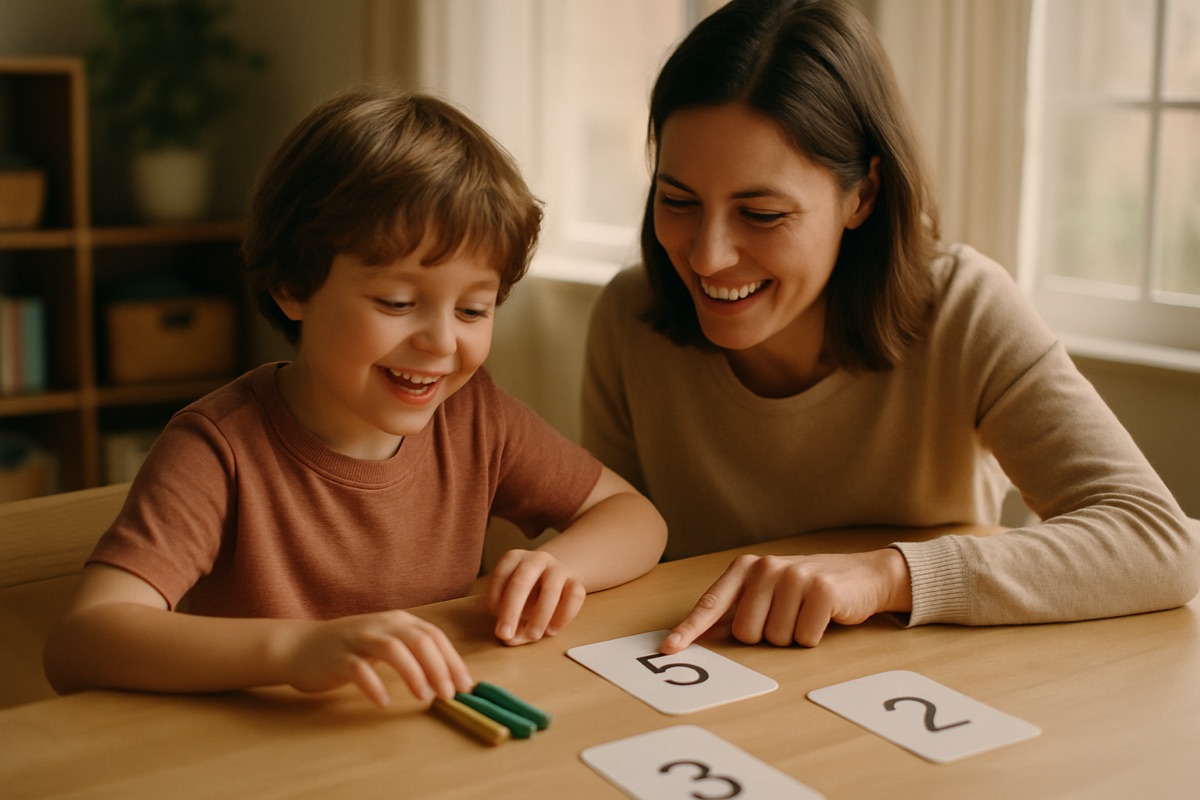
I once watched a dad quiz his daughter with a stack of 100 multiplication flashcards at pickup. He held up 7 times 8, she froze, he sighed, she teared up, and he flipped to the next card while she was still stuck on the last one. Twenty minutes of that. By the end she wasn't learning multiplication. She was learning that flashcards mean she's about to feel dumb in front of Dad.
That's the version of flashcards that gives them a bad name. But the tool itself is fine. Knowing how to use math flashcards effectively is mostly about avoiding a handful of mistakes almost everyone makes.
Where flashcards go wrong
The classic errors are easy to spot once you know them, because they all come from treating flashcards like a test instead of like practice.
- Too many cards at once. A stack of 100 tells a kid "you have a mountain to climb." Nobody feels good staring up at a mountain.
- Going too fast. Flipping to the next card while the kid is still thinking teaches panic, not recall.
- Mixing known and unknown randomly. If your kid already owns the 2s, quizzing them mixed in with the brutal 7s just wastes reps and hides where the real gaps are.
- Only ever asking the ones they miss. This turns the whole session into a highlight reel of failure.
- Doing it when everyone's fried. Right before dinner, tired and hungry, is the worst possible window.
The dad at pickup was doing four of those five at once. No wonder it hurt.
The small pile beats the big stack
Here's the single change that fixes most of it. Shrink the pile. I mean really shrink it. Pull out just the facts your kid does not yet know cold, and cap it around five to seven cards. That's the working set.
A stack of six feels beatable. A kid can hold six things in mind and actually watch himself get better at them across a week. Once one of those six becomes automatic, it graduates out of the pile and a new one comes in. The pile stays small forever, but the number of facts the kid owns keeps growing. It's a conveyor belt, not a mountain.
I do this with my own class. Each kid has a little rubber-banded set of "the ones I'm working on." Nobody carries the whole times table around. It's less scary and it makes the daily win visible.
Wait longer than feels comfortable
When you show a card and your kid doesn't answer instantly, the urge is to jump in or flip past. Don't. Count to five in your head. The pause is where the actual retrieval happens, and retrieval is the thing that builds the memory.
If they're still stuck after a real pause, don't just tell them the answer flat. Give a bridge. For 6 times 7, you might say "you know 6 times 6 is 36, so 6 times 7 is just one more group of 6." Now they're rebuilding the fact from something they know, which sticks far better than being handed the number.
And when they get it, move on cleanly. No big celebration, no "finally." Just "yep" and the next card. Calm and quick keeps the whole thing low-stakes.
Two minutes, most days
Fluency comes from short, frequent contact, not long grinding sessions. Two to three minutes with a small pile, most days of the week, beats a twenty-minute marathon on Sunday every time. The marathon just exhausts everyone and teaches the kid that flashcards are a punishment.
Pick a boring, reliable moment. In our house growing up it was the drive to school. For your family it might be right after they brush teeth, or while dinner's in the oven. Attach it to something that already happens and it stops being a battle you have to start from scratch each night.
A quick note on rewards, since a lot of families pair flashcards with a sticker chart or points. Tie the reward to a fact actually moving from the "working on" pile to the "know it" pile, not to how many minutes the kid sat there. You want them to feel the payoff for real recall, not for enduring the drill. Rewarding time-served just teaches kids to stall.
Make the kid the quizmaster sometimes
Flip the roles once or twice a week. Let your kid hold the cards and quiz you. Then miss a couple on purpose and let them correct you. Two things happen. They get to feel like the expert, which does more for confidence than any pep talk. And explaining why 8 times 8 is 64 forces them to actually know it, not just recognize it.
Younger kids especially love catching a parent being wrong. Lean into it. "Wait, is 7 times 6 really 48?" and let them pounce. It's the same practice, but now it's a game they're winning.
Where flashcards stop and understanding starts
One honest limit. Flashcards drill recall of facts a kid already understands. They're the reps after the concept clicks, not the way the concept clicks in the first place. If your kid genuinely doesn't get that 4 times 3 means four groups of three, no amount of flipping cards will fix that. They'll just memorize a sound with no meaning under it, and it'll collapse when the numbers get bigger.
So use flashcards for the last mile, the part where a known fact becomes automatic. Build the understanding first with objects, drawings, skip-counting, whatever makes it real. Then, and only then, do the small-pile, short-and-calm flashcard work to lock it in.
That daughter at pickup, for what it's worth, was totally capable. Her dad just needed to trade the stack of 100 for a stack of six and slow down. Last I heard, the two minutes in the car had replaced the twenty minutes of tears. Same tool, completely different night.