Word Problem Games That Take the Fear Out of Story Math
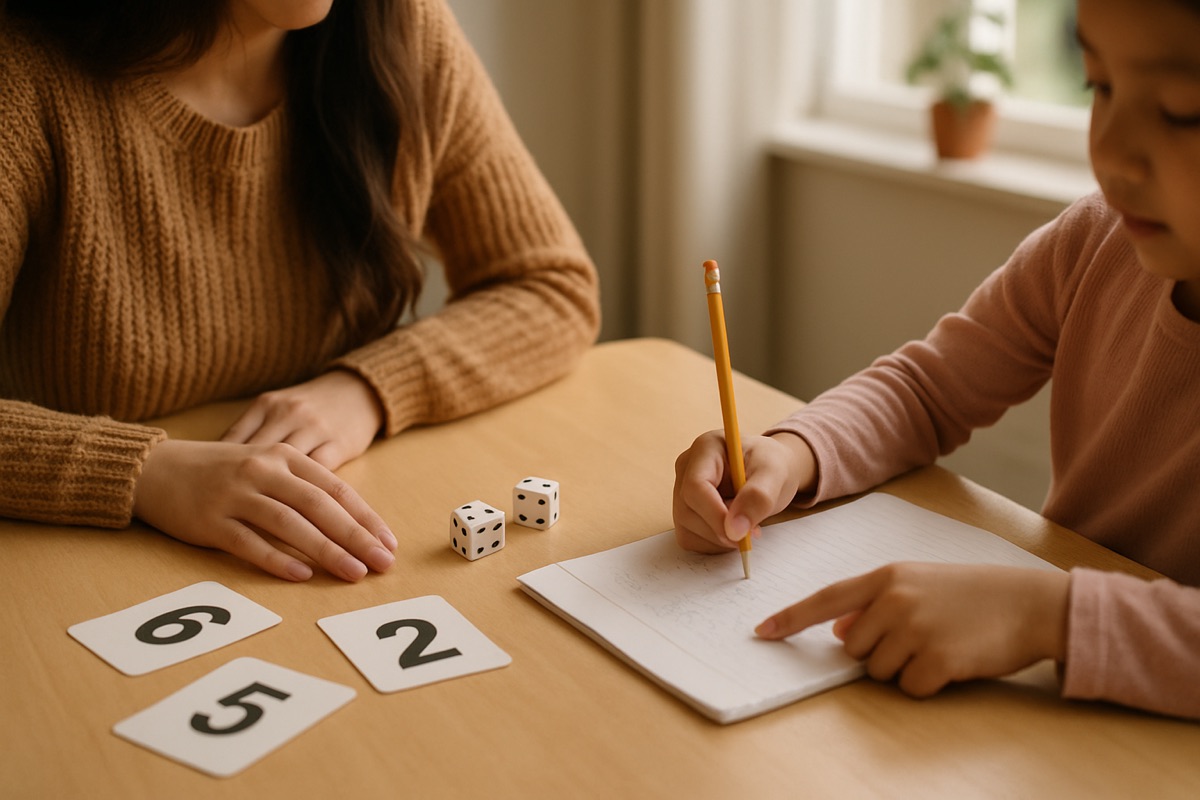
A third grader named Priya once put her pencil down the second she saw a word problem and said, "I can't do these." She could add and subtract just fine. She could tell me a story about her weekend for ten minutes straight. But put those two things in the same paragraph and she shut down. That freeze is the thing I see most, and it's exactly what good word problem games for kids are built to melt.
Story math scares kids because it asks them to do two hard things at once. Read carefully. Then decide what math to use. Most worksheets pile ten of these in a row and grade the results, which teaches a kid that word problems are a test they'll probably fail. Games flip that. When it's a game, a wrong turn is just part of playing, and kids will try things they'd never risk on a worksheet.
Why the freeze happens in the first place
The panic is almost never about the arithmetic. I've watched kids who can do the numbers in their head go blank the moment those numbers show up inside a sentence.
Here's what's actually going on:
- They read the whole problem as one blur instead of a little story with parts.
- They hunt for a keyword ("altogether" means add, right?) instead of picturing what's happening.
- They think there's one correct way to start, and they're terrified of picking wrong.
Once you name those three, the fix gets clearer. You want games that slow the reading down, that reward picturing the situation, and that make guessing safe.
Act it out with real stuff
The single best trick I know costs nothing. Grab objects around the house and turn the problem into a scene.
Say the problem is "You have 12 grapes and you eat 5. Then your brother gives you 4 more. How many now?" Put out 12 actual grapes on the counter. Eat five (kids love this part). Add four. Count what's left. Suddenly there's no story to decode, because the story is happening on the counter.
I do a version of this in class with cups and pennies, but at home the fridge and the junk drawer work better. Legos, socks, crackers, whatever's nearby. The point is that the child builds the problem with their hands before a single number gets written down. After a few weeks of this, most kids start picturing the scene automatically, even when there's nothing on the table.
Turn your kid into the problem writer
Solving story problems is one skill. Writing them is a completely different one, and it's the one that kills the fear fastest.
Give your kid a number sentence like 7 + 6 and ask them to invent a story that fits it. You'll get gems. "There were seven zombies and six more zombies came out of the swamp." Fine. That counts. When a kid writes their own word problems, they stop seeing them as traps somebody set for them and start seeing the machinery underneath. They realize the person writing the problem made choices, which means the problem isn't some fixed monster. It's just a story with numbers in it.
Make it a back-and-forth. You write one for them, they write one for you. Get the numbers a little wrong on purpose sometimes and let them catch you. Kids adore catching a grownup in a mistake, and catching a mistake means they read carefully.
Games that build the picturing muscle
A few structured games work well once your child has warmed up:
- Draw it, don't solve it. Read a problem out loud and the only job is to draw a picture of what's happening. No answer required. This separates understanding the situation from doing the math, which is where most kids get overwhelmed.
- The missing question. Give them a story with numbers but no question at the end. "Sam had 20 stickers and gave 8 to his friend." Then ask, what could we figure out from this? They come up with the question themselves, which forces them to see what the numbers are for.
- Estimate first, then check. Before solving, everyone guesses whether the answer will be big or small, and roughly how much. Being close feels great, and it teaches kids to sanity-check instead of trusting a random number they cranked out.
None of these are races. That matters. The moment you add a timer to story math, you bring the anxiety right back.
What to skip
Keyword lists are the big one. You've probably seen the chart: "in all" means add, "left" means subtract, and so on. It works until it doesn't, and it stops working around fourth grade when problems get written to trip up keyword hunters. A kid who relies on keywords never learned to picture the situation, so the first tricky problem knocks them flat. Skip the shortcut and build the real skill.
I'd also go easy on the timed drills for story problems specifically. Fact fluency can handle a stopwatch. Reading comprehension plus math planning cannot, at least not while a kid is still nervous. Speed comes on its own once the fear is gone.
If you use an app for practice, look for one that lets a kid work through a story at their own pace and gives credit for the thinking, not just the final number. That's the whole idea behind how we built Math Prizes, but honestly, the grapes on the counter do most of the work.
The shift you're looking for
You'll know it's working when your kid stops asking "is it plus or minus?" and starts telling you the story back in their own words. Priya got there. A few weeks of acting problems out with pennies, plus writing her own goofy zombie stories, and one afternoon she read a word problem, said "oh, so I need to take away," and just did it. No freeze. She didn't get faster overnight. She stopped being scared, and the speed followed. That's the order it goes in, every time.