When to Move From Understanding a Fact to Just Knowing It
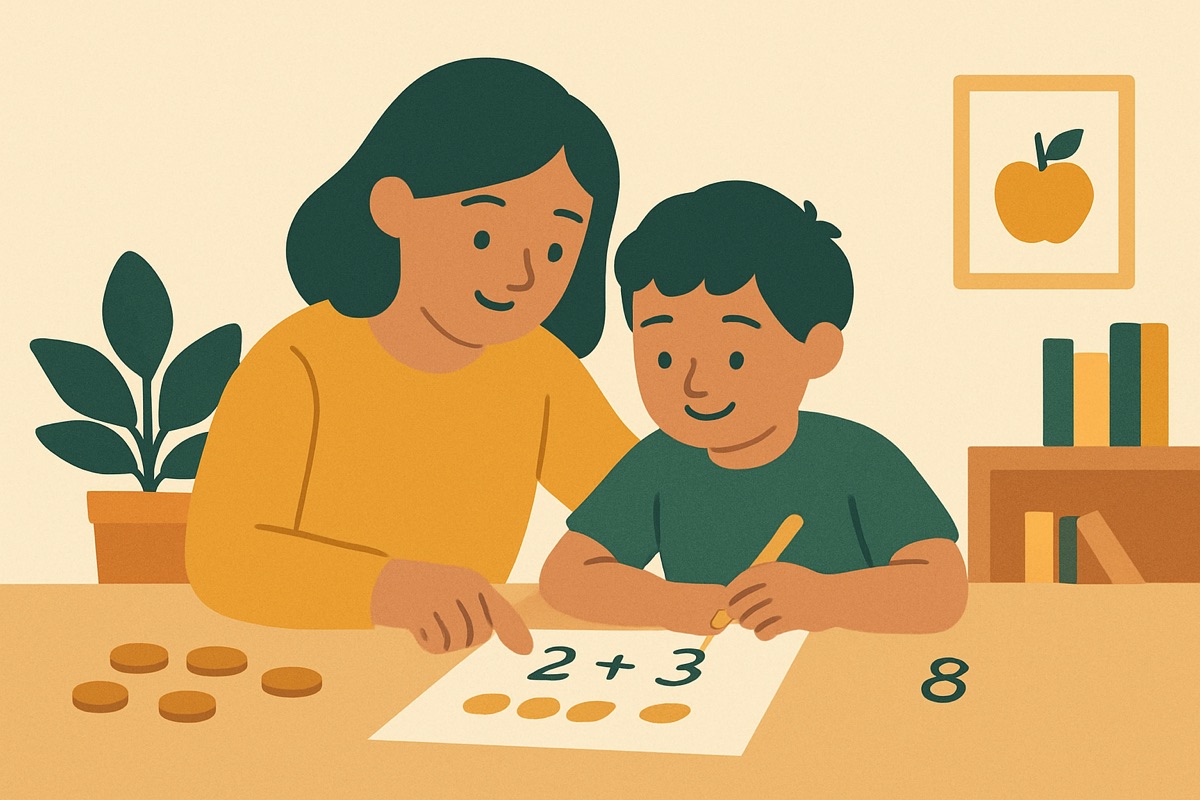
Here's a scene I've watched a hundred times. A fourth grader is doing a long multiplication problem, and every time she hits a basic fact like 6 times 7, she stops, stares at the ceiling, and counts it up in her head. By the time she gets the answer she's forgotten what the bigger problem was even asking. She understands multiplication perfectly. She just doesn't know her facts, and it's costing her the whole problem.
That's the crux of when to start memorizing math facts. It's not a date on a calendar. It's the point where a kid understands what a fact means but calculating it every single time has started to get in the way. Move too early and you're drilling something they don't grasp yet, which teaches them math is about memorizing nonsense. Move too late and they're the ceiling-starer, understanding fine and drowning anyway.
Understanding comes first, always
I want to be clear about the order, because this trips people up. A kid should never memorize a fact they don't understand. That's the mistake the old drill-and-kill approach made, and it's why so many adults my age can recite times tables but couldn't tell you what multiplication actually is.
Before you memorize that 6 times 7 is 42, you should know that it means six groups of seven, or seven groups of six, and you should be able to build it or draw it or count it out if you had to. That understanding is the anchor. Memorization without it is a phone number with no person attached. The kid can dial it but has no idea who picks up.
So the readiness question assumes the understanding is already there. If it isn't, you're not at the memorizing stage yet, no matter what grade the kid is in.
The signs a kid is ready
You're looking for a specific combination: they get it, and the slow calculating has become a bottleneck. Here's what that looks like in practice:
- They can explain what the fact means, or show it with objects, without hesitating.
- They're consistently getting the right answer, just slowly.
- They're counting on fingers or counting up for facts they've done dozens of times.
- The slow recall is interrupting bigger work. They lose their place in multi-step problems because a basic fact stole their attention.
- They're getting frustrated at their own pace, saying things like "I know this, why is it taking so long."
That last one is a great signal. When a kid is annoyed that something they understand is still slow, they're ripe for the switch to memorization. They want the speed. Now the practice feels like a tool instead of a punishment.
Rough grade markers, held loosely
Parents always want a grade, so here are the ballpark ones, with the reminder that kids vary a lot and the signs above matter more than any of this.
Addition and subtraction facts to 20 usually settle into recall somewhere in first and second grade. Multiplication and division facts tend to move toward memorization in third and fourth grade, once the concept of equal groups is solid. If your kid is in fifth grade and still finger-counting 4 times 8 in the middle of a fractions problem, that's a flag, not because they're behind as a person, but because the missing recall is now actively blocking harder math they're otherwise ready for.
Don't force the calendar, though. I've had second graders who were dead ready to lock in their addition facts and third graders who needed another year of building understanding first. Pushing memorization on a kid who's still shaky on the concept just makes them hate the whole subject.
How to do the actual memorizing
Once a kid is ready, the goal is fast, frequent, low-stakes practice. Short bursts beat long grinds every time. Five focused minutes a few times a day does more than a joyless half hour that ends in tears.
A few things that work in my classroom and at kitchen tables:
- Focus on one small set at a time. The threes, then the fours. Not all of them at once.
- Use the facts they already know to unlock the ones they don't. If they know 5 times 6, then 6 times 6 is just one more group of six.
- Play instead of drill. Flip two cards and multiply, race a timer they set themselves, whatever keeps it fast and light.
- Space it out. Practicing the sevens today and again in two days beats hammering them for an hour once.
The line I hold is that the practice has to stay tied to real progress. A kid should feel themselves getting faster, and that felt speed is the reward. When we built our own math app, I made sure the payoff came from actually mastering a set, not from grinding out the same problem fifty times for points. Repetition for its own sake teaches kids to game the system. Repetition aimed at a fact they're about to own teaches them the fact.
Don't skip the understanding to chase the speed
The pressure runs one direction, toward more speed sooner. Timed tests, flash card apps, worried comparisons with the kid down the street. Resist rushing a child into memorizing facts they haven't made sense of yet. The speed will come, and it comes to stay when it's built on understanding. Slap it on top of confusion and it falls off the first time the problems get hard.
The fourth grader who counted 6 times 7 on her fingers wasn't behind on understanding. She was behind on recall, and once we spent two weeks doing quick daily practice on just the facts that slowed her down, the ceiling-staring stopped. She could finally hold the whole problem in her head, because the small parts had gone quiet. That's the entire point of knowing a fact instead of figuring it out. It gets out of the way so the kid can think about the thing that actually matters.