What Every Second Grader Should Know in Math by June
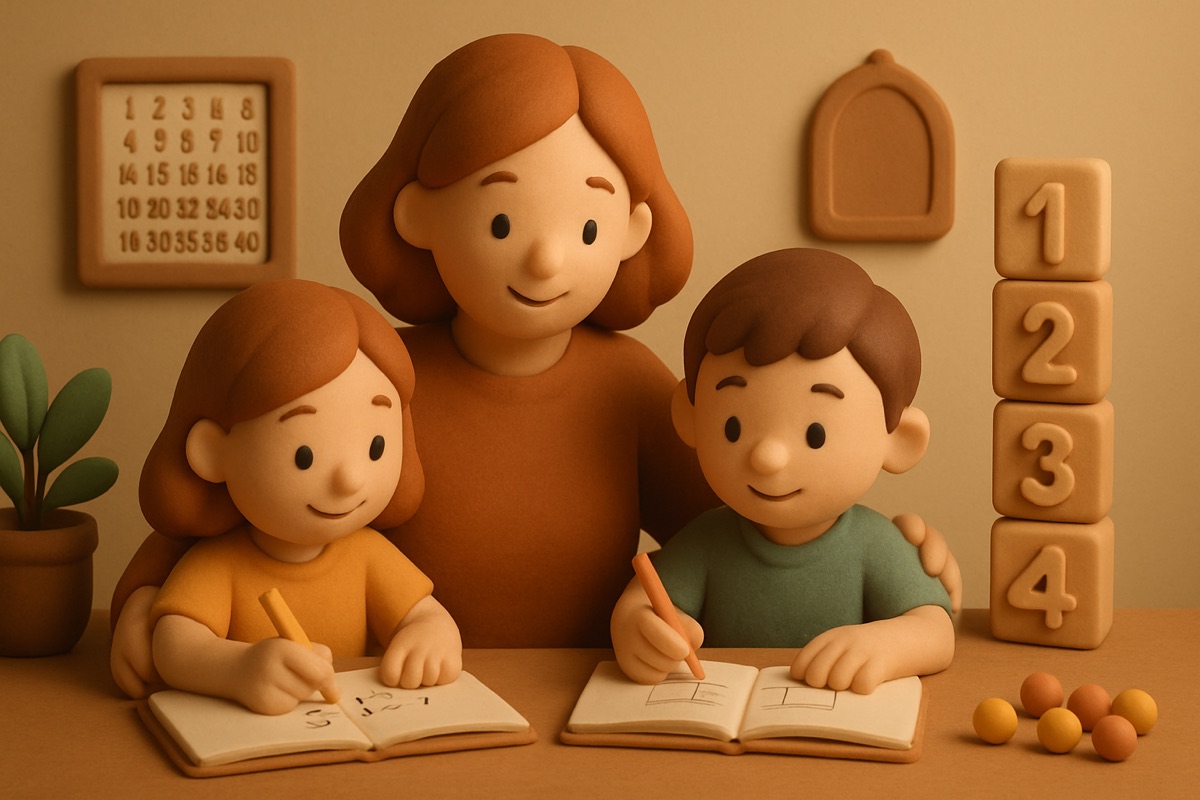
By June of second grade, one of my students named Theo could rattle off answers to addition problems faster than anyone in the class. He looked like a math star. Then I asked him to tell me which was bigger, 68 or 86, and he froze. He could add. He had no idea what the numbers meant. That gap is exactly the kind of thing an end-of-year checklist should catch, and it's why I want to give you a real one instead of the vague "on grade level" that report cards hand you.
Here are the 2nd grade math skills that actually matter by the end of the year. Not every standard on paper. The load-bearing ones, the skills that third grade will stand on top of. If your kid is solid on these, they're ready. If a couple are wobbly, you have all summer, and I'll tell you what to do.
The four skills that really carry weight
If I could only check four things before a kid walked into third grade, these would be them.
- Place value into the hundreds. A second grader should know that in 347, the 3 means three hundreds, the 4 means four tens, and the 7 means seven ones. This is the one Theo was missing, and it's the single most important idea in the grade. Everything about bigger numbers rests on it.
- Add and subtract within 100, with regrouping. Problems like 45 plus 38, or 62 minus 27, where you have to carry or borrow. Not just the answer, but understanding why you regroup.
- Fluency with facts to 20. Sums like 8 plus 7 and 13 minus 6 should be quick and mostly automatic. Not instant for every kid, but not a finger-counting slog either.
- Telling time and counting money. Time to the nearest five minutes, and counting mixed coins up to a dollar. These feel small and turn out to matter a lot in daily life and in the word problems ahead.
There's more in the official second grade list, things like measuring length and reading simple bar graphs. Those are real, but they're lighter. The four above are the ones I'd lose sleep over.
How to check each one at the kitchen table
You don't need a test. You need ten minutes and some ordinary questions. Here's how to poke at each skill without it feeling like an exam.
For place value, write 347 and ask "how many tens are in this number?" The answer you want is 4. Then ask what the 3 is worth. If they say "three" instead of "three hundred," that's your Theo signal. You can also grab a pile of pennies, dimes, and a dollar and ask them to build 52. Watch whether they reach for five dimes and two pennies or start counting out fifty-two pennies one at a time.
For regrouping, hand them 56 plus 27 on paper. Watch the process, not just the 83. Do they know a new ten got made? Ask "where did that little 1 come from?" A kid who can answer understands it. A kid who says "the teacher told me to put it there" is running on memory alone, which is the thing that quietly falls apart in third grade.
For facts, just fire off ten of them out loud during a car ride. 9 plus 6. 14 minus 8. You're listening for smooth versus stuck. A pause here and there is fine. Counting on fingers for every single one is worth working on.
For time and money, use real stuff. Point at a clock. Make change from a dollar for a pretend purchase. This is the easiest set to practice because life is full of clocks and coins.
What to do about the shaky ones
First, don't panic over one wobbly skill. That's normal. Summer exists partly for this. But do resist the urge to drill the thing they can already do, which is what most of us reach for because it feels productive and the kid gets easy wins. Piling on more addition when the gap is place value just widens the gap. Work the weak skill, at the kid's real edge, in small doses.
A few practical moves:
- For place value, play with actual objects. Bundle straws or pennies into groups of ten. Kids need to physically see that ten ones become one ten before it lives in their head.
- For regrouping, slow it way down and make them narrate. If they can explain it to you, they own it.
- For facts, short and daily beats long and occasional. Five minutes with a deck of cards most days will do more than an hour on Sunday.
And keep the pressure low. A second grader who feels dumb about math in June carries that into September, and the attitude problem ends up costing more than the skill gap ever would. Whatever practice you do, tie the good feeling to real progress on the hard skill, not to grinding through easy pages for the sake of a full worksheet. Mastery of the thing that was hard yesterday is the win worth celebrating.
Theo got his place value sorted over that summer, mostly with a jar of pennies and about ten minutes a night. By fall he wasn't just fast anymore. He knew what the fast answers meant. That's the whole difference, and it's very fixable if you catch it now.