The First Grade Math Skills That Actually Matter (And the Ones That Can Wait)
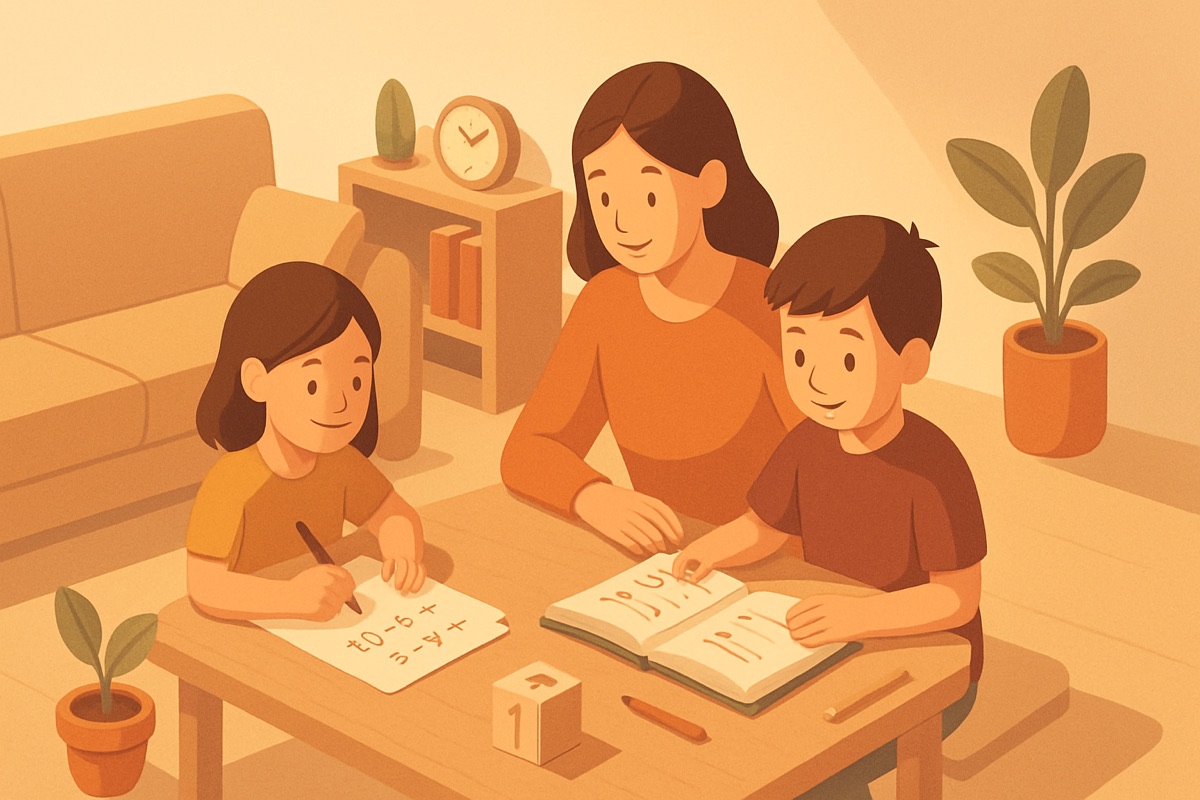
I had a first grader named Marcus who could rattle off addition facts to 20 faster than anyone in the room. His mom was thrilled. Then one day I asked the class to figure out how many crayons we'd have if each of the six tables got a box of eight, and Marcus just froze. He knew his facts cold. He had no idea what to do with them. That gap, the one between memorizing and understanding, is the thing I watch for most when I think about the 1st grade math skills that actually matter.
First grade is where a lot of parents start to panic. The worksheets come home, the timed tests start, and suddenly everyone's comparing their kid to the neighbor's kid. So let me tell you, after sixteen years of teaching this age, what's worth your attention and what you can let go of.
The skills that build a real foundation
If I could only pick a handful of things for a first grader to truly own by June, these would be it. Not memorized. Understood.
- Counting on and counting back. A kid who can start at 7 and count up 5 more without going back to 1 is doing real math. It sounds small. It's not. This is the bridge to addition and subtraction.
- Understanding that numbers can be broken apart. Knowing that 8 is 5 and 3, or 6 and 2, or 4 and 4. We call this composing and decomposing. It's the skill Marcus was missing, and it's the whole ballgame.
- Place value with tens and ones. A first grader should get that 34 means three tens and four ones, not just "three-four." Give them a pile of pennies and have them make stacks of ten. That physical grouping is worth more than a hundred flashcards.
- Addition and subtraction within 20, with meaning. Yes, fluency matters eventually. But in first grade I care far more that a child can show me why 13 minus 4 is 9 than that they can spit out the answer in two seconds.
- Comparing numbers. More, less, equal. Which is bigger, 27 or 31, and how do you know? A kid who can explain the "how do you know" part understands place value whether they can name it or not.
Notice what these have in common. They're all about the meaning underneath the number, not the speed of the answer.
The stuff parents stress about that can wait
Here's where I spend a lot of my parent-conference breath talking people off the ledge.
Speed is the big one. Timed tests make a lot of six-year-olds feel like they're bad at math when they're actually just six. A child who takes a few seconds to think through 8 plus 6 is not behind. They're thinking. I would trade a fast wrong-most-of-the-time kid for a slow right-every-time kid every single day.
Memorizing addition facts under pressure can wait too. The facts stick on their own once the understanding is there. I've watched it happen year after year. You build the concept, you give it a few months of low-stakes practice, and the recall shows up like it was always going to.
Big numbers can wait. If your first grader isn't working with numbers into the hundreds and thousands yet, that's fine. That's a second and third grade job. A kid who deeply understands numbers to 100 is in far better shape than one who can read 4,000 but couldn't tell you it's bigger than 400.
And honestly, neatness can wait. I've had brilliant little mathematicians whose written work looked like a spider walked through ink. The thinking was gorgeous. The handwriting caught up later.
How to tell if your kid actually gets it
The trick I use, and the one I hand to parents, is to ask "how did you know?" instead of "is that right?"
If your child says 9 plus 5 is 14 and you ask how they knew, listen to the answer. "I took one from the 5 to make the 9 into 10, then 10 and 4 is 14." That's a kid who understands. "Um, I just knew it" might mean they memorized it, which is fine, or it might mean they guessed. The explanation tells you which.
A quick test at the kitchen table. Put out 15 dried beans. Ask your kid to split them into two groups and tell you both numbers. Then have them do it a different way. A first grader who can find several ways to make 15 (10 and 5, 8 and 7, 12 and 3) is showing you flexible number sense, and that's the single best predictor I know of for how math is going to go for them.
Practice at home without the battle
You don't need a curriculum. You need a deck of cards and about ten minutes.
Flip two cards and add them. Play "war" but the higher sum wins. Count the stairs on the way up and count them backward on the way down. Ask how many forks you need if four people are eating and everyone gets one fork and one spoon. That last one is word-problem thinking dressed up as chores, and kids don't even notice.
The one thing I'd steer you away from is grinding. Twenty worksheets of the same problem doesn't build understanding, it builds resentment. If you use an app or a game, pick one that rewards a kid for real progress and actual thinking rather than just cranking through repetitions. We built Math Prizes partly because our own kids were getting bored numb by the drill-and-kill stuff, and bored kids don't learn.
What I'd tell you at a conference
If you're worried, the question to ask isn't "is my kid fast enough." It's "does my kid understand what the numbers mean." A child who gets the meaning has room to grow into everything else. A child who only has speed hits a wall the minute the problems get interesting, the way Marcus did with those crayons.
Marcus, by the way, was fine. We spent a few weeks with beans and blocks, building up the "what does this actually mean" part he'd skipped. By spring he was the kid explaining to his tablemates why a strategy worked. The facts he already had. He just needed to know what they were for.
Give your first grader time, keep it low-pressure, and pay attention to the thinking instead of the clock. The rest tends to sort itself out.