The Kindergarten-to-First-Grade Math Shift: From Counting to Adding
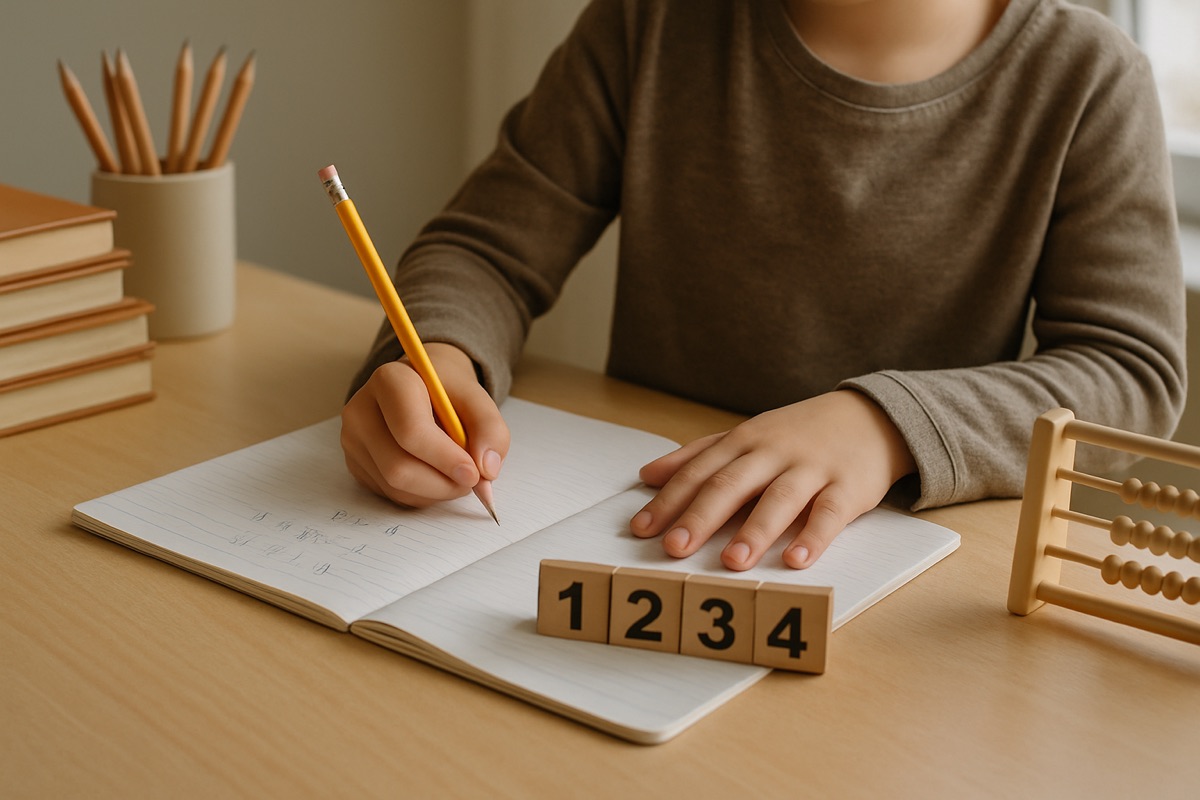
I had a kindergartner named Priya who could count to a hundred without stopping to breathe. Her parents were proud, and they should have been. Then first grade started, and within a month she was in tears over a problem like 7 plus 5. She could count. She just couldn't add. Those are two different skills, and the gap between them is the whole story of the kindergarten to 1st grade math transition.
Most parents assume counting leads naturally into adding. It doesn't, not by itself. A kid can count perfectly and still have no idea what to do when two numbers show up together. Knowing that ahead of time changes how you help.
What actually changes in first grade
In kindergarten, math is mostly about knowing that numbers have an order and that each one stands for an amount. Kids count objects, they count out loud, they match a number to a pile of blocks. That's the foundation, and it's a good one.
First grade asks for something harder. Now a child has to hold numbers in their head and do something to them. Combine them. Take some away. Compare two amounts. The physical crutch of pointing at each object one by one starts to fail, because you can't point your way through 8 plus 6 fast enough to keep up with the class.
So the real shift isn't from small numbers to big numbers. It's from counting things you can see to working with numbers you can't. That's a big jump, and a lot of kids stall right there.
Why counting on fingers stops working
Fingers are fine. I want to say that clearly, because parents panic when they see a first grader still counting on their hands. Fingers are a tool, and plenty of strong math students use them for years.
The problem is counting from one every single time. If your child solves 9 plus 4 by starting at one and touching every finger up to thirteen, they'll get the right answer, but slowly, and they'll be exhausted by the tenth problem. Worse, they never build the number sense that makes the next grade easier.
The move you want is called counting on. Instead of starting at one, your child starts at the bigger number and counts up. For 9 plus 4, they say "nine," then count "ten, eleven, twelve, thirteen" on four fingers. Same fingers, totally different thinking. It's faster, and it means they actually understand that nine is already nine and doesn't need recounting.
The mental shift that makes adding click
Here's the thing I watch for. Adding clicks when a kid stops seeing 7 plus 5 as two separate piles to merge and starts seeing it as one number that grows.
A few ideas do most of the heavy lifting here:
- Doubles. If a child knows 6 plus 6 is 12, then 6 plus 7 is just one more. Doubles are easy to memorize and they unlock a huge number of nearby facts.
- Making ten. Ten is the friendliest number in the system. Teaching a kid that 8 plus 5 is really 8 plus 2 (to make ten) plus 3 more is one of the best gifts you can give them before second grade.
- The order doesn't matter. 3 plus 9 and 9 plus 3 give the same answer. Sounds obvious to us. It is genuinely surprising to a six-year-old, and once they believe it, they'll always start from the bigger number and save themselves work.
None of this is worksheet material at first. It's talking. It's noticing.
How to help at home without a battle
You do not need to buy anything or run drills at the kitchen table until someone cries. The best practice for this age is short, concrete, and folded into normal life.
Use objects your kid can touch. I mean literal objects. Grapes at snack time, cars on the rug, buttons in a jar. Put out seven grapes and five grapes and ask how many altogether. Let them count if they need to, then ask if there's a faster way. Do it for two minutes, then stop. Two good minutes beats twenty tired ones.
Talk out loud about your own thinking. "I have four eggs left and the recipe wants six, so I need two more." That sentence is addition, subtraction, and comparison all at once, and it costs you nothing.
When your child gets stuck on a fact, resist giving the answer. Ask "what's a fact near this one that you already know?" A kid who knows 5 plus 5 can find 5 plus 6 if you give them a second to reach for it. That reaching is the whole point.
A quick app session can help too, as long as it rewards real progress and not just tapping fast. My husband and I built Math Prizes partly because so many apps just fling numbers at kids without building the counting-on habit first. Whatever tool you use, ask yourself whether it's teaching the shift or just testing whether it's happened yet.
What patience looks like here
Some kids make this jump in a few weeks. Others take most of first grade, and a chunk of them are still shaky in September of second grade. That range is normal. It is not a verdict on your child or on you.
The kids who struggle longest are almost never the ones who "can't do math." They're the ones who never got shown that adding is different from counting, so they kept counting harder and harder until it broke. Show them the difference, keep it short, keep it kind, and it usually comes.
Priya got there, by the way. Around March it just clicked, and by the end of the year she was the one explaining the make-ten trick to the kid next to her. Counting was never her problem. She just needed someone to tell her the rules had changed.