Should You Practice Math Facts Over Summer? A Teacher's Honest Answer
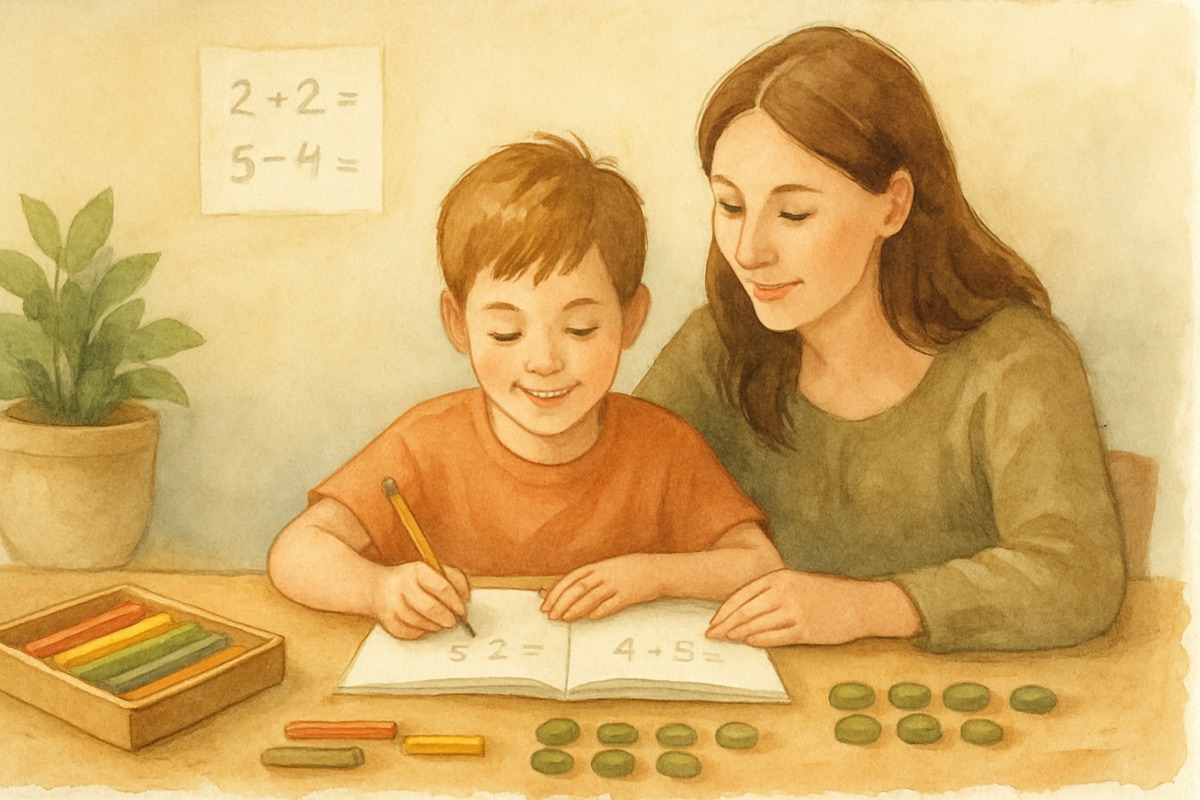
Every September I hand out the same short quiz on the first day. Twenty math facts, two minutes, no pressure, just to see where everyone is. And every September there's a cluster of kids who could rip through it in June and now sit there counting on their fingers for six times seven. Same kids. Same facts. Ten weeks off. That gap is the whole reason people ask about summer math fact practice, so let me give you the honest answer instead of the tidy one.
Yes, a little practice over summer is worth it. But almost certainly not the amount you're imagining, and definitely not the way most workbooks push it. The kids who come back sharp aren't the ones who did an hour a day at the dining table. They're the ones who touched their facts often enough that the wiring didn't rust.
What actually fades and what doesn't
Not everything slips over summer, which is good news. Conceptual understanding tends to stick. A kid who genuinely gets that multiplication is repeated addition doesn't forget that in July. The idea is theirs now.
What fades is speed and automaticity. The instant recall. In June your kid might have known that eight times seven is fifty-six the way they know their own name, no calculation, just there. By late August that same fact might require a slow trip through eight, sixteen, twenty-four. They can still get the answer. It just costs them time and mental energy, and that cost is the problem.
Here's why it matters. When a fourth grader hits long division or a word problem with three steps, they're juggling a lot at once. If they also have to stop and reconstruct every basic fact from scratch, they run out of room in their head and lose the thread of the actual problem. Fluent facts free up the brain for the harder thinking. That's the entire case for keeping them warm.
How little it really takes
This is the part that surprises parents. You don't need a program. You need frequency, not volume.
Five minutes, a few times a week, spread across the summer will do more than a marathon session in August to "catch up." The brain holds onto things you revisit, not things you cram. A kid who runs through a handful of facts three times a week keeps the pathways alive. That's it.
A few ways to hit that without a fight:
- Fact of the day. Pick one fact at breakfast. Say it a couple of times. Bring it up again at dinner. One fact, done well, beats a page done grudgingly.
- Car facts. The drive to the pool or the store is dead time anyway. "What's six times eight? Nine times four?" Keep it light and quick, and stop before it gets tedious.
- A deck of cards. Flip two cards, multiply or add them. Ten minutes, no prep, and it works for any grade by changing the operation.
- Real numbers in real life. "We have three packs of eight hot dogs. How many total?" This is fact practice wearing a disguise, and it sticks better than flashcards because it's attached to something the kid cares about.
The trap to avoid
Here's where I'll be blunt. The biggest mistake I see is turning summer into a slog of drill worksheets, forty problems a page, because it feels like it must be helping. It usually isn't, and it sometimes hurts.
A kid who spends June resenting math comes back in September not sharper but sour. You've kept the facts marginally warmer at the cost of the thing that actually powers a whole year of learning, which is willingness. That's a bad trade. More problems is not the same as more learning, and grinding a kid through repetition they hate teaches them that math is a punishment that follows you even on vacation.
Fluency comes from frequent, low-stress reps, not from volume. A short round where your kid feels the win of quick recall builds more than a long round where they feel behind and cornered. If a session turns into tears, you've already gotten whatever value was there. Stop.
A realistic summer plan
If you want something concrete, here's what I'd actually tell a parent in my class.
Aim for three short touches a week. Five to ten minutes each. Keep it to the facts your kid is closest to owning, the ones that are almost automatic, because those are quick wins that build momentum. Leave the genuinely shaky stuff for the teacher in the fall. Summer is for maintenance, not remediation.
Mix it into life so it doesn't own a slot on the calendar. Facts in the car, facts while you cook, facts as a two-minute card game before screen time. If your kid asks to do more, great, follow their lead. If they groan, you've hit the ceiling for the day.
And take a real break sometimes. A week at the grandparents' with zero math on it will not undo a childhood. The kids who come back strong aren't the ones who never stopped. They're the ones who kept a small, steady pilot light going. That's the honest answer. Keep the flame lit, don't burn the house down trying.