Should I Get a Math Tutor? How To Tell If You've Hit That Point
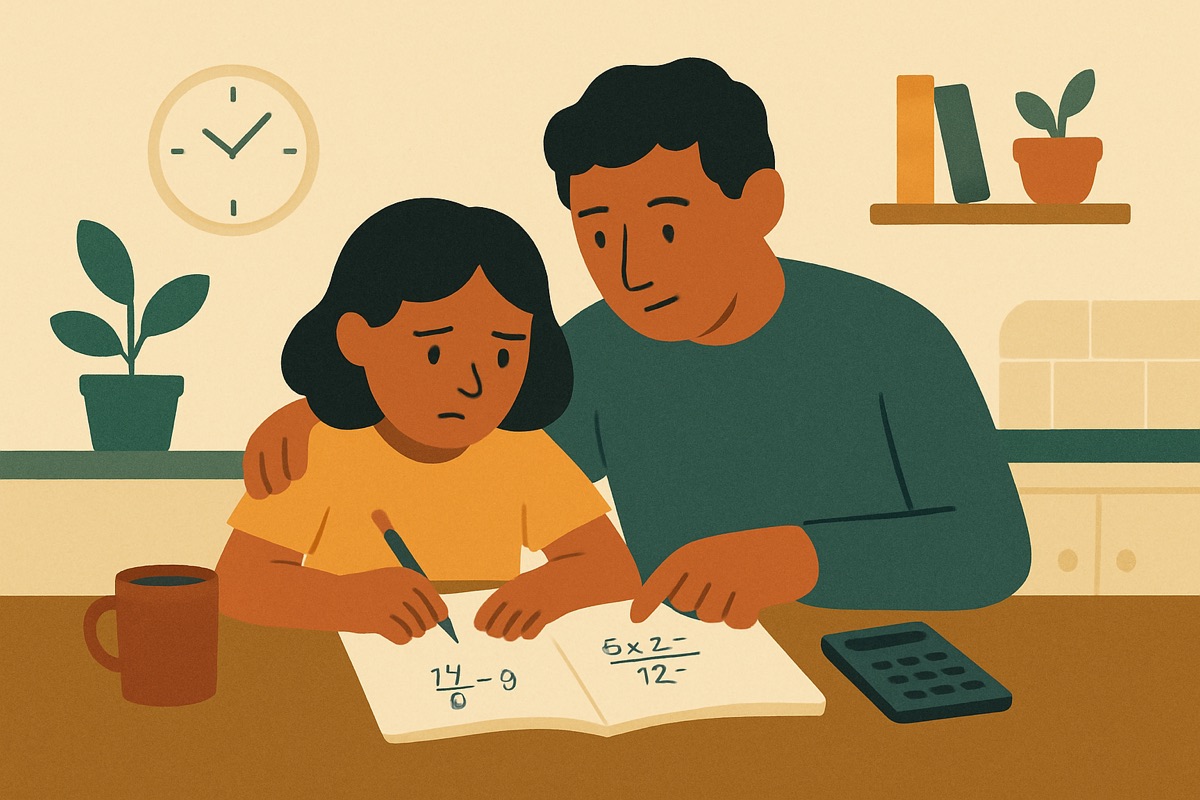
The homework that took two hours
A parent came to me in October, worn out, and asked if her fourth grader needed a tutor. What tipped her over was Tuesday night: one page of long division, seven problems, and it took two hours and ended in tears. Hers and his. She wanted to know if it was time to bring in help.
My answer, then and now, is that it depends on which two hours those were. A single brutal homework night doesn't mean anything. Every kid has bad nights. The question "does my child need a math tutor" is really a question about pattern, not about one hard evening. So before you spend the money, and a tutor is real money and a real weekly commitment, it helps to look at what's actually going on underneath.
What a tutor is good at, and what it isn't
A tutor is a person who sits with your kid, watches how they think, and fixes the specific broken step. That's the whole magic. A good one figures out that your kid isn't bad at "fractions," they just never got solid on what a denominator means, and everything after that has been guesswork.
Here is what a tutor is not. It's not a punishment. It's not a fix for a kid who's fine at math but hates homework. It's not a substitute for sleep, or for a kid who needs glasses and can't read the board. I've seen families pay for months of tutoring when the real problem was that the kid was lost in one specific unit and needed three focused sessions, not a standing appointment through June.
So the goal is to figure out whether you have a targeted gap (great fit for a tutor, maybe a short run of it) or a broader situation that tutoring alone won't touch.
The signs that actually point to a tutor
These are the ones I take seriously when a parent asks. Not one of them alone. A few of them together.
- The gap is old and it's compounding. Your kid is in fourth grade but still counts on fingers for basic facts, and now the multiplication is landing on top of that shaky foundation. When old holes are dragging down new work, a tutor can go back and patch them without holding up the whole class.
- You've genuinely tried at home and it isn't working, or it's wrecking your relationship. If every session ends in a fight, sometimes the best thing is to hand the teaching to someone who isn't Mom or Dad. The tension leaves the room.
- The teacher has raised it too. If the person who sees your kid do math thirty hours a week is also concerned, that's real signal, not just a rough patch you noticed.
- It's one specific subject falling apart, not a general slump. A kid who's fine until fractions and then face-plants has a targetable problem. That's exactly what a tutor is built for.
- Your kid has started saying "I'm just bad at math." When a child has decided that about themselves, a patient adult who shows them they can do it is worth a lot. Confidence is half the subject.
If three or four of those describe your house, a tutor is probably a good call. Get one who diagnoses before they drill, and ask them, after a couple weeks, what the actual gap is. If they can't tell you, find another one.
The cheaper things to try first
If you're seeing one or two signs, not four, try these before you sign up. They're free or close to it, and they fix a surprising number of cases.
Talk to the teacher first, always. Ask a specific question: "Where exactly does he lose the thread?" Teachers usually know. They may hand you the one topic to work on and save you three hundred dollars.
Then look at the foundation, not the current homework. If a fourth grader is drowning in long division, the problem is very often that the multiplication and subtraction facts underneath aren't automatic. When a kid has to stop and figure out 7 times 8 in the middle of a bigger problem, the whole thing collapses. Ten focused minutes a day on the missing facts does more than an hour of fighting the hard homework. This is where short, steady practice earns its keep, and where a well-built app can help, as long as it's rewarding real progress and not just keeping a kid busy tapping. Grinding a hundred problems a kid already knows isn't practice. It's stalling.
And watch for the non-math stuff. Is your kid tired? Hungry at homework time? Is the assignment being done at 8:45 at night after a full day? I've seen "math problems" evaporate when homework moved to right after an afternoon snack.
Making the call
Here's the honest version. If the gap is old, compounding, and you've already tried the home fixes without progress, get the tutor and don't feel bad about it. That's what they're for, and a few months of the right help can turn a kid's whole relationship with the subject around.
If it's one bad unit, or one bad month, start with the teacher and ten minutes a day on the shaky facts. You can always escalate. It's a lot easier to add a tutor later than to unwind a kid's belief that needing one means something's wrong with them.
That fourth grader with the two-hour long division night? Turned out he was solid on the division and lost on the subtraction inside it. Three weeks of five-minute subtraction practice and the two-hour nights were gone. No tutor. Sometimes the fix is smaller than the fear.