Fractions Confusion: Making a Half Actually Make Sense
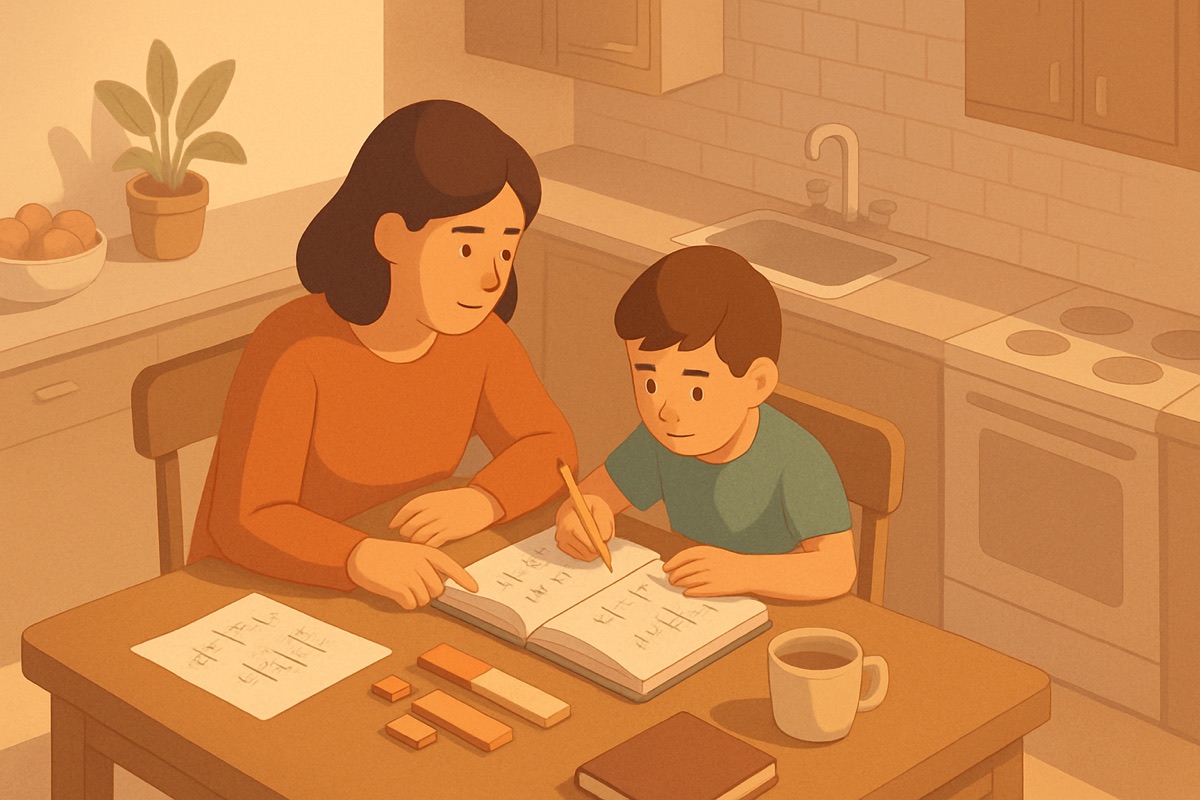
A fourth grader named Priya once told me, with total confidence, that one fourth was bigger than one half because four is bigger than two. She wasn't being silly. She was applying a rule that had worked for her whole life, which is that bigger numbers mean more, and fractions had just quietly broken that rule on her. When a child struggles with fractions, this is almost always what's happening underneath. The old logic stopped working and nobody went back to rebuild it.
I taught elementary math for sixteen years, and fractions were the concept that tripped up more kids than anything else, including long division. The good news is that the fix is rarely more worksheets. It's going back to the very bottom, to what a half actually means, and making that one idea rock solid before anything else gets stacked on top.
Why fractions break kids' brains
Up until fractions, math has one consistent story: numbers count things, and bigger numbers count more things. Three cookies beat two cookies every time. Then fractions arrive and flip it. Now the bigger the bottom number, the smaller each piece. One eighth is tinier than one half, even though eight is way bigger than two.
That's genuinely confusing, and it deserves respect instead of frustration. Your kid isn't slow. They're holding onto a rule that served them well for years, and fractions are the first time math has actively contradicted it. Priya wasn't wrong to trust her instincts. Her instincts just needed an update, and updating them takes something you can see and touch.
Start with a half of something real
Forget the numbers on the page for a minute. Get a real object your kid can split. A sandwich, a cookie, a piece of paper, an apple. The rule I always followed: whatever you use, cut it in front of them and let them do some of the cutting.
Take a graham cracker, the kind with the line down the middle. Break it. You now have two pieces. Ask, are they the same size? If yes, each one is a half. That's it. That's the whole definition, and it has to be dead obvious before anything else. A half means one of two equal parts. The word "equal" is the part kids skip, and it's the part that matters most.
Then break one of those halves again. Now you've got a half and two quarters. Line them up. Let your kid see with their own eyes that the quarter is smaller than the half. This is the exact thing Priya got wrong, and no explanation ever fixed it for her. Seeing it did. She held the quarter, held the half, and the wrong rule finally fell away.
Equal parts is the whole ballgame
Here's a mistake I saw constantly. A kid draws a circle, slices it into four wildly uneven pieces, points at the biggest chunk, and calls it one fourth. It isn't. One fourth means four equal parts, and if the parts aren't equal, they aren't fourths at all.
Drill this idea, gently, until it's automatic:
- A whole cut into 2 equal parts gives you halves.
- A whole cut into 3 equal parts gives you thirds.
- A whole cut into 4 equal parts gives you fourths.
- The bottom number tells you how many equal pieces the whole got cut into.
- The top number tells you how many of those pieces you're talking about.
When a kid truly gets that the bottom number is "how many equal pieces total," a huge amount of fraction confusion just evaporates. They stop reading one fourth as "something with a four in it" and start reading it as "one piece out of four equal ones."
Food is your best teaching tool
I'm not exaggerating when I say most fraction breakthroughs in my career happened over snacks. Pizza, obviously. A pizza cut into eight slices is a machine for teaching eighths. Eat three and you've got five eighths left, and your kid can see it. Chocolate bars with their little rectangles are pre-made fractions. Measuring cups while baking show that two half cups fill one full cup, which is the same truth as two halves make a whole, just wetter.
The reason food works isn't that it's fun, though it is. It's that fractions are about a whole getting divided, and food is a whole your kid genuinely wants divided fairly. Fairness makes them care about equal parts in a way no worksheet ever will. A kid who'll shrug at an uneven drawing will absolutely notice if their brother's half of the candy bar is bigger.
Go slow and don't pile on
The biggest error I see parents make is rushing to the hard stuff. Adding fractions, common denominators, all of it. If a kid doesn't yet feel in their bones that one half is bigger than one fourth, none of that will land. It'll just be more rules memorized without meaning, which is exactly the kind of hollow practice that looks like progress and isn't.
Slow down. Spend a whole week on halves and fourths with real objects and don't apologize for it. Real understanding of one simple idea beats a shaky grip on ten. When your kid can look at half a cookie and a quarter of a cookie and tell you instantly which is more, and why, they've got the foundation. Everything else in fractions is built on that single stone, and it's worth setting it right.
Priya got there, by the way. It took about two weeks of graham crackers and pizza, and one afternoon she looked at me like I'd been hiding something obvious and said, "Oh, the little pieces are because you cut it more times." Yes. Exactly that. She'd finally rebuilt the rule, and from there the rest of fractions had somewhere solid to stand.