Practice Over Winter and Spring Break Without Ruining the Vacation
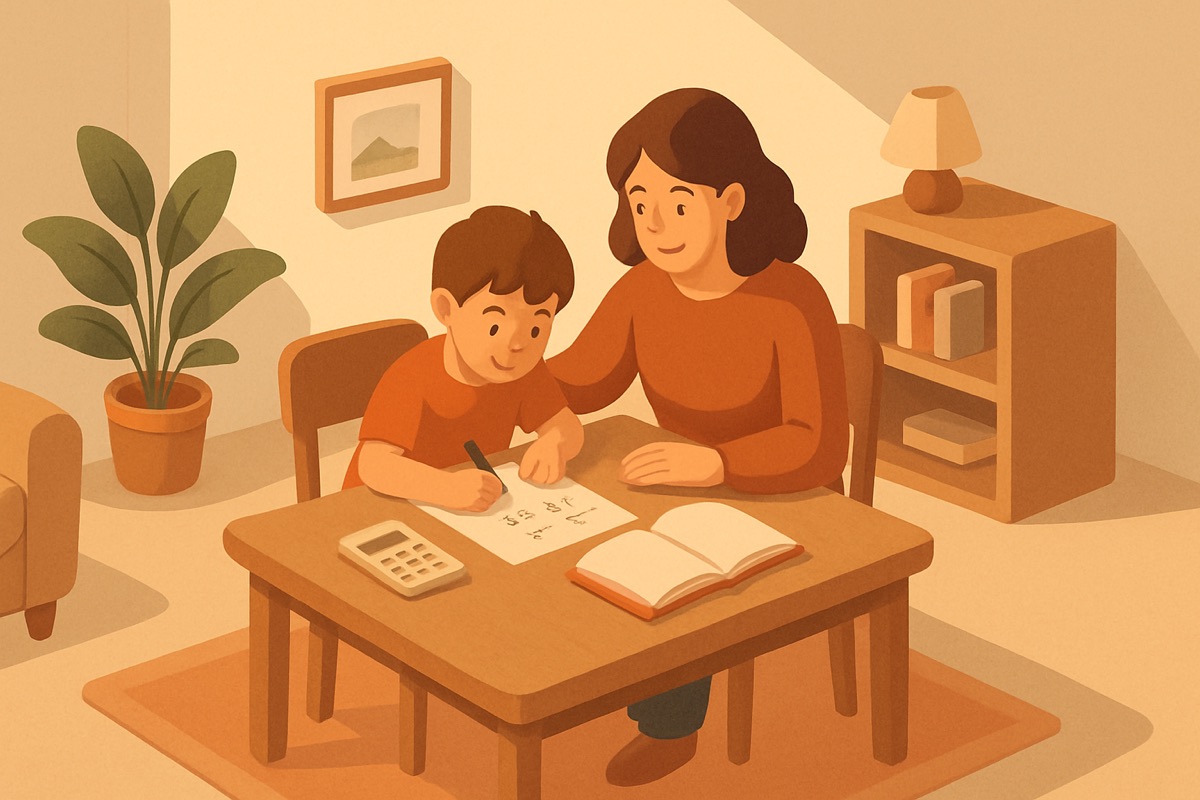
It's the second Tuesday of winter break, everyone's in pajamas at noon, and the last thing anybody wants is a worksheet. Good. Put the worksheet away. But if you do absolutely nothing math-shaped for two or three weeks, your kid does come back a little rusty, and the first week of January or April gets rougher than it needs to be. The trick with math practice over school breaks is finding the setting between "grind through packets" and "total blackout." That middle setting exists, and it's more relaxed than you'd think.
A week off is fine. Three weeks of nothing is the risk.
Let's be clear about the actual stakes. A short break, five or six days, isn't going to erase anything. Kids' brains don't work that way, and honestly a real rest is good for them. Nobody learns well while resentful and exhausted, and December and April both come at the end of long, draining stretches.
The problem is the longer stretch of pure zero. When a kid does no math at all for two or three weeks, the fluency stuff gets slow. Facts that were automatic go back to being calculated. It's not that they forgot how, it's that the fast lane got weedy. And the fix for that is small and cheap. Not packets. Just a little bit of contact, often enough that the fast lane stays clear.
Tiny doses beat big sessions, every time
If I could get one idea into every parent's head about break practice, it's this: ten minutes three times a week does more than a two hour cram the day before school starts, and it costs you almost nothing in vacation mood.
The reason is how memory actually works. Coming back to something often is what keeps it warm. One long slog, especially a resented one, mostly teaches a kid that math is a punishment that waits for you at the end of fun. That's the opposite of what you want. So keep the doses short and keep them frequent, and let them be the price of nothing. Not a lecture, not a reward negotiation, just a quick thing you do and then it's over.
A realistic break rhythm looks like:
- Three short bursts a week, ten minutes each, tops.
- Skip the days you travel or have something big going on. Missing a day isn't a crisis.
- Aim to keep skills warm, not to teach anything new. Break is not the time to get ahead.
- Stop while they still have patience left. End on an easy one.
The best break math doesn't look like math
Here's the good news for your vacation. Most of the best practice over a break isn't at a desk at all. Real life is stuffed with arithmetic if you point the kid at it.
Cooking is the obvious one. Doubling a cookie recipe is fractions and multiplication with a payoff you can eat. "We need three quarters of a cup, but we're making two batches, so how much total?" That's a real problem with real stakes, and it beats a worksheet on fractions cold.
Money is the other reliable well. Give a kid twenty dollars in a store and let them figure out what they can afford and what the change should be. At a restaurant, let them work out the tip. On a road trip, "we've gone 140 miles and it's 400 total, are we more or less than halfway" is honest math dressed up as a car conversation.
And games count. A deck of cards, a couple rounds of a board game with a scorepad, dice games, any of it keeps addition and comparison ticking over. My own kids spent one entire spring break locked in a running gin rummy war, and their mental addition came back sharper than any packet would've left it, purely from keeping score every night.
Adjust to the kid in front of you
A break is actually a decent time to fix a specific weak spot, precisely because there's no new homework piling up on top of it. If your kid has been shaky on multiplication facts all fall, ten minutes of a card game that hits those, a few times a week, can do real quiet work without the pressure of a school deadline hanging over it.
But read the kid. If they're fried from a hard semester, protect the rest first. A genuinely burned-out kid needs the recovery more than they need the drill, and pushing anyway usually backfires into a fight that poisons the next attempt. You know the difference between "doesn't feel like it" and "is actually running on empty." Trust that read.
The point is coming back ready, not ahead
You're not trying to win the break. You're trying to have your kid walk back into class on the first day without that awful cold-engine feeling where everything they knew has gone stiff. That takes surprisingly little. A few short touches a week, a lot of it disguised as cooking and cards and change at the register, and enough real rest that they actually come back glad to be a kid again.
Vacation is allowed to be vacation. Just don't let it go completely dark on the math, and January or April will thank you.