Pattern and Logic Games That Grow Real Math Thinking
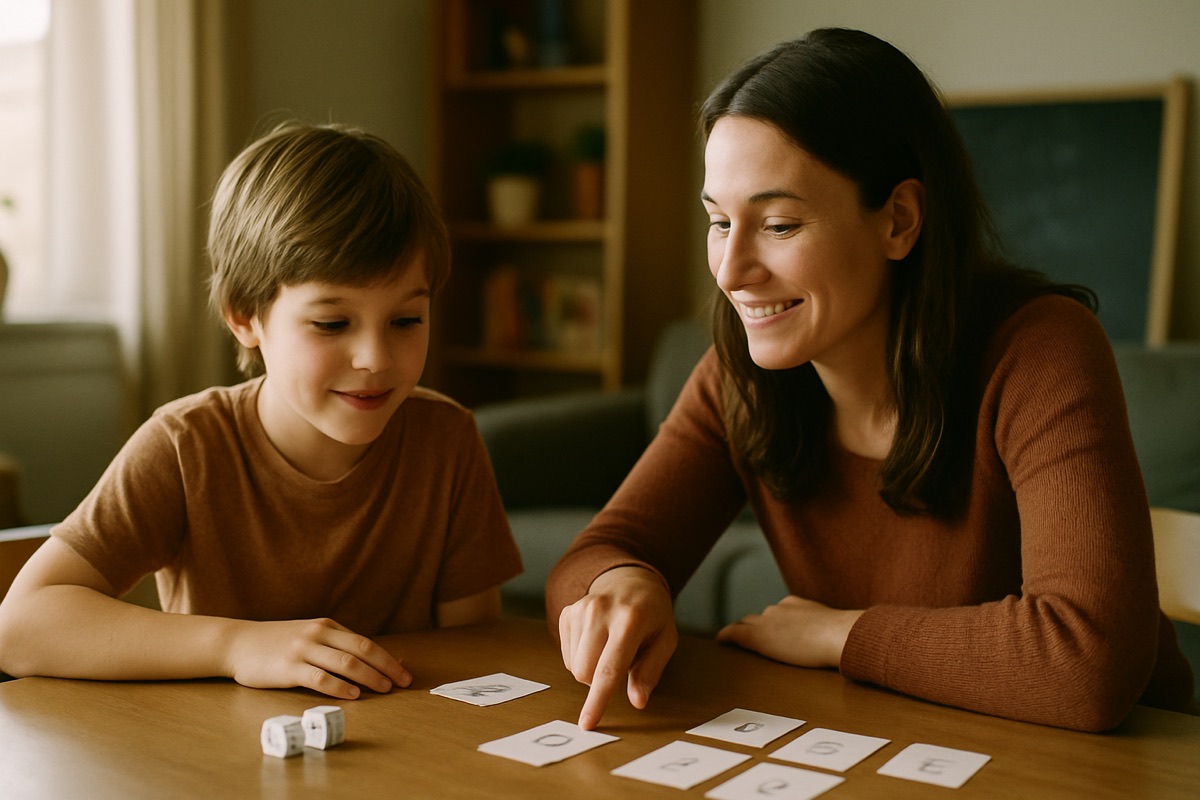
The strongest math student I taught one year was a third grader who couldn't recite her times tables to save her life. She'd stall on 6 times 8 every single time. But hand her a logic puzzle, the kind where you have to figure out who owns which pet from a set of clues, and she'd have it solved before the other kids finished reading. She understood something a lot of adults miss: math is not mainly about facts. It's about noticing patterns and reasoning your way to an answer that has to be true.
That's the part that gets skipped. We drill facts because facts are easy to test, and we leave the actual thinking to chance. Good logic games for kids fix that. They grow the reasoning muscle directly, and the best part is that not one of them feels like homework. Here are the ones I've watched work, in a classroom and at my own kitchen table.
Why patterns come first
Before a kid can reason, they have to notice. Pattern spotting is the ground floor of all of it, and it starts younger than most people think. A four year old lining up red, blue, red, blue blocks is doing early algebra, even if nobody would call it that. The kid who sees that 2, 4, 6, 8 keeps adding two is a step away from seeing that 5, 10, 15, 20 counts by fives, which is a step away from multiplication.
You can build this with almost anything in the house:
- Lay out a pattern with silverware, buttons, or cereal and ask what comes next. Then make it trickier: two forks, one spoon, two forks, one spoon.
- Point at the number patterns already around you. House numbers on your street. The way even and odd alternate on a receipt. The count on the microwave ticking down.
- Play "my rule." You sort a handful of objects into two groups by a secret rule (rough versus smooth, big versus small) and the kid has to guess the rule from the groups. This is exactly how real math reasoning works, spotting the pattern behind the sorting.
None of this needs a screen or a purchase. It needs about four minutes and a willingness to ask "what comes next?" and then wait.
Logic games that make kids reason
Once a kid can spot patterns, you want games where they have to hold a few facts in their head and squeeze out a conclusion. Deduction. This is the good stuff.
- Guess My Number. You think of a number from 1 to 100. The kid asks yes-or-no questions to narrow it down. "Is it more than 50?" "Is it even?" The trick you want them to discover on their own is that cutting the range in half each time beats guessing one number at a time. When a kid figures that out, they've stumbled onto a real strategy that computer scientists use. I never tell them. I just let them play badly for a while until it clicks.
- Mastermind or any code-breaking game. You set a secret code of colored pegs, they guess, and you tell them how many are right and how many are in the wrong spot. The whole game is using each clue to rule out possibilities. It's pure logic, and kids get fiercely into it.
- Dot-connecting and grid puzzles. The classic dots-and-boxes game, where you take turns drawing lines and try to complete squares, teaches kids to think a move ahead and see the consequence of a choice. That "if I do this, then they can do that" reasoning is the same shape as algebra later.
- Set. A card game where you race to find groups of three cards that follow a rule across color, shape, number, and shading. It looks like a game about noticing. It's actually a game about testing a rule against every card at once, which is heavy-duty logical thinking dressed up as fast fun.
I keep a couple of these in the closet the way some people keep a first aid kit. Rainy Saturday, restaurant wait, long car ride. They travel, and they do more for a kid's reasoning than a stack of worksheets ever could.
The rule I never break
Here's where I get stubborn. The value in these games is the thinking, so protect the thinking. That means when your kid is stuck, you do not hand over the answer. Ever, if you can help it.
I once watched a dad, meaning well, solve a logic puzzle for his son in about ten seconds because the boy was frustrated. The kid learned nothing except that if he waits long enough, Dad does it. The struggle is not a bug in these games. The struggle is the game. A kid who wrestles with a puzzle for six minutes and finally cracks it has built something real. A kid who gets bailed out has built nothing.
So when they're stuck, ask instead of tell. "What do you already know for sure?" "Is there a clue you haven't used yet?" "What would happen if it were the other one?" You're not giving the answer. You're teaching the moves for finding it. That's the entire skill.
Keep it short, keep it real
A few things that make these stick at home:
- Play in short bursts. Ten minutes of a logic game beats an hour that ends in tears. Stop while they still want one more round.
- Let them beat you sometimes, and don't fake it too obviously. A kid who wins about half the time keeps coming back.
- Talk about your own thinking out loud when it's your turn. "Hmm, it can't be the red one, because you already said it's not near the edge." You're modeling reasoning, and kids soak that up.
- Skip the timer. The second you turn a thinking game into a speed test, some kids freeze, and the reasoning shuts off.
That third grader who couldn't recite her tables? She got them eventually, and faster than I expected, because once you can reason, the facts have somewhere to live. The pattern and logic games didn't replace the arithmetic. They built the frame the arithmetic hangs on. Start there, and the rest comes easier than you'd think.