Parenthood, Planned: A 30-Minute Weekly Family Reset
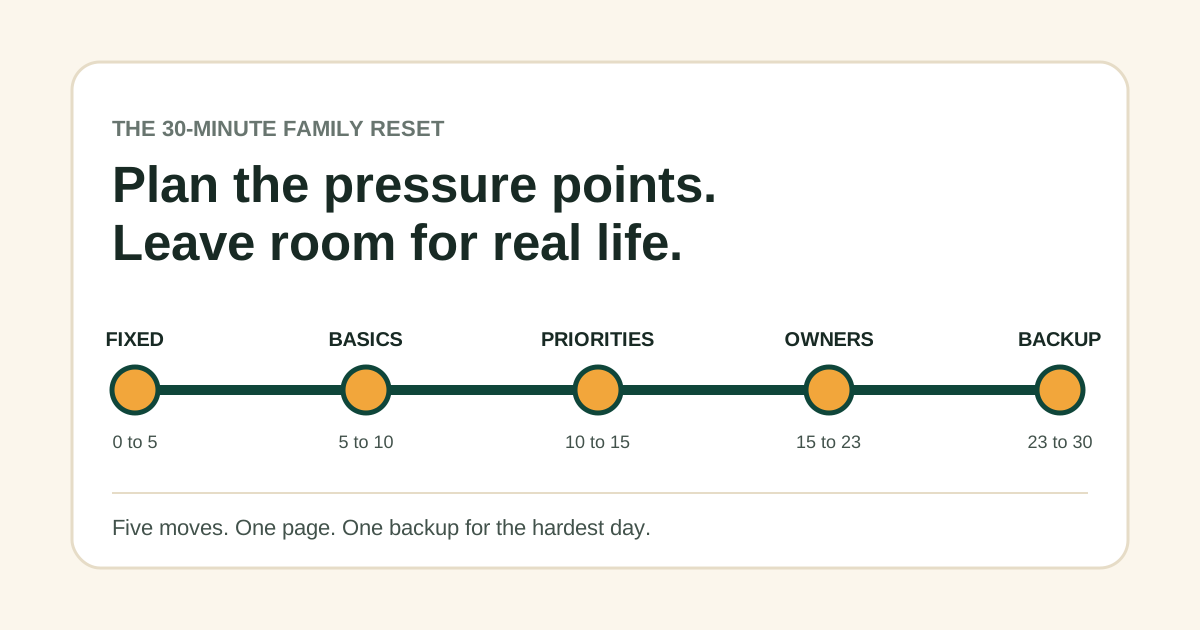
Planned parenthood at home means deciding the week's pressure points before they arrive, while leaving room for children to choose and for plans to change. A useful weekly reset takes 30 minutes: place fixed events, protect sleep and meals, choose two family priorities, assign ownership, and write one backup for the hardest day. The goal is a visible next step, not a perfectly controlled family.
The search phrase "parenthood planned" can point to several different needs. This guide covers the household-planning one: a short, repeatable system for school-age families.
What should a weekly parenthood plan include?
A weekly parenthood plan should include fixed commitments, protected basics, two priorities, clear owners, and a fallback. It should fit on one sheet or one shared calendar view.
Keep the scope deliberately small. The U.S. Bureau of Labor Statistics reported that in 2025 adults living with a child under six spent 2.3 hours per day on primary childcare on average, while adults whose youngest child was six to 17 spent 47 minutes. Those figures do not include every minute a parent remains responsible, so a planning system that demands another hour each night is unlikely to survive.
Step 1: How do I map the week in five minutes?
Map the week by placing only events that already have a time: school, work shifts, appointments, practices, pickup, and travel. Use one color for the whole family rather than building a decorative calendar nobody can scan.
Mark the tight transitions, such as a 4:40 pickup followed by a 5:15 practice. Those seams create most last-minute stress because food, equipment, and travel all compete in a short window.
Step 2: Which family basics should I protect first?
Protect sleep, meals, medication, movement, and a little unassigned connection before adding optional goals. The American Academy of Pediatrics' Family Media Plan recommends guarding important activities such as sleep and in-person connection from being crowded out by media.
Write these basics as anchors instead of aspirations. "Devices charge in the kitchen at 8:00" is usable; "less screen time" leaves the decision for the most tired part of the evening.
Step 3: How many priorities can a family plan hold?
A family plan can usually hold two extra priorities for one week without turning into a wish list. Pick one practical priority, such as returning library books, and one growth priority, such as three short spelling practices.
If a third item matters, swap it in rather than stacking it on top. The CDC advises starting young children with a single clear family rule and adding another after the first becomes familiar; older children can manage more, but parents still have to follow through on everything they add.
Step 4: Who owns each task?
Each task needs one named owner, even when several people help. "Pack soccer bag: Maya" and "check water bottle: Dad" are clearer than "get ready for soccer."
Give children ownership that matches their current skill. A seven-year-old might place homework in a backpack; the adult still checks the school message about the field trip payment. A simple after-school homework routine shows how to attach these handoffs to moments that already happen.
Step 5: How do I plan the hardest day?
Plan the hardest day by naming the likely failure and choosing a smaller version in advance. If Thursday has a late practice, the fallback might be sandwiches, a five-minute review instead of 15 minutes, and baths moved to Wednesday.
The backup should reduce volume without discarding the family's values. It prevents a hard day from becoming proof that the entire plan failed.
What does a finished 30-minute reset look like?
A finished reset is one page with five timed planning moves and a week that still contains open space. Here is a worked example for a family with two school-age children:
| Minutes | Planning move | Written result |
|---|---|---|
| 0 to 5 | Add fixed events | Tue soccer, Thu dentist, Fri library books |
| 5 to 10 | Protect basics | Dinner around 6, devices dock at 8, bedtime at 8:30 |
| 10 to 15 | Pick two priorities | Three 10-minute practices; return permission slip |
| 15 to 23 | Assign owners | Child packs folder; adult signs slip; sibling picks Friday game |
| 23 to 30 | Build one backup | Thursday uses leftovers and a five-minute practice |
The family schedules 35 minutes of practice: three regular 10-minute sessions plus the five-minute Thursday fallback if it is needed. Across a 168-hour week, that is about one-third of one percent of the available time. The number is small on purpose, and the sessions can grow only after the small version is steady.
For a math-specific version, the realistic weekly practice plan helps choose the actual activities without rebuilding the family calendar.
How should screens and rewards fit into the plan?
Screens and rewards should fit as bounded tools with a purpose, an endpoint, and an adult owner. Put the rule on the plan before the device is in a child's hands: "Math app after snack for ten minutes" works better than negotiating during play.
If practice earns family rewards, choose the available prizes and prices during the reset, not after a child asks to redeem one. Parent Prize Portal keeps that adult-managed list separate from the learning session; its worked setup example shows the account, device, and first-prize steps.
How do I keep planning from becoming controlling?
Keep planning from becoming controlling by deciding household constraints together and leaving real choices inside them. The adult can set bedtime and budget while the child chooses practice order, one reward from an approved menu, or which parent joins a game.
Add a two-minute child check at the end: "What looks hard? What would you move? What do you want to own?" You may keep the final responsibility, but the answer can expose a collision you missed.
What should happen at the next weekly reset?
The next weekly reset should begin with three marks: keep, change, and drop. Keep one thing that worked, change one friction point, and drop one item that nobody needed.
Do not grade the family or rebuild the entire system. A repeatable 30-minute meeting becomes useful because it carries learning from one week into the next.
Frequently asked questions
What day is best for a weekly family reset?
Choose the day before your family's schedule becomes busy. Sunday works for many school calendars, but Friday evening or Monday morning may fit shift work better.
Should children attend the whole planning session?
No. Adults can map logistics first, then bring children in for the choices and responsibilities that affect them; even a two-minute check gives them a voice.
What tool should we use?
Use the simplest tool every caregiver will check: paper on the refrigerator, a shared digital calendar, or a notes app. One current plan beats several synchronized-looking plans that drift apart.
What if the plan fails by Tuesday?
Use the backup for the hardest day, cross out what no longer matters, and keep the next anchor. Repairing a plan is part of the method, not evidence that planning was pointless.