Money Math Games Using Real Coins From the Junk Drawer
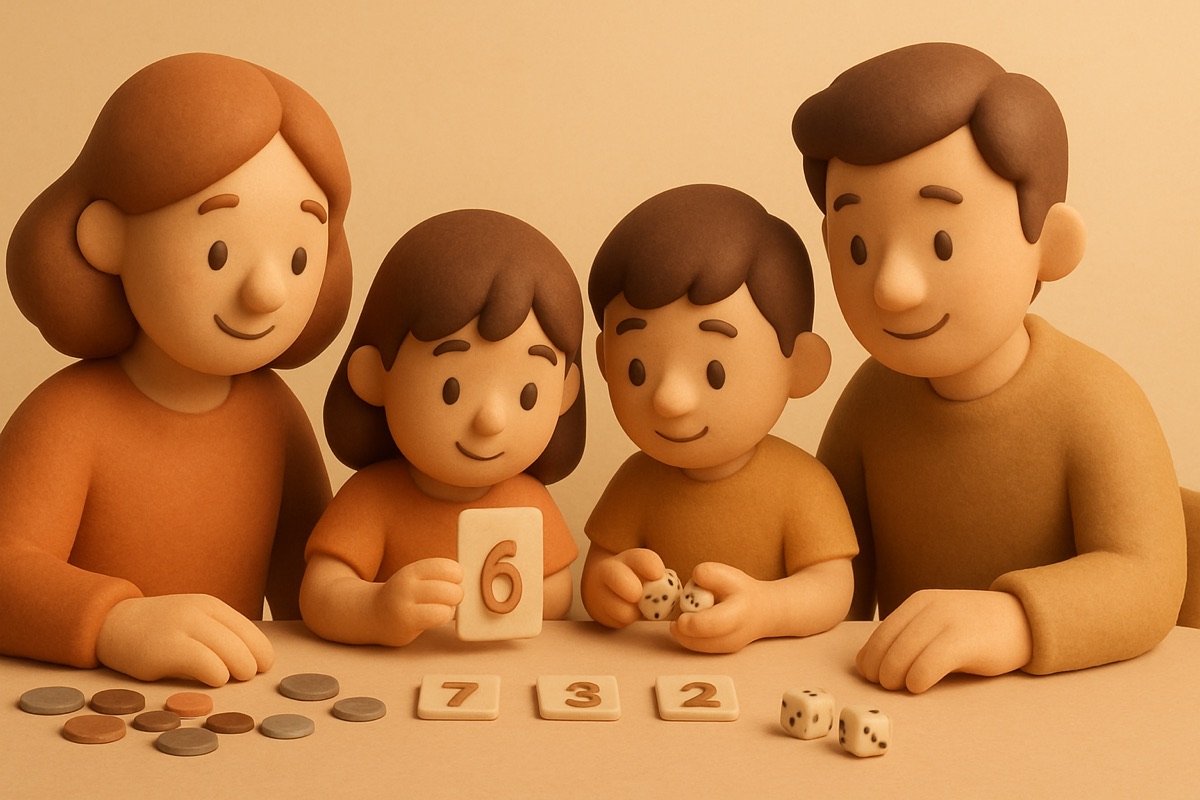
Every classroom I've taught in had a drawer of coins I'd scrounged from my own couch cushions, and it out-taught the money unit in the textbook every single year. There's something about real coins that a picture of a coin never captures. The weight, the different sizes, the fact that a dime is smaller than a nickel but worth more, which drives kids beautifully crazy until they get it. If you want money math games for kids that actually stick, start with the change you already have.
Go dig it out. A cup of pennies, nickels, dimes, and quarters is all you need. You don't have to sort it first. Half the learning is in the sorting.
Start with sorting and skip-counting
Before any game, dump the change on the table and have your child sort it into piles. This is not busywork. Sorting forces them to actually look at each coin and name it, which is the foundation everything else sits on.
Once it's sorted, count each pile out loud together.
- Pennies by ones: one, two, three.
- Nickels by fives: five, ten, fifteen.
- Dimes by tens: ten, twenty, thirty.
- Quarters by twenty-fives, which is the hardest skip-count and the most useful.
I had a third grader who could recite her times tables but froze on counting a handful of nickels. Skip-counting real coins fixed it in a week, because the coins gave the numbers a reason to exist. Builds: skip-counting, coin recognition, place value.
Coin War
You know War with playing cards. This is the money version and it's the game I recommend first.
Split the coins evenly between two players, face down in a pile. Each player flips one coin. Whoever's coin is worth more takes both. If they tie, it's a war, three coins down and flip a fourth to break it.
The magic here is the dime-versus-nickel moment. The nickel is bigger, so young kids grab it as the winner, and then you get to have the conversation about how size and value aren't the same thing. That one lesson is worth the whole game. Builds: comparing values, coin recognition, the idea that worth isn't about size.
Make a Dollar
Deal out a small handful of mixed coins to each player. On the count of three, everyone races to combine their coins into exactly one dollar. First to hit a dollar wins the round. If nobody can make exactly a dollar, closest without going over takes it.
This forces real addition with regrouping. Four quarters, or two quarters and five dimes, or a quarter, five dimes, four nickels, and five pennies. There are dozens of ways, and finding them is exactly the flexible thinking that makes bigger math easier later. Builds: adding money, making change, flexible combinations.
For a younger kid, change the target to a quarter or fifty cents so the numbers stay friendly.
The Store
This is the one my classes begged for. Grab five or six things off a shelf, a granola bar, a marker, a toy car, and put a price tag on each with a sticky note. Keep prices under a dollar to start. One of you is the shopkeeper, one is the customer with a pile of coins.
The customer picks something and has to pay the exact amount, or pay with a bigger coin and figure out the change owed. Then you swap roles. Making change is genuinely hard for kids, harder than adding, because it runs the operation backward. Doing it with real coins in hand, over and over, in a game they actually enjoy, is how it finally clicks.
I once watched a kid who'd bombed the making-change quiz run a pretend snack shop for twenty minutes and hand back perfect change every time. Same skill, no anxiety, because it was a game and not a test. Builds: making change, subtraction, mental math under a little friendly pressure.
Guess the Handful
A quick one for in-between moments. Grab a random fistful of coins and drop them on the table. Before counting, everyone guesses the total. Then count it together and see who was closest.
The guessing is the point. Estimating money value builds number sense, and over a few rounds kids get startlingly good at eyeballing a pile. It also turns the counting itself into something they want to do, because they're checking their guess. Builds: estimation, counting mixed coins, number sense.
A few things that make these work better
- Use real coins, not plastic play money, if you can. The different sizes and weights carry information. Play money flattens all that out.
- Let them handle the coins the whole time. Money math is physical for kids. The moment it becomes a worksheet, half the understanding drains out.
- Keep rounds short. These are five and ten minute games, not an hour. Stop while they still want more.
- Don't correct every mistake instantly. When a kid calls the nickel the winner over the dime, let the game reveal it. The self-correction sticks better than my saying so.
One last note. Reward the thinking, not the winning. When my own students got good at these, I didn't hand out prizes for who won Coin War. I noticed out loud when someone figured out a tricky bit of change or caught the dime-nickel trap on their own. That's the progress worth celebrating, and it costs nothing but attention. The junk drawer already gave you the rest.