Addition and Subtraction Games for First and Second Graders
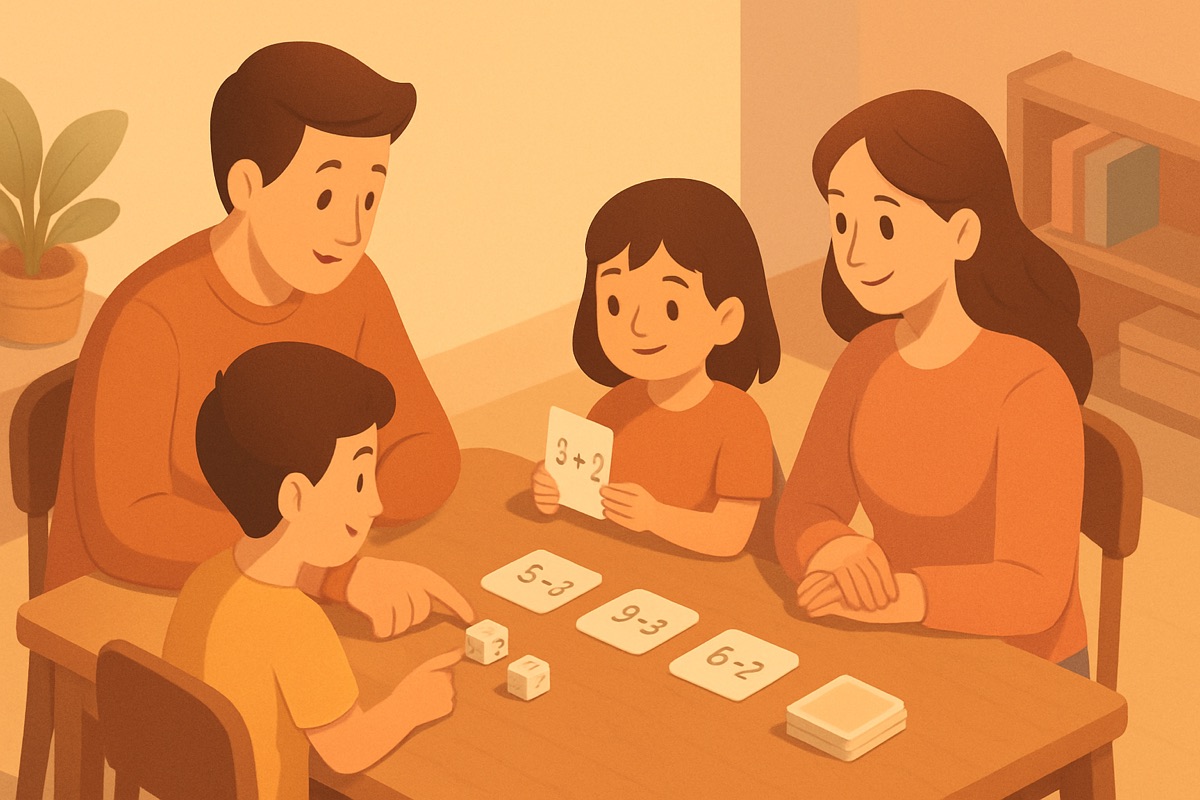
I once watched a second grader named Priya spend twenty minutes refusing to touch a subtraction worksheet, then, ten minutes later, cheerfully do about forty subtraction problems in her head because we'd turned it into a card game with her little brother. Same math. Completely different kid. That gap is the whole reason I steer parents toward games. Good addition games for kids don't dress up drill in a costume. They give a child a reason to want the answer.
After a lot of years teaching six and seven year olds, I've come to trust a handful of these. None of them need a screen or a store. Most use things sitting in a kitchen drawer right now.
Why games beat worksheets at this age
A worksheet asks a child to produce answers with nothing at stake. A game asks the same thing, but now there's a turn to win, a card to beat, a total to sneak past your opponent. That small bit of tension does something worksheets can't. It makes the child think about numbers instead of just producing them.
The goal at first and second grade isn't speed. It's number sense, the feeling for how numbers come apart and fit back together. A kid who really understands that 8 is 5 and 3, or that 12 take away 4 is the same as 12 take away 2 take away 2, is building something a timer never measures. Games give that understanding room to grow because there's no red pen and no rush.
Dice games for addition
Dice are the best two dollars you'll ever spend on math. Here are three that carry a lot of weight:
- Race to 20. Each player rolls two dice, adds them, and keeps a running total. First to hit exactly 20 wins, but you can't go over. That last part is the good stuff. When your kid is sitting on 17 and rolls an 8, they have to reason about it instead of just adding.
- Roll and cover. Draw a grid of numbers from 2 to 12. Roll two dice, add them, cover that number. First to cover a full row wins. Kids figure out fast that 7 comes up more than 12, which is a real piece of thinking hiding inside a simple game.
- Doubles war. Roll one die, double it. Highest double takes the round. Doubling is a shortcut that makes bigger addition easier later, so drilling it now pays off in third grade.
Roll fast, keep it light, and let your kid roll for you sometimes so they add your numbers too. That sneaks in extra practice without it feeling like their turn to be tested.
Card games for subtraction
Subtraction is where kids get stuck, and it's usually because they only ever meet it as "the hard one that comes after addition." A deck of cards fixes that by making subtraction feel like just another move.
Try Make Ten Go Fish. Instead of matching pairs, players ask for the card that makes ten with a card in their hand. Holding a 6? You ask for a 4. This looks like addition, but it's quietly teaching the subtraction facts too, because your kid is figuring out ten minus six every single time.
For a more direct one, play Difference War. Each player flips two cards and finds the difference between them. Bigger difference wins. A kid with a 9 and a 2 beats a kid with a 6 and a 5, and to know that, both of them just did subtraction without being told to. Face cards can be tens, or pull them out for younger players.
Games that use money
Coins are underrated for this. There's something about real pennies and nickels on a table that makes numbers feel solid.
Set up a little store. Price a few small toys or snacks at things like 6 cents, 8 cents, 12 cents. Give your child a small pile of pennies and let them buy things and count out change. Making change is subtraction that a child can actually see, which is exactly what a struggling kid needs. If you paid 15 cents for something that cost 12, the three pennies coming back are the answer to 15 minus 12, sitting right there in their hand.
You can grow this as they do. Add nickels, then dimes. Have them be the shopkeeper so they're the one figuring out change. My own students always argued over who got to run the register, which tells you everything about how differently kids treat math when it comes with a job.
How to keep it from turning into a drill
The fastest way to ruin a math game is to hover and correct. Here's what actually keeps these fun:
- Play a real turn yourself. Add out loud, make a mistake sometimes, let them catch you.
- Stop while they still want more. Five good minutes beats twenty grudging ones.
- Don't announce that it's math. Just play the game.
- When they get stuck, ask a question instead of giving the answer. "How far is 12 from 20?" moves a kid forward. "The answer is 8" ends the thinking.
That last point matters more than the games themselves. Real progress comes from a child working through the number in their own head, not from getting to the right answer the fastest. A kid who counts up slowly but understands what they're doing is in far better shape than one who blurts memorized facts and falls apart the moment the problem looks different.
You don't need a program or a plan. You need a pair of dice, a deck of cards, a handful of pennies, and about ten minutes when nobody's in a rush. Do that a few times a week and by spring you'll have a kid who thinks addition and subtraction are things you do for fun. Which, for a first or second grader, is most of the battle.