How We Built a Math Game That Rewards Mastery, Not Grinding
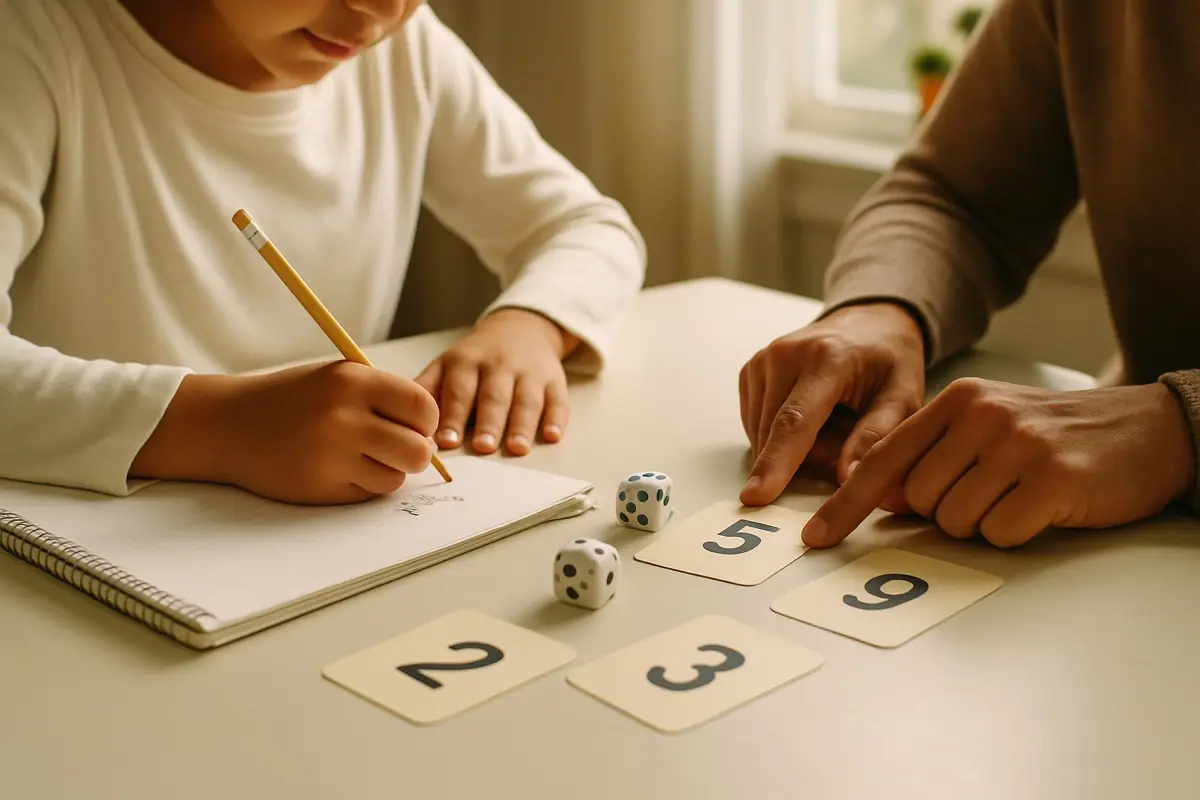
The first version of our reward system was dumb, and I built it, so I get to say that. A kid answered a question, got a point. Answer a hundred questions, get a hundred points. It ran fine. It was also completely gameable. My own daughter figured out in about a day that she could tap the same easy addition problem over and over, rack up points, and never touch the multiplication she actually needed to work on. She wasn't cheating. She was doing exactly what the system rewarded. The system was just rewarding the wrong thing.
That's the trap almost every math app falls into, and it's worth understanding if you're a parent deciding what to put on your kid's tablet. When a math game rewards mastery, it looks very different under the hood from one that rewards volume. Most reward volume, because volume is trivial to count and mastery is not. I want to walk through what we changed and why, because the same logic tells you what to look for in any app, not just ours.
Why apps reward volume (it's easier to build)
Counting is cheap. "Problems attempted" is one line of code: every time a kid taps an answer, add one. It never breaks, it always goes up, and it makes a very satisfying number to show on a screen. From a build standpoint, it's the path of least resistance.
The problem is that the number measures activity, not learning. A kid can attempt five hundred problems and be exactly as confused at the end as at the start. Worse, a reward tied purely to volume actively pushes kids toward the easiest problems, because easy problems can be answered faster, and faster means more points per minute. You've built a machine that pays kids to avoid the hard stuff. That is the precise opposite of what a math practice tool is for.
So the honest first question isn't "how do we make the points feel exciting." It's "what are we actually paying the kid to do."
What we decided to actually measure
We threw out raw problem count as the thing that earns rewards. Instead we track a few signals that get closer to real progress:
- Facts that moved from slow to fast. If a kid used to take eight seconds on seven times six and now takes two, that's genuine progress, and it earns.
- Problems answered correctly at the edge of a kid's ability, not below it. Nailing something slightly hard is worth more than nailing something trivial.
- Retention over time. Getting a fact right today is fine. Getting it right again next week, without warm-up, is what we actually care about, so we check back on old facts and reward the ones that stuck.
None of these is as simple as "add one per tap." Each one needs the app to remember how a specific kid did on a specific type of problem over days and weeks, then compare against their own past self. It's more work. It's the difference between a game that measures effort and a game that measures whether the effort worked.
The anti-grinding rules
Once you decide to reward real progress, you have to actively defend against grinding, because kids are smart and will find the shortcut. A few of the guardrails we put in:
- Repeating the same easy problem pays less each time. The tenth identical two-plus-three is worth almost nothing. The app noticed you already know it.
- There's a daily cap on rewards you can earn from the non-math stuff around the game, so a kid can't just farm the fun parts and skip the math. The math itself is what pays.
- Difficulty nudges upward as a kid gets fluent, so "the easy problems" stop being available to grind. If you've mastered a level, the game quietly stops offering it and moves you on.
That last one is the important one philosophically. A good practice tool should keep meeting a kid right at the edge of what they can do, because that edge is where learning actually happens. Sitting comfortably in stuff you've already mastered feels productive and teaches nothing. Our job as the people who built the thing is to make sure the rewards line up with the edge, not with the comfortable middle.
What this means for you, picking an app
You don't have to take our word for how we built ours. You can test any math app your kid uses with a couple of simple experiments at the kitchen table.
- Have your kid deliberately answer the same easy problem five times in a row. Do the rewards keep flowing at the same rate? If yes, the app is paying for volume, and your kid will eventually figure that out.
- Watch whether the app ever gets harder on its own. If a kid can stay parked in addition forever while never being pushed toward the next thing, the app has no real sense of mastery. It's just a tap counter with nice animations.
- Ask your kid what they do to "win." If the answer is "I just do a lot of them fast," the game is rewarding grinding. If the answer involves getting better at something specific, the design is pointing them the right way.
The tell is always the same. Does the reward track whether the kid is actually learning, or just whether they're busy? Busy is easy to fake. Learning is not.
We build Math Prizes for our own two kids, which is a useful constraint, because I have to watch them play it every day and I can't fool myself about whether it's working. When my daughter stopped tapping the same easy problem for points and started chasing the "you got faster at this" reward instead, that was the signal the design had finally turned the corner. The points weren't the point. Getting better was, and the points finally agreed.