How To Help a Child Who Says 'I Don't Get It' About Everything in Math
When "I don't get it" means everything and nothing
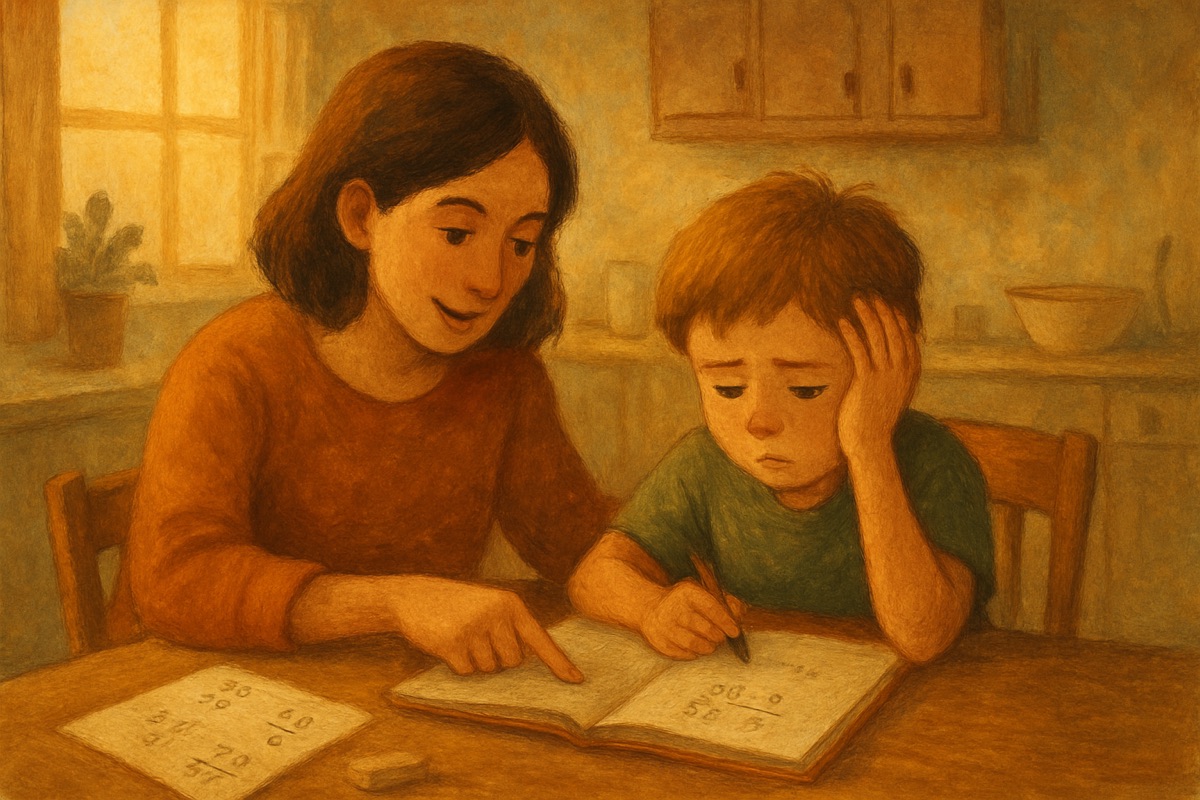
I had a third grader named Priya who answered "I don't get it" to every math problem for about two weeks. Every one. I'd put a problem in front of her, one she'd done correctly the day before, and before she'd even read it she'd say it. "I don't get it." She wasn't lying and she wasn't being lazy. The sentence had just stopped meaning "I don't understand this specific thing" and started meaning "I'm overwhelmed and I want out." When a child says I don't get math about everything, that's almost always what's going on. The words are a door closing, not a description of the problem.
So the first job isn't to explain the math better. It's to figure out what the sentence is actually covering for, because there are only a few things it usually is.
Find out which "I don't get it" it is
"I don't get it" is a blanket, and under the blanket is one of a small number of real things. Your job is to pull the blanket back and see which. It's usually one of these:
- I don't know where to start. The child understands the pieces but can't see the first move. This is the most common one and the easiest to fix.
- I got lost partway through. They started fine, hit a step they didn't have, and the whole thing collapsed backward into "I don't get any of it."
- I got it wrong before and I'm scared to be wrong again. This one isn't about the math at all. It's protection. Saying "I don't get it" before trying means they can't fail at trying.
- I actually don't understand this concept. The real one. Less common than the other three, but it exists, and it's the only one that needs actual reteaching.
You can't help until you know which. And the way you find out is not by asking "do you understand," because the answer is already "no." You find out by making the problem small enough that they have to show you where the wall is.
Shrink the problem until they can point at the wall
Here's what I did with Priya. I stopped putting the whole problem in front of her. I covered it with my hand and showed her one number. "What's this?" She could tell me. I showed her the next part. "What's this one asking, add or take away?" She could usually tell me that too. I kept going one small piece at a time until we hit the spot where she went quiet. And there it was. It wasn't the whole problem. It was one step. She didn't know how to regroup when there was a zero on top, and every problem with a zero in it had become "I don't get it," and then all problems had become "I don't get it," because the fear spread.
The technique is simple and it works on almost every kid. Don't ask them to explain what they don't understand, because if they could name it they wouldn't be stuck. Instead, ask them small questions they can answer until you find the exact one they can't. That question is the whole problem. Everything else was noise.
Some questions that shrink a problem down:
- "Read me just the first sentence. What do we know so far?"
- "Don't solve it. Just tell me, is this an adding problem or a taking-away problem?"
- "Show me the very first thing you'd write down, even if you're not sure it's right."
The last one is my favorite, because "even if you're not sure it's right" gives them permission to move, and a kid who's frozen mostly needs permission to move.
Handle the fear before the math
If the wall turns out to be fear, and a good amount of the time it is, no amount of explaining will get through until the fear comes down. A kid who's decided that being wrong is dangerous will not risk being right, because being right means having tried, and having tried means they could have failed. "I don't get it" is a lot safer than a wrong answer.
The fastest way I know to lower that is to make being wrong boring. When Priya finally guessed at a step and got it wrong, I said "okay, that's not it, try the other way" in the flattest, most nothing voice I could manage, like she'd guessed which hand the coin was in. No sad face. No "that's okay honey." Just, that's not it, try again, next. When wrong stops producing a reaction, it stops being scary, and a kid who isn't scared of wrong will actually attempt the problem, and a kid who attempts the problem gives you something to work with.
Praise the attempt, not the answer. "You tried the regrouping, good, let's see if it worked" tells a kid that the trying is the thing you value. Over a couple of weeks that changes what "I don't get it" costs them, and they say it less.
Reteach the one thing, not everything
Once you've found the actual stuck point, resist the urge to reteach the whole unit. This is the mistake I see most from well-meaning parents. The kid says "I don't get it," so the parent starts over from the beginning of multiplication, and now the kid is grinding through fifteen minutes of stuff they already knew to reach the one thing they didn't, and they're bored and frustrated and it feels like punishment for having struggled.
Don't do that. You found the one step. Teach the one step. Priya didn't need to relearn subtraction. She needed ten minutes on regrouping across a zero, and once she had it, every problem that had been "I don't get it" was suddenly just a problem again. The confidence came back faster than I expected, because it was never really gone. It was buried under one missing step and a pile of fear.
That's the whole approach, and it works because it treats "I don't get it" as a clue instead of a conclusion. The child isn't broken and they aren't bad at math. They've got one wall, and the sentence is hiding where it is. Shrink the problem, find the wall, take the fear out of being wrong, and teach the one thing. Then hand the problem back and watch them get it, because most of the time, they were closer than either of you thought.