Does Speed Matter? Judging Timed Practice Features in Math Apps
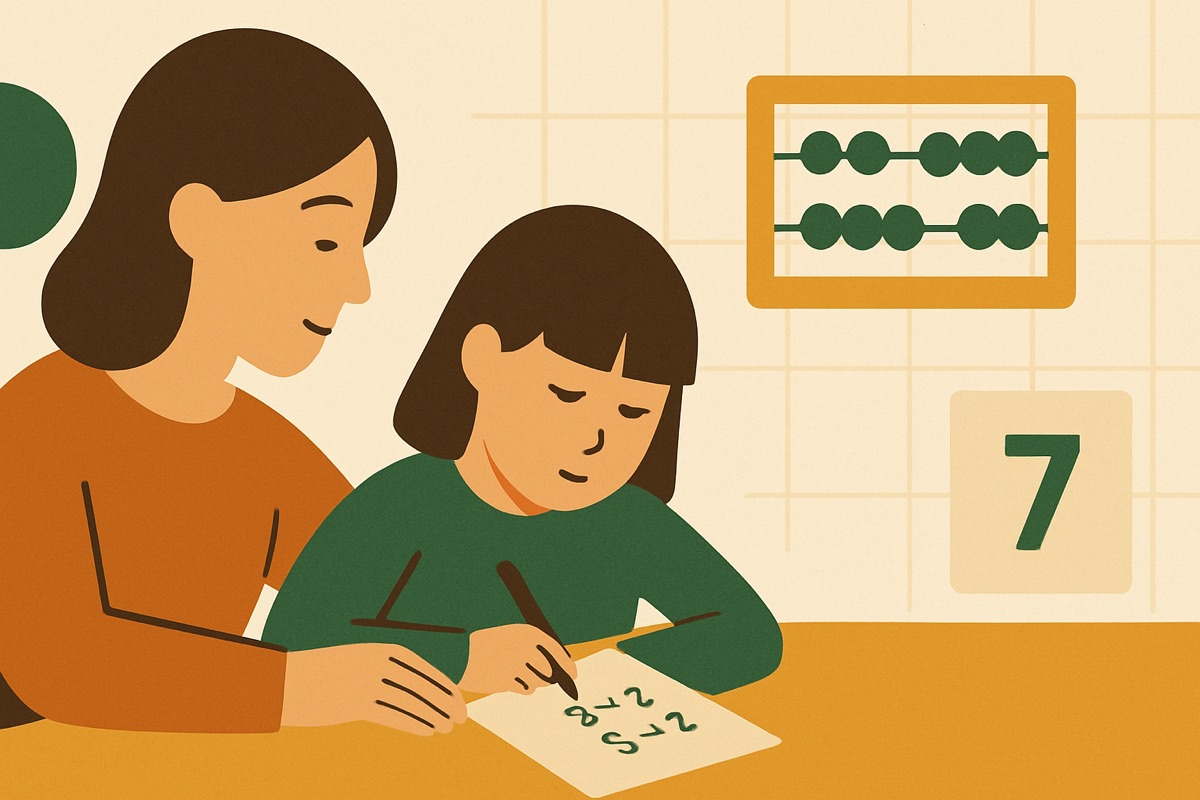
I built a countdown timer into an early version of Math Prizes and then I ripped it out three weeks later. It looked great in a demo. A number ticking down, a little urgency, a score at the end. My daughter used it twice and then started avoiding the app, and when I sat with her I saw why. She knew the answer to seven times six. She just froze because the clock was shrinking, and freezing made her feel stupid, so she stopped playing.
That is the problem with a timed math practice app in one sentence. The clock is a feature that can do two completely different jobs, and the app rarely tells you which one it is doing. Sometimes speed is a real signal of learning. Sometimes it is just pressure dressed up as rigor. Figuring out the difference is the whole game when you are deciding whether to trust one of these tools.
What Speed Actually Measures
There is a real thing called math fact fluency, and speed is a legitimate part of it. When a kid knows that six times seven is forty-two the way they know their own name, they answer fast because they are not calculating, they are recalling. Fast recall frees up their brain for the harder stuff, like multi-step word problems, where you do not want them burning working memory on basic facts.
So speed can be a signal. A kid who takes eleven seconds on six times seven is probably still counting up in their head, and that is worth knowing. A kid who fires it back in a second has that fact locked in.
Here is the catch. Speed is a signal of fluency, not a cause of it. Making a kid go faster does not build the underlying knowledge. It just measures whether the knowledge is already there. Plenty of apps get this backwards and treat the timer as a teaching tool, when all it can honestly do is report.
Two Kinds of Clocks
When I look at a math app now, I sort the timer into one of two buckets almost immediately.
The first kind is a pressure clock. It counts down, it is loud about it, and running out means you lose. The screen turns red, a buzzer goes off, points evaporate. This clock treats every problem like a threat. For a confident kid it can feel like a game. For an anxious kid, and there are a lot of them in math, it confirms their worst fear that they are too slow and everyone can see it.
The second kind is a measuring clock. It times the kid quietly in the background, uses that data to decide which facts need more work, and never punishes a slow answer with a game-over. The kid barely notices it. The app is using speed as information about what to show next, not as a stick.
The features look similar in a screenshot. Both have a timer. The difference is what happens when your kid is slow, and you usually cannot tell until you watch them use it for ten minutes.
How To Tell Which One You Bought
You do not need to read the developer's mind. You need to watch a few specific things while your child plays. Here is my actual checklist:
- What happens on a slow but correct answer? If a right answer that came in slowly still counts as fully right, good. If slowness costs points or triggers a fail state, that is a pressure clock.
- Can the timer be turned off? An app that lets you disable the countdown while keeping the practice is telling you the clock was never the point. That is a good sign.
- Does the app adapt, or just repeat? A measuring clock feeds into which problems come next. If your kid keeps getting the facts they are slow on and stops getting the ones they have mastered, the timer is doing real work.
- How does your kid look after ten minutes? This is the honest test. Loose and a little competitive is fine. Tight shoulders, tears, or "I hate this" means the clock is doing damage regardless of what the marketing says.
That last one overrides everything else. I have seen well-designed timers wreck a specific kid, and I have seen crude ones work fine for another. The child in front of you is better data than any feature list.
When the Clock Earns Its Place
I am not against timers. After I pulled that countdown, I did not go clock-free forever. I added timing back in a quieter form, where it measures response time to figure out which multiplication facts a kid is still shaky on, and it never ends the game when someone is slow. That version does real work without the panic.
Timing makes sense once a kid genuinely knows the material and you are trying to move them from "can figure it out" to "just knows it." A quick speed round on facts they have already learned can be fun, the way a card game is fun. The mistake is using the clock while a kid is still learning the concept. Speed on something you do not understand yet is just stress with a scoreboard.
A rough rule I use: the clock is fine for review, and it has no business anywhere near new learning. If your kid is meeting a concept for the first time inside a countdown, close the app.
The Real Question Behind the Timer
Speed matters, but only as a downstream result of understanding. That order cannot be reversed, and a good math app respects it. The bad ones sell speed as the product because a ticking number is exciting and looks like progress, even when the kid underneath is just getting more anxious and no more fluent.
So when you are judging a timed math practice app, do not ask whether it has a timer. They all do. Ask what the timer does when your kid is slow, and whether the app is using speed to teach or just to score. Watch your child's face for ten minutes. That will tell you more than any feature comparison, and it is the one test the marketing can never fake.