In-App Purchases in Math Games: Where to Draw the Line
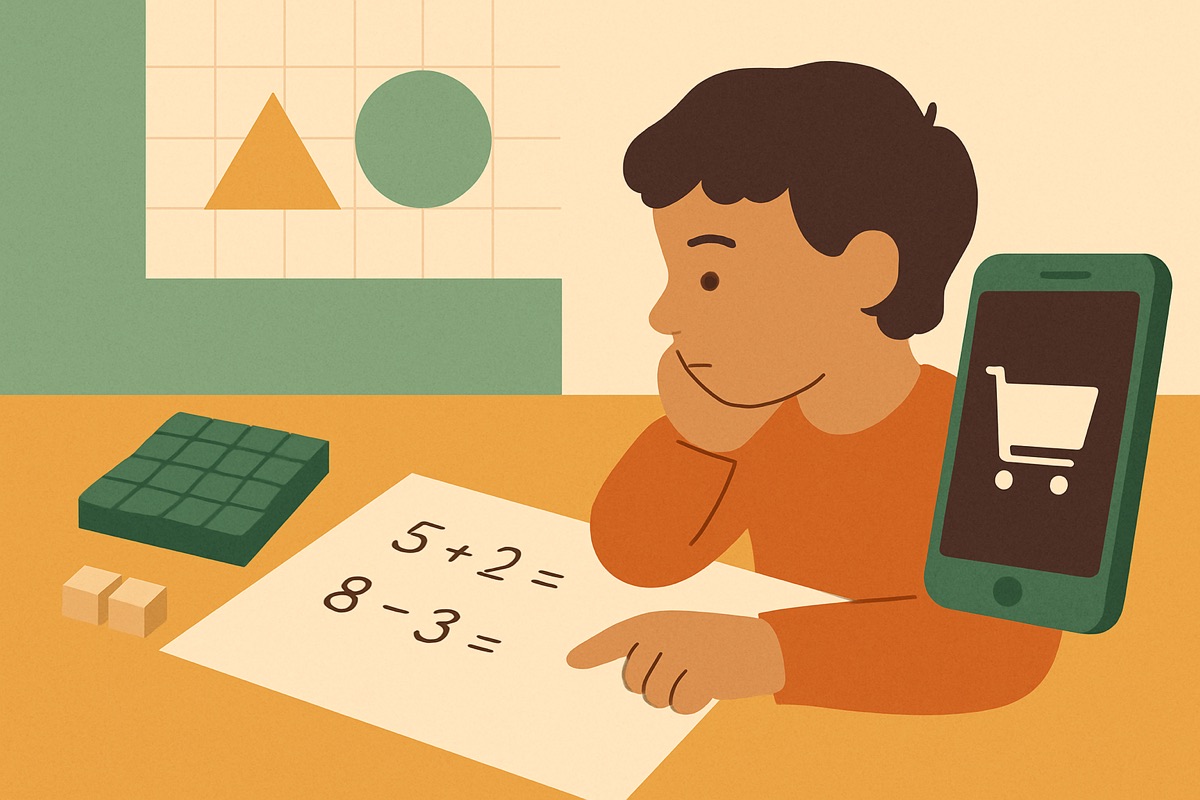
My daughter handed me her tablet one afternoon with a math app open and a pop-up flashing on the screen. It was a chest, gold and glowing, with a timer counting down and a button that said "Open now for 500 gems." She wanted to know if she could have the gems. She's seven. She had no idea that button was tied to my credit card, and she had no idea a grown person in an office somewhere had spent months making that chest feel impossible to ignore.
That's the moment that made me pay real attention to in-app purchases in kids math games. I build software for a living, and I've built a math app for my own kids, so I know what's happening on the other side of that screen. Not all of it is bad. Some in-app purchases are perfectly fair. But the design tricks that get a small child to tap Buy are the same ones used in slot machines, and it's worth knowing which is which before you hand over the tablet.
What you're actually paying for
Strip away the marketing and there are really only a few things an app can sell you.
- The whole app, once. You pay a flat price or a subscription and you get everything. No pop-ups, no locked levels, no currency.
- More content. You bought the addition pack, now you can buy the fractions pack. This is fine. It's the same as buying the next book in a series.
- Removing ads. You pay so your kid stops seeing ads. Reasonable, though I'd argue an app aimed at six-year-olds shouldn't have run the ads in the first place.
- Virtual currency. Gems, coins, stars, whatever they call it. You buy a pile of it, and the pile gets spent on things inside the app. This is the one to watch.
The first three are honest transactions. You know what you paid and what you got. The fourth one is where the design gets slippery, because currency exists to hide the price. When a hat for the character costs 300 gems, and gems come in bundles of 100 or 500 or 1200, your kid has no way to connect "I want the hat" to "this costs Dad four dollars." The number on the price tag stops meaning anything.
The tricks that target kids specifically
I want to be direct about this, because the people building these systems are not accidentally making them addictive. Here are the patterns I look for, and they're the ones that make me close an app for good.
Timers and urgency. That countdown on the chest exists to short-circuit the pause where a kid might think, or ask a parent. Urgency is manufactured. Nothing bad happens if the timer runs out, but a seven-year-old doesn't know that.
Loot boxes and mystery rewards. You pay, and you don't know what you get. Maybe it's a great prize, maybe it's junk. This is gambling with a cartoon skin on it. The uncertainty is the point, because the brain chases an unpredictable reward harder than a guaranteed one. A math app has no business teaching a child that mechanic.
Currency that never divides evenly. You need 500 gems for the thing your kid wants. Gems sell in packs of 400 or 600. So you either come up short or you buy extra, and the extra sits there nagging to be spent. That mismatch is deliberate.
Reward loops that have nothing to do with math. If the kid earns currency just for opening the app, or for tapping through screens, the app has quietly changed its job. It's no longer teaching math. It's training a habit of coming back and spending, and the math is set dressing.
The line I actually draw
Here's my rule, and it's simple. A purchase is fine if it buys real learning content or removes an annoyance, and if I, the adult, can see the actual dollar price before anything happens. A purchase is not fine if it's designed to get my kid to want it, pressure my kid to buy it now, or hide what it costs.
Rewards inside the app should be tied to real progress, not to spending or to just showing up. If a kid earns a prize for finally getting long division to click, that reward means something. If a kid earns the same prize for tapping a glowing box every day, it's teaching them that showing up is the same as learning. It isn't. This is the whole reason I'm skeptical of currency systems: they tend to reward the behavior the company wants (opening the app, spending) instead of the behavior you want (understanding the math).
For what it's worth, when we built Math Prizes we tied the reward economy to correct answers and real skill progress, and we kept the pricing plain, because I didn't want my own kids tapping a chest they didn't understand.
What to do this week
You don't have to become an expert to protect your kid. A few concrete moves cover most of it.
- Turn on the parental controls in the App Store or Play Store that require a password for every purchase. On iOS it's under Screen Time, Content & Privacy Restrictions. On Android it's in the Play Store settings under Purchase authentication. This alone stops the accidental taps.
- Open the app yourself and play it for ten minutes. Look for timers, mystery boxes, and currency. If you see all three, that app is built to extract money, not to teach.
- Check what earns the in-app rewards. If a kid gets currency for anything other than doing math, be suspicious.
- Watch how your kid talks about the app. If they're excited about the math, good. If they're excited about the gems, the app has trained them on the wrong thing.
The chest my daughter showed me is still out there, in one form or another, in a lot of apps. Some companies really are just trying to make a good learning tool and keep the lights on, and I'll happily pay those people. The trick is telling them apart from the ones running a casino for kids. Once you know what the currency is hiding, it gets a lot easier to see.