Consistency Beats Intensity: The Math Practice Truth Nobody Sells You
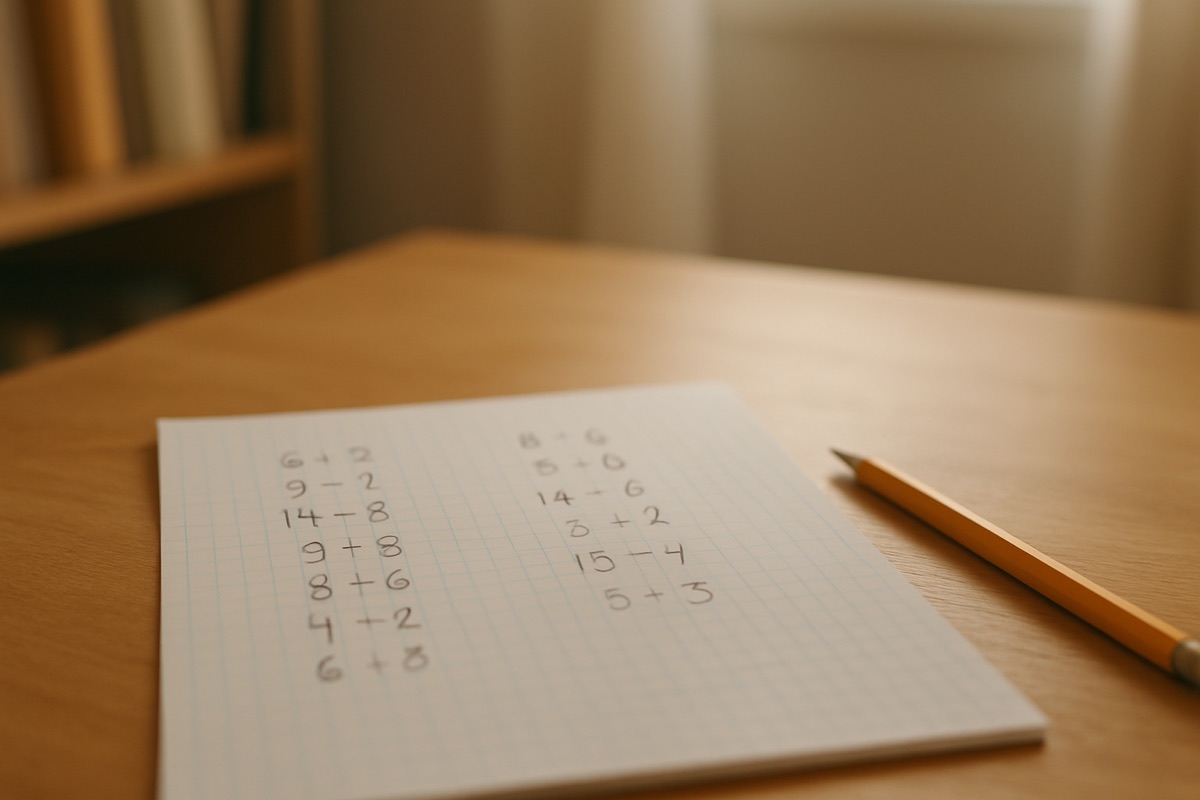
I had two students one year who told the same story from opposite ends. One did a marathon math session every Sunday afternoon, two hours at the kitchen table, and swore off it the other six days. The other did about eight minutes most mornings before school, sometimes in the car. By March, the eight-minutes kid was solid on his times tables and the two-hours kid was still counting on his fingers for sevens. Same effort on paper. Wildly different results. That gap is the whole case for consistency in math practice, and almost nobody selling you a program wants to say it out loud, because "a little every day" doesn't fit on a bright box.
Your brain forgets on a schedule
There's a reason the eight-minutes kid won, and it isn't talent. It's how memory actually works.
When you learn a fact, your brain starts letting go of it almost immediately. By the next day, a chunk is gone. This is normal. The fix is to touch the fact again right before you'd forget it, which tells the brain "keep this one." Do that a few times spaced out over days and the fact settles in for good. Researchers call it spaced repetition, but you don't need the term to use it.
Here's the part that matters. A two-hour cram session on Sunday reviews everything once, then leaves it alone for a week. By the following Sunday, most of it has drained back out, so you spend the first hour just relearning what you already covered. Eight minutes a day hits each fact several times across the week, right in that window where it's about to slip. Less total time, way more sticking.
Small and boring wins
Parents hear "consistent" and picture a rigid schedule with a chart and a timer, and then it collapses the first week of soccer season. That's not what I mean. Consistent just means it happens often enough that the forgetting never gets a head start.
A few things that make daily math practice survive real life:
- Attach it to something that already happens. Right after breakfast, right before the tablet comes on, in the pickup line. A new habit needs an old habit to hang on.
- Keep it short enough that saying no feels silly. Ten minutes. If your kid begs for more, great, but the floor stays low so it's easy to clear on a bad day.
- Same skill for a few days, then move on. Don't jump topics daily. Let a fact family sink in before you switch.
- Miss a day without drama. One skipped day is nothing. Two weeks off is the thing that hurts. Just start again the next morning.
I had a mom tell me she felt guilty because her son only did five minutes some nights. Five minutes, six nights a week, is thirty minutes of practice spread across the exact days his brain needed it. That beats the guilty parents who do zero all week and one furious hour on Saturday. It isn't close.
Intensity feels productive and mostly isn't
The Sunday-cram approach is seductive because it feels like work. Two hours! Sweat! Tears, sometimes! Surely that counts for more than a few minutes here and there.
The trouble is that most of hour two is your kid running on fumes. Attention fades, mistakes climb, and now they're practicing the wrong version of a problem over and over, which is worse than not practicing at all. I've watched a kid get faster and more accurate in the first fifteen minutes and then quietly get slower and sloppier for the next forty-five while the parent felt great about the "effort." That's not learning. That's endurance with a math worksheet.
There's also the emotional cost. Long forced sessions turn math into the thing that ruins Sunday. Kids remember that feeling far longer than they remember any fact. Short and pleasant, even when it's a little boring, keeps the door open. You want your kid to be neutral about math practice, not braced for it.
What "consistent" looks like at different ages
The rhythm changes as kids grow, but the every-day-ish part doesn't.
For a kindergartner or first grader, consistency might be counting objects while you cook, or five minutes of a number-bond game, or one round of a card game after dinner. It barely looks like practice, and it shouldn't. At this age you're building the sense that numbers are friendly and everywhere.
For a second through fourth grader working on facts, ten focused minutes on one operation is plenty. Multiplication one week, mixed review the next. The goal is fluency, meaning the answer comes without a long pause, and fluency is built by frequent short reps, not by a giant sheet of a hundred problems once.
For older kids juggling word problems and multi-step work, consistency shifts toward reviewing yesterday's tricky problem for a few minutes before starting today's. The daily touch keeps the method fresh so they're not relearning the process every single time.
Make the reward match real progress
Here's where I'll gently push back on a lot of apps and reward charts. If the prize is tied to minutes logged or problems attempted, you've quietly told your kid that grinding is the goal. So they grind. They click through, half-reading, racing the clock, and the number goes up while the understanding doesn't.
Tie the payoff to actual progress instead. Did the sevens finally come out fast today? Did she get through the whole set without counting on fingers? That's worth celebrating. A short daily habit where the reward lands on real mastery, not on busywork, is the version worth building. It's the reason we set up Math Prizes to pay off correct, understood answers rather than just time spent staring at a screen.
The honest truth is that consistency is less exciting to sell than a bootcamp or a big weekend push. It's a small thing you do again and again, and it works precisely because it's small enough to keep doing. Ten quiet minutes, most days, aimed at understanding. That's the boring secret. Start tomorrow morning, keep it short, and let the days do the heavy lifting.