The Kitchen Is a Math Classroom: Fractions Kids Can Taste
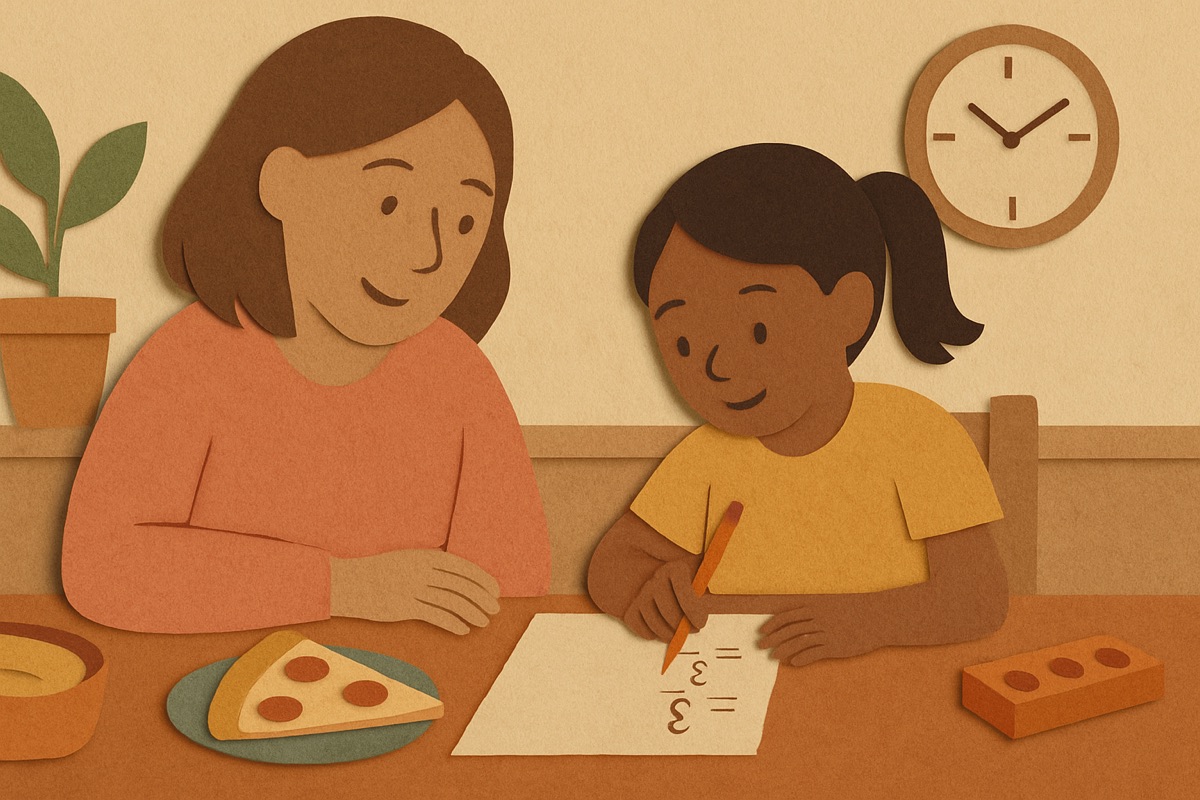
My clearest memory of fractions clicking for a kid is not from a classroom. It's from my own kitchen, a Saturday, a nine year old holding a half-cup measure and a one-third-cup measure and asking, genuinely puzzled, "Wait, why is this one smaller? Three is bigger than two." He'd been getting fraction problems wrong on paper for a month. Thirty seconds of holding the two cups, feeling that one-third holds less than one-half, and something turned over in his head that no worksheet had managed. Cooking math for kids works because fractions stop being symbols and start being things you can hold, pour, and eat.
That's the whole trick of the kitchen. On paper, 1/2 and 1/3 are just numbers with the smaller one looking bigger, which is exactly the confusion that trips kids up. In your hands, the half-cup is obviously more. The mistake corrects itself.
Why the counter beats the workbook
Fractions are the first place a lot of kids fall out of love with math. Up to that point, numbers behaved. Then suddenly the bigger bottom number means a smaller piece, and adding them means finding some common thing first, and none of it matches the rules they trusted. It feels like math betrayed them.
A worksheet asks a kid to trust the rule before they understand it. The kitchen does it backwards, which is the right way. They feel the quantity first, then the notation makes sense as a label for something they already get. When a kid has physically combined a half cup and a quarter cup of flour and seen it fill a three-quarter measure, "1/2 + 1/4 = 3/4" is just writing down what happened. The symbol comes after the experience, which is how understanding actually forms.
The doubled recipe, which does more than you'd think
Here is my favorite kitchen lesson, and it costs you nothing extra. Pick a recipe with fraction amounts and tell your kid you're doubling it. Pancakes are perfect. A basic batch might call for:
- 1 cup flour
- 1/2 cup milk
- 1/4 teaspoon salt
- 3/4 cup blueberries
Now the kid has to double each one. One cup becomes two, easy. Then it gets interesting. Half a cup doubled is a whole cup, which surprises them the first time. A quarter teaspoon doubled is a half. And three-quarters of a cup doubled is a cup and a half, which forces them to deal with an amount bigger than one whole, all on their own, because they want the pancakes.
That last one, 3/4 doubled making 1 1/2, is a real piece of math. Doubling a fraction, converting an improper result into a mixed number, all of it, and they're doing it standing up, motivated, because the reward is breakfast. Halving a recipe is the same lesson in reverse and it's even better, because now they're dividing fractions, which is the part that scares older kids to death, and they'll do it without noticing they're scared.
Let them get it wrong and taste it
This is the part parents resist, and it's the most valuable part. If your kid measures wrong, let it ride sometimes. A batch of cookies with double the salt is a lesson that lives in the mouth forever. I'm not saying ruin dinner every night. I'm saying the occasional failed batch teaches more about why the measurement mattered than any correction from you.
Real understanding comes from the kid noticing the consequence and reasoning back to the cause. "These are gross. Oh. I used a whole tablespoon of salt instead of a teaspoon." That's the whole thing right there, cause and effect in a form they'll never forget. It beats fifty correct worksheet problems that vanished from memory by dinner. Mastery is knowing why, not just producing the right answer while you hover.
Small kitchen questions that add up
You don't need a whole recipe to sneak in fractions. The counter is full of quick ones, and they land better than drills because they're about something real in front of the kid:
- "We cut the pizza into 8 slices and 3 are gone. What fraction is left?"
- "This says half a cup. We only have the quarter cup. How many scoops?"
- "There are 12 strawberries and 4 of us. Fair shares. How many each?"
- "The recipe serves 6 but there's 3 of us. What do we do to every amount?"
Notice these aren't quizzes. They're genuine questions with a genuine reason to answer. Nobody's getting graded. The kid solves it because they want the right amount of pizza, and that motivation is doing the teaching for you.
Keep it light or you'll wreck it
One warning. The second the kitchen starts feeling like school, the magic drains out. If you turn every stir into a pop quiz, your kid will figure out that "helping cook" is a trap and stop volunteering. Ask a fraction question here and there. Let plenty of the cooking just be cooking. The point is that math lives in normal life, not that dinner is now a testing center.
A kid who has doubled a pancake recipe a dozen times owns halves and quarters in a way a kid who only ever saw them on a page does not. It's in their hands and it's in their memory of a good Saturday. That's the kind of learning that lasts, and it happens to come with pancakes.