Building Addition Fluency Without a Single Worksheet
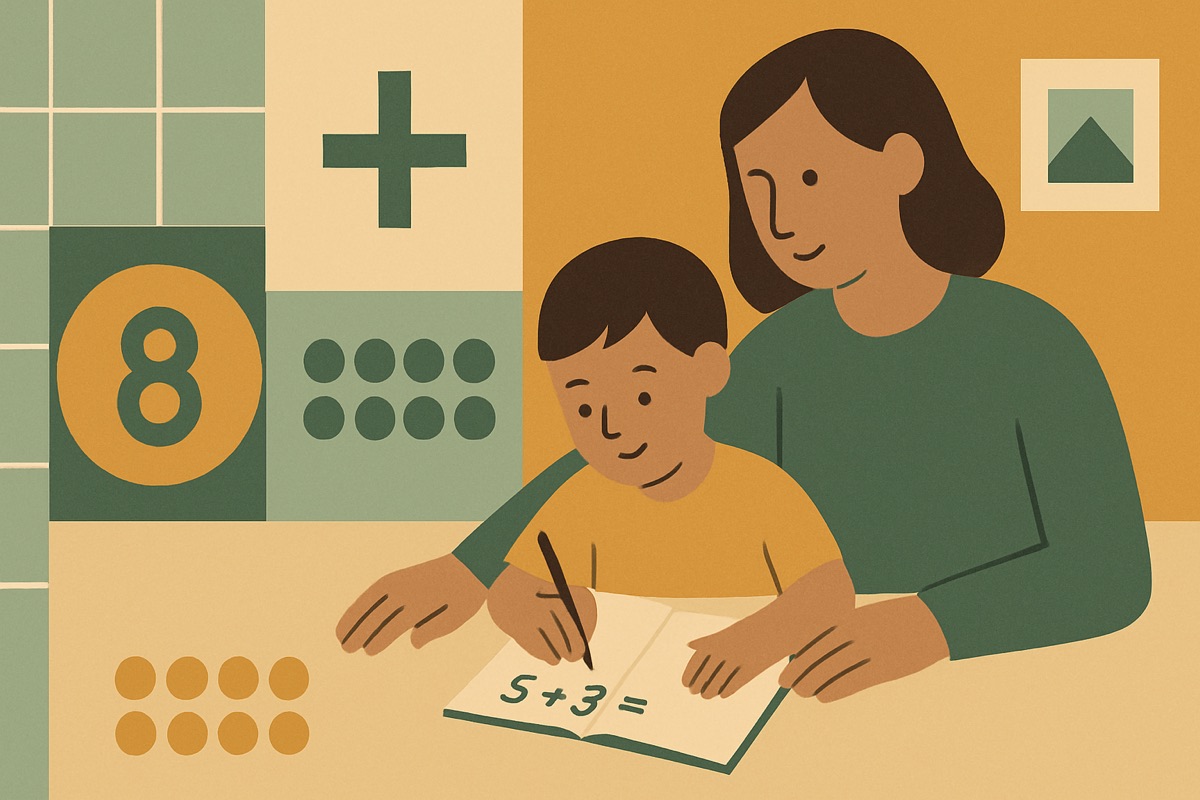
The most fluent adder I ever taught was a second grader who couldn't sit still for a worksheet to save her life. She'd done maybe a dozen the whole year, most of them half-finished. But she could tell you 8 plus 6 before you finished asking, and she got there through a deck of cards and a dice game her grandpa played with her every night. That's when I stopped believing worksheets were the road to fluency. Addition fluency games at home did more for her than a stack of paper ever could, because she actually wanted to play them.
Let me be clear about what fluency even means, because the word gets tossed around. Fluency is fast, accurate recall without counting. A fluent kid doesn't count up from 8 to get 8 plus 6. They just know it's 14, the same way they know their own name. Worksheets can build this, technically, but they're the slowest and most joyless path, and a kid who dreads the path won't walk it often enough to get anywhere. Games solve the "often enough" problem, because kids come back to games on their own.
Why games beat worksheets for fluency
Fluency is built by repetition, and here's the catch: it has to be repetition the brain stays awake for. A kid grinding through a worksheet on autopilot isn't building fast recall. They're building the ability to zone out and still fill in blanks. The math slides right past them.
A game demands attention because something's at stake, even if the stakes are just winning a silly round against Dad. That attention is what turns a fact from "I can figure it out" into "I just know it." Games also front-load the facts kids actually stumble on. Nobody struggles with plus one. The hard ones are the sums that cross ten, the 7s and 8s and 9s, and good games hammer exactly those without your kid noticing they're being drilled.
The games worth playing
You don't need to buy anything. The best ones use a deck of cards, some dice, or nothing at all. Here are the ones that held up across years of my students:
- Make Ten. Deal cards face up. First to grab two that add to ten keeps the pair. This burns the "friends of ten" into a kid's memory, and friends of ten are the backbone of fast mental addition.
- Addition War. Regular card war, but each player flips two cards and adds them. Higher sum wins the pile. Face cards are ten, aces are one. It's War, so kids will play it forever, and every single round is an addition fact.
- Double Dice. Roll two dice, say the sum as fast as you can. Add a third die once the two-dice sums are automatic. Race yourself with a phone timer. Kids love beating their own record.
- Twenty-One-ish. A gentle version of blackjack with the betting stripped out. Kids add their cards toward 21, deciding whether to take another. Real decisions, real adding, zero worksheet.
Notice these all take two minutes to explain and can be played in the ten minutes before dinner. That's the point. A game you'll actually reach for beats the perfect drill you never open.
Fold addition into stuff you already do
Some of the best fluency practice doesn't look like a game at all. It's just talking numbers while life happens. My students whose parents did this arrived faster than the ones who only practiced in a math slot.
Setting the table? "We've got four people and two guests, how many forks?" In the car? "There were 6 red cars and now 5 more, how many red cars have we counted?" Snack time? "You have 8 crackers, I'll give you 5 more, how many before you eat one?" These are addition facts wearing everyday clothes. The kid answers because they care about the crackers, and their brain does the exact same work a worksheet would ask for, minus the dread.
The trick is to keep it light and stop before it turns into a quiz. One or two questions folded into a moment, then move on. The second your kid feels tested, the magic leaks out.
Aim for real recall, not just fast fingers
Here's the thing to watch for, because it trips up well-meaning parents. Speed alone isn't fluency. A kid who counts on their fingers very quickly is still counting, and counting breaks down the moment the numbers get bigger. You want them to stop counting and start knowing.
So notice how your kid gets to the answer, not just whether they get it. If they're still counting up for 9 plus 4, that fact isn't fluent yet, no matter how fast the fingers move. Spend a little extra game time on the facts that still need counting, and lighten up on the ones they clearly own. There's no reason to keep drilling 2 plus 2 when a kid can rattle it off in their sleep. Push where the counting still happens. That's where fluency actually gets built, and it's why a good app that adapts to your kid, or just a parent paying attention over a card game, beats a one-size worksheet that spends half its problems on facts they already know cold.
What patience looks like here
Fluency comes in slowly and then all at once. For weeks it'll seem like nothing's changing, your kid still pausing on 7 plus 8, and you'll wonder if the games are doing anything. Then one week the pauses shorten, and a few weeks after that they're gone, and you realize your kid just knows their addition facts and you never made them cry over a worksheet to get there.
That second grader with the card deck went on to be genuinely good at math, and I don't think it was luck. She learned early that numbers were something you played with, not something that happened to you on a timed test. Pick two of these games, play them a few nights a week, sprinkle in the cracker questions, and give it a season. The worksheets your kid dodged won't be missed.