When Practice Should Stop: Reading the Signs Your Kid Is Done for Today
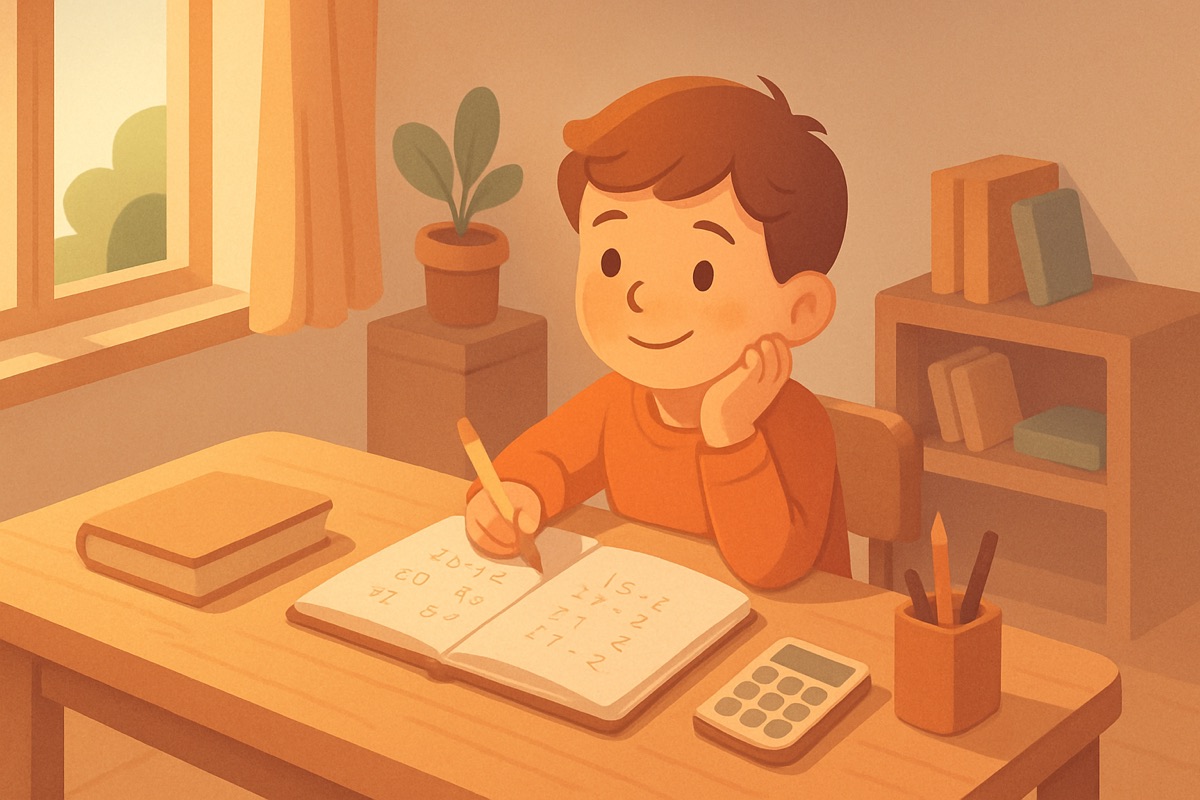
A boy in my class, Diego, used to do math homework at the kitchen table for forty-five minutes every night, and his mom was proud of it until she noticed the last twenty minutes were all erasing. He was not learning in that stretch. He was just sitting there, tired, making and unmaking the same mistakes. When she cut him off at twenty-five minutes, his grades went up. If you have ever wondered how much math practice is too much, that story is most of the answer. Too much is the point where learning stops and grinding begins, and that point comes sooner than most of us think.
I have watched a lot of kids practice math over the years, in class and in conversations with parents. The single most common mistake I see at home is not too little practice. It is practice that runs long past the point of doing any good.
Why more is not better
There is a real ceiling on how much focused math a young kid can do in one sitting, and it is lower than you would guess. For most elementary kids it is somewhere between ten and twenty-five minutes of real concentration. After that the brain is not absorbing new work. It is just enduring.
The damage from pushing past that ceiling is not only the wasted time. It is what the kid learns about math itself. When practice always ends in frustration and a fight, the lesson that sticks is not the multiplication facts. It is that math is the thing that makes the evening go bad. That association is expensive, and it does not wash out easily. A kid who ends every session miserable will resist starting the next one, and now you have a motivation problem on top of a math problem.
Ten good minutes beat thirty grinding ones. I would rather a kid do a short, sharp session and walk away still willing to come back tomorrow than a long one that poisons the whole idea.
The signs a kid is done
Kids will rarely say "I am mentally out of gas." They show it instead, and the signs are pretty reliable once you know them. Watch for these.
- The mistakes change character. Early on, errors come from not knowing. Late in a session, they come from not caring, careless slips on problems the kid clearly can do.
- Speed drops off a cliff. A problem that took ten seconds now takes a minute of staring.
- The body checks out. Slumping, head on the arm, fidgeting, suddenly needing water and the bathroom and a snack in quick succession.
- The eraser gets busy. Lots of erasing and rewriting the same thing is a sign the thinking has stopped and the anxiety has taken over.
- The mood curdles. A kid who was fine gets snippy, teary, or silent. That is not attitude. That is a depleted brain.
When you see two or three of these together, the useful part of the session is over. Anything after that is you and your kid pretending, and the kid knows it too.
Stop at a win, not a wall
Here is a trick that changes how the next session starts. Do not stop when your kid hits a wall. Stop right after they get one right.
If you push until they are stuck and frustrated and then quit, that failure is the last thing they remember, and it is what they carry to tomorrow. If instead you end on a problem they nailed, even an easy one, the session closes on the feeling of being capable. That feeling is what makes a kid willing to sit down again.
So when you see the signs above starting, do not slam the book shut mid-struggle. Hand them one they can definitely do, let them get it, and then say you are done. "That was a good one. Let's stop there." You are managing the memory of the session, not just its length, and the memory is what shapes whether the next one happens without a fight.
Short and steady wins
The math on this is simple. Ten focused minutes a day, five days a week, is fifty good minutes, and it beats one exhausting ninety-minute cram on Sunday every single time. Little and often is how skills actually build, because the brain needs the overnight gap to file what it learned. Massed practice feels productive and mostly is not.
This is also why I am skeptical of anything that pushes volume for its own sake. A worksheet with a hundred problems, or an app that keeps dangling one more level to rack up points, is optimizing for minutes on the page, not for understanding. The kid grinds to hit the number and learns very little in the back half. Good practice rewards getting things right and then lets the kid stop. If a tool cannot let your kid walk away satisfied, it is working against you.
Trust the read
Some days your kid will have twenty solid minutes in them. Some days they come home wrung out and eight minutes is all there is, and eight good minutes is a fine day. The amount is not fixed, and chasing a set number every night misses the point. Read the kid in front of you.
Diego's mom told me the biggest change was not his grades, it was that he stopped dreading the table. He would sit down, do his short stretch, get one last easy one right, and go play. How much math practice is too much has no single answer, but there is a good rule of thumb hiding in all of this. When the learning stops, you stop, even if the clock says there is time left. The clock is not the thing you are trying to fill. The kid is.