Resilience in Math: Raising a Kid Who Tries the Hard Problem Twice
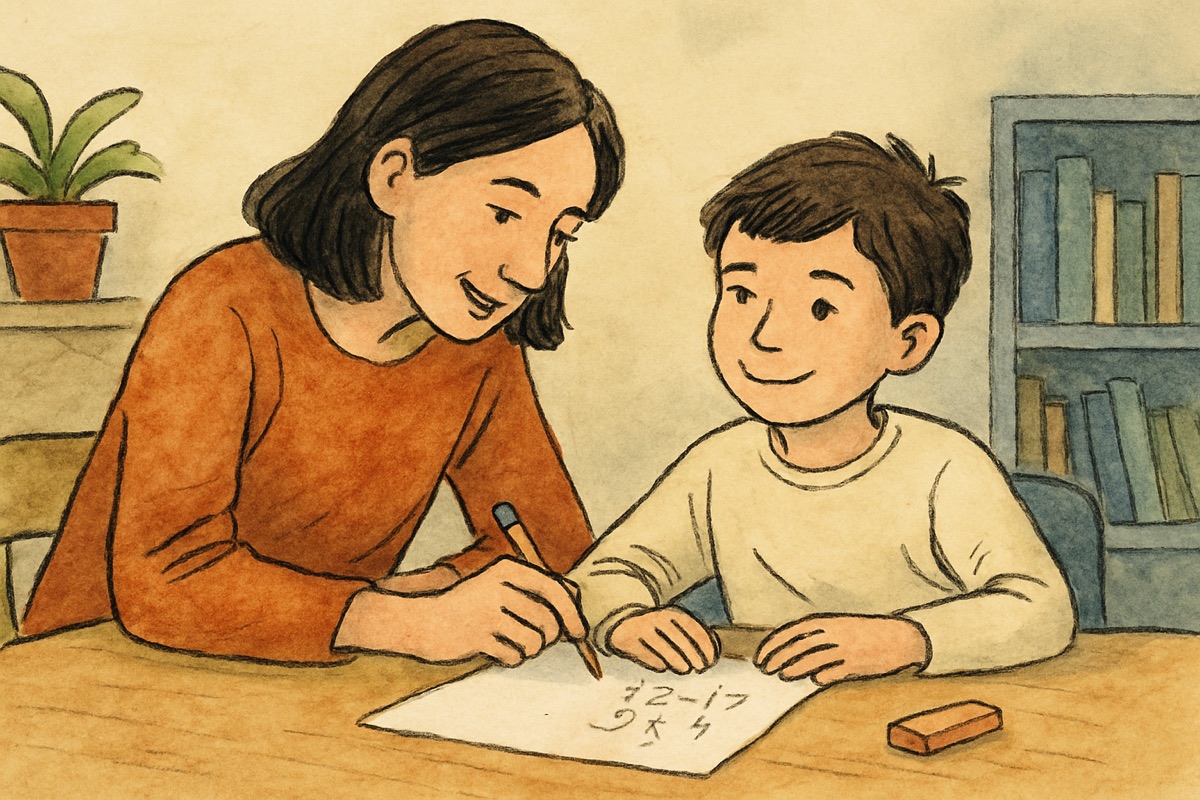
There's a moment I watch for in every class. A kid hits a problem that doesn't crack on the first try, and their pencil stops. What happens in the next ten seconds tells me more about how they'll do in math than any test score. Some kids read it again and take another run. Some put the pencil down and wait for me to rescue them. The difference between those two kids isn't talent. It's whether anyone has taught them that being stuck is survivable.
Building resilience in math is really about that ten-second gap. Not grit as a poster slogan, but the specific, learnable habit of going back to a hard problem a second time instead of quitting the first. Here's what actually builds it, from someone who's watched it fail and succeed in a lot of nine-year-olds.
Stuck is the normal state, not the emergency
Most kids believe, deep down, that math is supposed to click instantly, and that getting stuck means something has gone wrong. Where do they get this? From us, usually. From every time an adult solved the problem for them at the first sign of struggle, which quietly taught them that struggle is a signal to stop and call for help.
The fix starts with normalizing stuck out loud. When my students hit a wall, I don't rush in. I say, "Good, you found the hard part. That's where the actual math is." I want stuck to feel like a landmark, not an alarm. A kid who thinks stuck is failure will bail the moment it shows up. A kid who thinks stuck is the work will lean in.
You can do this at home with almost nothing. When your kid groans that a problem is too hard, resist the urge to make it easy or make it go away. Try, "Yeah, this one's a fighter. Where does it stop making sense?" You've just told them that hard is expected and stuck is locatable, both of which make trying again feel possible.
Rescue too fast and you teach helplessness
I know how hard this one is, because watching your kid struggle is genuinely uncomfortable. But every time we jump in and finish the problem, we teach a small lesson: you couldn't have done this, so I did it for you. Do that enough and the kid stops trying, not because they're lazy, but because they've correctly learned that waiting works.
There's a stretch of productive struggle that has to happen before help arrives, and the timing matters. Too soon and you rob them of the win. Too late and they drown. The sweet spot is when they're working but stuck, and the move is not to give the answer but to give the smallest possible nudge.
- Instead of the answer, ask, "What have you tried so far?"
- Instead of the next step, ask, "What do you already know from the problem?"
- Instead of solving it, point at one line and ask, "What's happening right here?"
Each of these keeps the pencil in the kid's hand. The goal is for the breakthrough to come out of their head, so they log it as something they did. That memory, of having been stuck and having gotten unstuck by themselves, is the raw material resilience is made of.
Praise the second attempt, not the right answer
Here's a small change that pays off for years. When your kid finally gets a hard problem, don't lead with "See, you're so smart." Lead with "You went back and tried it again. That's the whole thing."
Praising the answer tells the kid the answer is what mattered, and by extension that a wrong answer would have made them the wrong kind of kid. Praising the second attempt tells them the trying is what mattered, and trying is the one part they fully control. I've watched this shift a kid's whole relationship with getting things wrong. A boy in my class used to crumple his paper the second he made a mistake. We spent a few weeks where I only commented on whether he went back, never on whether he got it right. By spring he was erasing and re-trying without a flicker, because the erasing had stopped meaning failure and started meaning work.
Small hard things, on purpose, often
Resilience isn't built by one dramatic breakthrough. It's built by a steady diet of small hard things that a kid pushes through and survives. A problem that takes two tries. A puzzle that needs a walk-away and a return. A fact they couldn't recall yesterday and nailed today.
This is also where a lot of math practice goes wrong. Endless easy repetition doesn't build resilience, because nothing ever gets hard enough to require a second try. A kid can grind through fifty problems they already know and never once practice the actual skill of being stuck and continuing anyway. The practice that builds resilience is the kind that sits right at the edge of what they can do, hard enough to require effort, not so hard it floods them. When rewards are tied to real progress, to mastering something that was genuinely difficult, the kid learns that the hard part is where the good stuff is. When rewards come from mindless volume, they learn the opposite, that math is a chore to get through.
Keep the hard things small and frequent, and celebrate the return more than the result. That's the whole recipe, repeated a thousand times.
What it looks like when it's working
You'll know it's taking hold when the ten-second gap changes. The pencil stops, and then it starts again on its own. Your kid rereads the problem instead of looking up at you. They mutter "wait, let me try something." They get one wrong and reach for the eraser instead of the exit.
None of this means they'll love every math problem. My most resilient students still sigh at a hard worksheet like anyone would. Resilience isn't enjoyment. It's the willingness to take a second run at the thing that beat you the first time, and that willingness is a muscle, not a personality. You build it the way you build any muscle, with the right amount of strain, over and over, in a place where it's safe to fail and try again.
The kid who tries the hard problem twice isn't a different kind of kid. They're a kid who's been shown, again and again, that the second try is where math actually happens. Show them that enough times and it stops being something you tell them. It becomes something they know.