The No-Worksheet Summer Math Plan for Grades 1 to 5
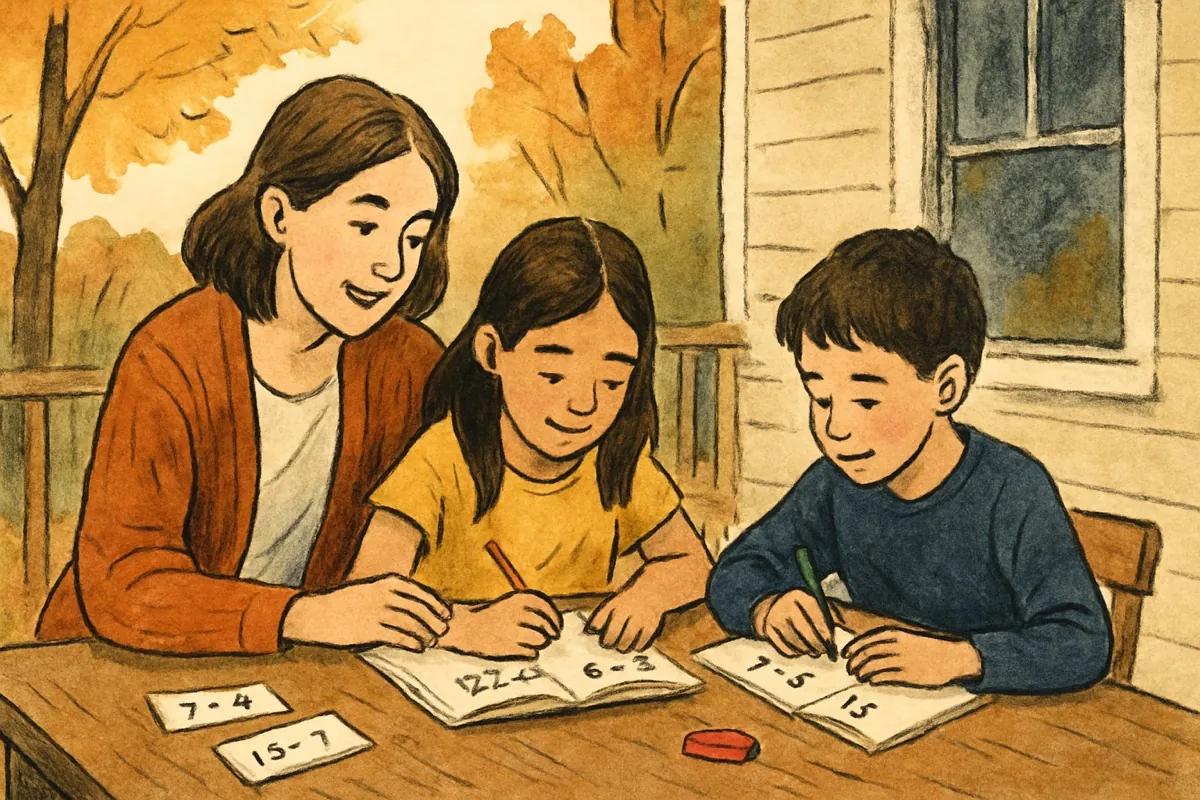
Last June a mom handed me a workbook at pickup and asked if I thought it was a good one for the summer. It was 240 pages. I flipped through it, and by page 30 the problems were already the same ones on page 12, just with different numbers. I told her the truth. Her daughter would fill in maybe eight pages, mostly in the last week of August, in the car, in pencil that would smear.
That's the thing about the summer workbook. It looks like a plan, but it's really just a stack of paper that makes everyone feel guilty by July. The good news is that the best summer math activities kids actually do have nothing to do with worksheets. They happen at the grocery store, the kitchen counter, and the back seat. Here's how I'd map out a whole summer, grade by grade, without buying a single workbook.
Why the workbook usually loses
Kids get about ten months of school. When it ends, most of them are done sitting still and filling in blanks, and I don't blame them. The research on summer slide is real, but the fix people reach for is usually the wrong shape. A worksheet asks a kid to repeat a skill they might already have, in the least fun way possible, with no reason to care about the answer.
What holds math over the summer isn't repetition. It's use. A kid who splits a bag of 24 grapes evenly among four cousins is doing division, and she's doing it because she wants her fair share, not because a box told her to. That's the whole idea here. Tie the math to something the kid actually wants to figure out, and you don't need to bribe them through 240 pages.
The plan, ten minutes at a time
You don't need an hour. You need a few short moments most days, woven into stuff you're already doing. I tell parents to aim for something like this:
- Three grocery or errand moments a week. Estimating totals, counting change, comparing prices per unit.
- Two kitchen sessions a week. Doubling a recipe, halving it, reading measurements.
- A card or dice game a few nights a week. Ten minutes, not a tournament.
- One "real problem" a week that the kid owns. Planning a lemonade stand, budgeting an allowance, measuring a fort.
That's it. It adds up to more real practice than the workbook ever would, and nobody cries.
Grades 1 and 2: count everything
At this age the whole game is number sense. You want them counting, grouping, and starting to see that numbers can be taken apart and put back together.
Give the six or seven year old a job at the store. "We need eight apples, go pick them and count them into the bag." Let them hand the cashier the money and figure out the change, even if it's slow, even if the line is long. At home, sort the coin jar into piles and count each one. Play a card game where you flip two cards and add them, and the higher sum takes the trick.
I had a first grader a couple years back who couldn't tell me what 7 plus 5 was on a flashcard but could instantly tell me she needed two more crackers to have a dozen for her snack. Same math. One had a reason attached. Lean into the reason.
Grades 3 and 4: multiplication in the wild
Third and fourth grade is where multiplication and division move to the center, and where a lot of kids quietly fall behind if the facts never got solid. Summer is a good time to shore that up, and you can do most of it without a single flashcard drill.
Cooking is the best tool I know for this. A recipe that serves four and needs to feed eight is a multiplication problem with a delicious payoff. "We need three quarters of a cup, and we're doubling it, so how much?" is fractions and multiplication in one bite. Let them mess it up once. A slightly too-salty batch of cookies teaches more than a page of correct answers.
Arrays show up everywhere once you look. A muffin tin is 2 by 6. A carton of eggs is 2 by 6 too, so that's a free comparison. The tiles on the bathroom floor are just waiting to be counted by rows. When a kid sees that 4 rows of 6 is the same as 6 rows of 4, that's real understanding taking root, not a memorized fact that evaporates by September.
Grade 5: let them run a small operation
Fifth graders can handle a project with real stakes, and they love being trusted with one. This is where fractions, decimals, percentages, and multi-step thinking all come together.
Give your fifth grader a budget and a job. Maybe they plan the food for a family movie night with twenty dollars. They have to price things out, figure out how far the money goes, and account for the fact that a family-size bag of pretzels is a better deal per ounce than two small ones. That "per ounce" thinking is exactly the kind of proportional reasoning fifth grade is built on, and it sticks because they're spending real money.
A lemonade stand is the classic for a reason. Cost of lemons and cups, price per cup, profit, maybe a two-for-one deal that they have to prove actually makes sense. My own kids ran one and argued for twenty minutes about whether charging fifty cents or a dollar would make more money. That argument was better math than anything I could have assigned.
Keeping it honest without nagging
The trap with any summer plan is that it slowly turns into the thing you were trying to avoid. You start "quizzing" at the dinner table, the kid shuts down, and now math feels like a chore again.
Keep it light. If a moment isn't landing, drop it and try again tomorrow. Praise the thinking, not just the right answer, so a kid who reasons their way to a wrong total still feels like the effort counted. The point of summer math activities kids will actually stick with is that they don't feel like school. They feel like being useful, or winning a game, or getting to spend the movie budget.
We built our own app, Math Prizes, partly because I wanted my kids to get rewarded for real progress instead of grinding through busywork, and that same idea holds for the whole summer. Reward the understanding, not the page count.
By the time August comes, you won't have a workbook to feel bad about. You'll have a kid who spent three months quietly doing math without ever calling it that. That's a better place to start the year from than any smeared pencil ever got anyone.