Beating the Summer Slide in Math With 15 Minutes a Day
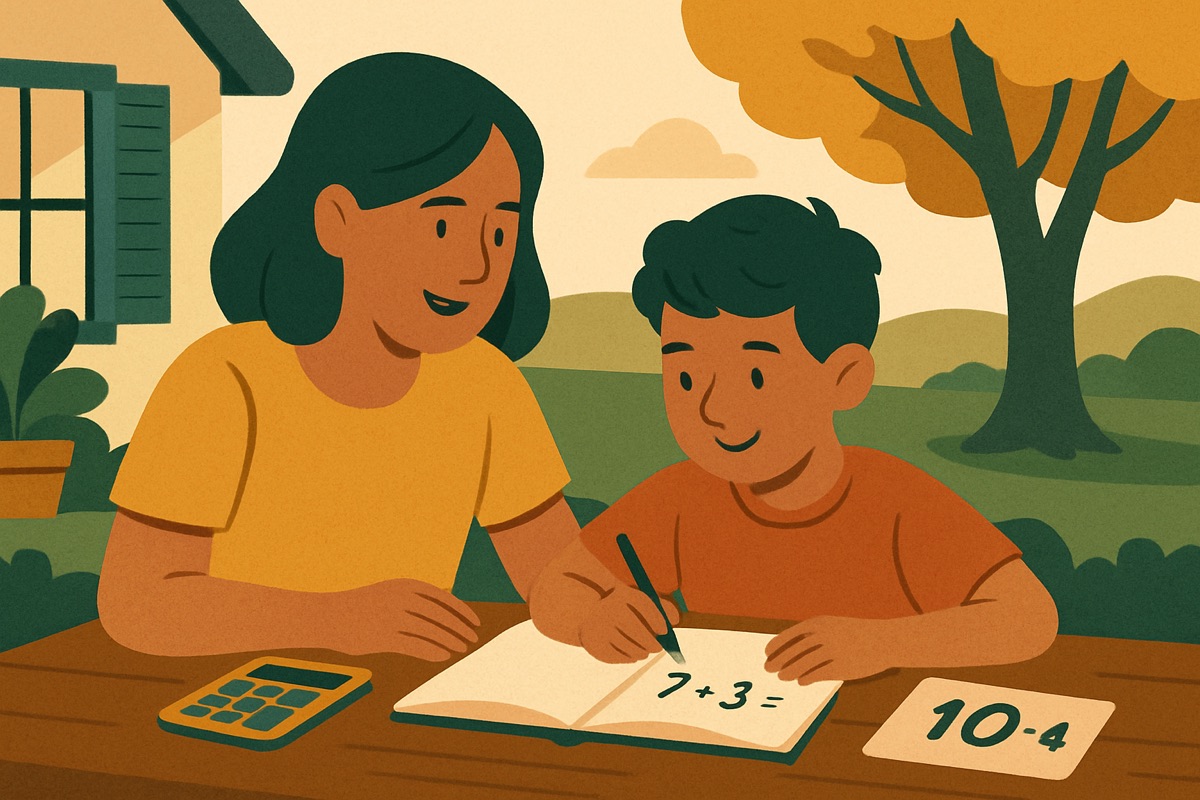
Every September I hand out the same first-week review, and every September I can tell within about ten minutes which kids touched math over the summer and which ones didn't. It's not that the second group forgot everything. It's that the facts that used to be automatic got slow. A kid who knew 7 times 8 in June is counting on fingers by Labor Day. That slowdown is the summer slide math teachers actually worry about, and the good news is that holding your ground takes far less time than parents fear.
Fifteen minutes a day. That's the whole prescription. Not fifteen minutes of tears over a workbook, either. Fifteen minutes of the right stuff, most days, is enough to keep a child's skills warm through a long break.
Why the slide happens (and what actually fades)
Skills don't disappear evenly. Understanding tends to stick. If your child understood in May that division is sharing into equal groups, she'll still understand that in August. What fades is speed and fluency, the stuff that lived in fast recall.
Here's the order things usually go:
- Math facts get slow first. Addition and multiplication facts that were instant start needing a pause.
- Multi-step procedures get rusty. Long division and regrouping subtraction lose their rhythm.
- Word problem stamina drops. Kids stop wanting to read and think at the same time.
Notice what's not on that list: deep conceptual understanding. That's why cramming a hundred worksheet problems in the last week of August is such a poor trade. You're drilling the thing that fades slowest and ignoring the thing that fades fastest. Short, frequent contact beats one big panic session every time.
What 15 minutes should actually look like
I split the fifteen minutes into two rough buckets, and I don't get fussy about the clock.
Spend the first several minutes on fact fluency for the grade your child just finished. A rising third grader should keep addition and subtraction facts sharp. A rising fifth grader needs multiplication and division facts staying automatic, because everything in fifth and sixth grade leans on them. Flashcards work. So does a quick app. So does you calling out facts while you drive.
Spend the rest on one small, real problem. Not a page. One. "We need three batches of cookies and each takes two and a quarter cups of flour, how much flour total?" is worth more than a worksheet row of naked fraction problems, because your child has to figure out what the question is even asking. That's the stamina piece, and you can pull these out of ordinary life without any prep.
The whole thing should feel closer to a warm-up than a workout. If your kid is grinding and miserable, you've lost the plot. The point is to keep the machine running, not to teach next year's curriculum in July.
A loose weekly rhythm
You don't need a schedule taped to the fridge, but a little structure helps you not skip. Here's what I suggest to parents:
- Four or five days a week, not seven. Weekends off is fine. A slide you prevent with five days is the same slide you'd prevent with seven, minus the burnout.
- Rotate the topic so it doesn't get stale. Multiplication Monday, money problems Tuesday, measuring while you cook Wednesday. Kids tune out sameness fast.
- Bank the wins where your child can see them. A sticker chart, a jar of marbles, a note on the calendar. Little kids especially need to feel the streak, not just be told it exists.
One caution on rewards. Tie them to real effort and real progress, not to sheer volume. A kid who finally nails the six times table earned something. A kid who scribbled through forty problems without thinking did not, even though the second pile of paper looks more impressive. If the reward rewards grinding, you'll get grinding, and grinding doesn't build the fluency you're after.
Make it stop looking like school
The summer math that sticks is the summer math a kid doesn't fully register as math. I've watched a reluctant seven-year-old refuse a worksheet and then spend twenty minutes happily doubling a pancake recipe because he wanted more pancakes. Same skill. Different frame.
A few things that carry real math without a workbook in sight:
- Cooking. Doubling, halving, and reading fractions off a measuring cup is genuine fraction practice.
- Money. Let your child handle the cash at a lemonade stand or garage sale and make change. Making change is subtraction with a purpose.
- Card and dice games. War with a twist where the higher product wins is multiplication drill wearing a disguise. Yahtzee is addition all afternoon.
- Travel math. Estimating arrival times, splitting a snack budget, counting license plates by state and tallying.
Screens can fit in here too, in small doses. If you use an app, pick one that pushes toward understanding and rewards genuine progress rather than one that just doles out points for tapping fast. That's the difference between practice that holds and practice that only feels productive. We built Math Prizes with our own kids partly because we wanted the reward to follow the learning, not the other way around, and that same rule applies whether the tool is an app or a jar of marbles.
What to do if you already fell off
Say it's mid-July and you haven't done a single minute. Don't try to make up for lost weeks in a weekend. Just start today, small, and let the daily habit do the work. Two weeks of honest fifteen-minute sessions before school starts will recover most of what slid. The kids who show up in September in decent shape aren't the ones whose parents ran a summer boot camp. They're the ones who kept the pilot light on.
Fifteen minutes. Most days. The right fifteen minutes. That's the whole thing, and it's a lot more doable than the August cram you were dreading.