Screen Time You Don't Have to Feel Bad About: Cars, Restaurants, Waiting Rooms
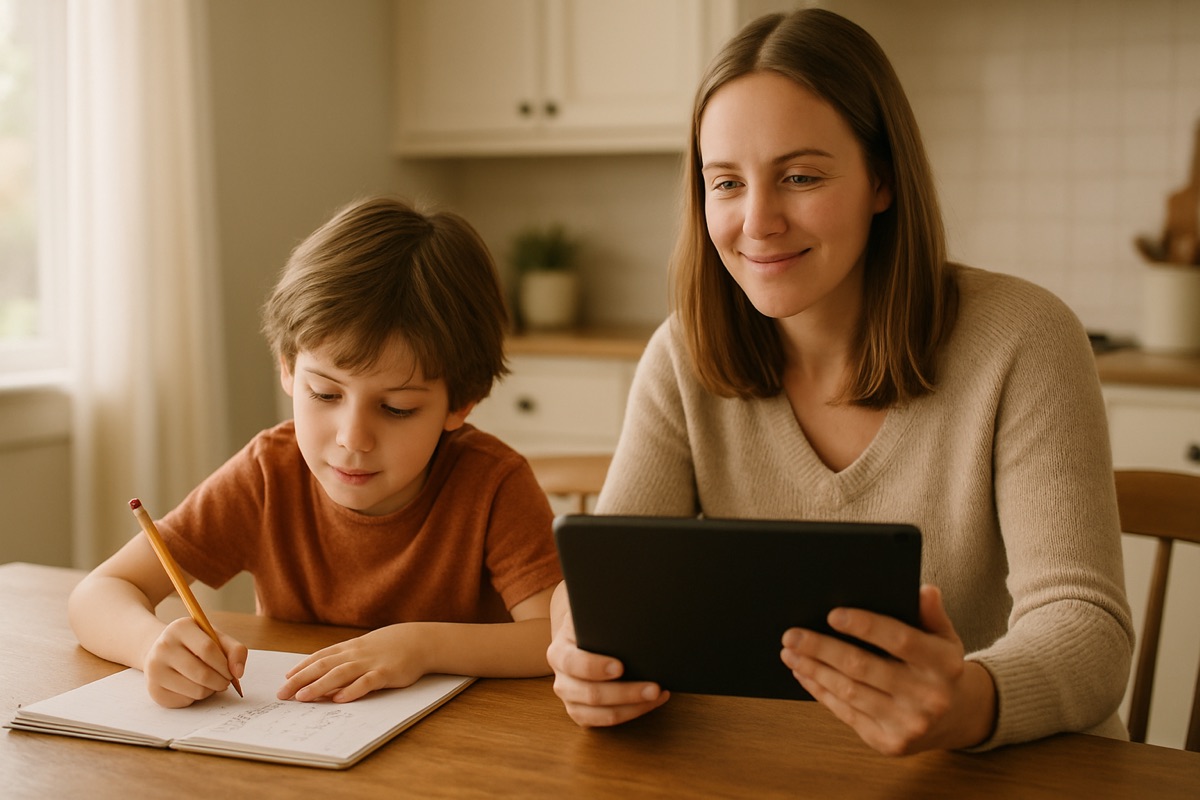
Last month I sat in a pediatrician's waiting room next to a mom who was clearly fighting herself over the phone in her four year old's hands. She kept glancing at me, the teacher, like I was going to grade her. I wasn't. We were forty minutes past the appointment time in a room with two broken chairs and a fish tank with one fish. Handing that kid a screen wasn't a moral failure. It was a reasonable call by a tired person in a hard spot.
I want to say that plainly, because so much of the conversation around screen time in public places is soaked in guilt, and the guilt isn't helping anyone. There's a real difference between two hours of a kid parked in front of a tablet at home every afternoon and ten minutes in a car or a restaurant when you genuinely need your kid occupied. Treating those as the same thing just makes parents feel bad without changing anything.
The situations screens are actually for
Some moments are built for a device, and pretending otherwise is a fight you'll lose. The long drive where nobody can safely entertain a toddler. The restaurant where the food is running late and a three year old is about to lose it. The waiting room, the DMV line, the flight. These are the times where the choice isn't "screen or a lovely enriching activity." It's "screen or a meltdown in a crowded room."
In those spots, a screen isn't stealing time from something better. There's nothing better available. So the question worth asking isn't "should I use a screen at all," which usually just produces guilt. It's "since I'm going to use one here, what should be on it."
What's on the screen matters more than the screen
I've watched this play out in classrooms for years. A kid who plays a thinking game for twenty minutes and a kid who watches autoplay videos for twenty minutes have had completely different twenty minutes, even though a stranger glancing over would see the same thing: a child staring at a tablet.
Content is the whole game. The stuff that leaves a kid worse off tends to share a few features:
- It never ends on its own, so there's no natural stopping point
- It's designed to be watched passively, with nothing to do but stare
- It gets faster and louder to keep hijacking attention
- Getting your kid off it starts a fight every single time
The stuff that's actually fine, even good, works differently. It asks the kid to do something. It has natural breaks. And it doesn't turn your child into a puddle when it's time to stop.
Turning the waiting room into a win
Here's where I'll put my teacher hat on for a second. The waiting room and the back seat are dead time anyway, so if a kid is going to be on a screen, you might as well point that time at something that gives a little back. A short math practice session in a doctor's office is genuinely a better use of forty stuck minutes than another video, and the kid usually doesn't even mind.
I don't mean turn every outing into school. That's its own kind of exhausting, and kids see through it. I mean keep one or two things on the device that happen to be worthwhile, so that when you reach for the screen in a pinch, what comes up is a game where your kid is thinking instead of just consuming. My own family leans on a math app for exactly these moments, and the reason it works is that the practice is short and the reward lands when a skill clicks, not just for tapping through. The specific tool matters less than the idea. Have something on hand that earns its screen time.
A concrete version: my sister keeps her seven year old's tablet stocked with a couple of math games and a drawing app, and pointedly nothing that autoplays. So when they're stuck at the tire shop, the "boring" tablet is the only tablet, and he does twenty minutes of times tables without a fight because that's what's there. She didn't lecture him. She just controlled what was on the device.
Let go of the number
Parents get fixated on the total minutes, as if two hours is automatically bad and thirty minutes is automatically fine. I've never found the raw number to be the useful thing. A kid who spends forty minutes building something in a game, then hops off cheerfully and goes to dinner, is in better shape than a kid who watches fifteen minutes of frantic videos and then melts down when the phone goes away.
Watch how your kid comes off the screen instead of just counting the time on it. Do they transition okay, or does every session end in a battle? Are they doing something, or just being fed? Those tell you far more than the clock does. A calm handoff back to real life is the sign that the screen time sat okay with them.
The part nobody says out loud
You're allowed to use a screen because you need a minute. Not for the kid's enrichment, not as a teaching moment, just because you're at the end of your rope in a public place and you need ten minutes of quiet to eat or drive or fill out a form. That's not the version of screen time to build your whole week around, but as an occasional tool, it's completely normal, and the guilt attached to it is doing you no good.
The mom in the waiting room didn't need my approval, but if she'd asked, I'd have told her this. The screen isn't the problem. Mindless content on autopilot, all day, every day, is the problem. A short stretch in a hard moment, with something halfway decent on it, is just a parent using the tools available. Pick your content, watch how your kid comes off it, and let the guilt go. You've got enough to carry in that waiting room already.