How to Move a Kid From Watching to Doing on the Same Device
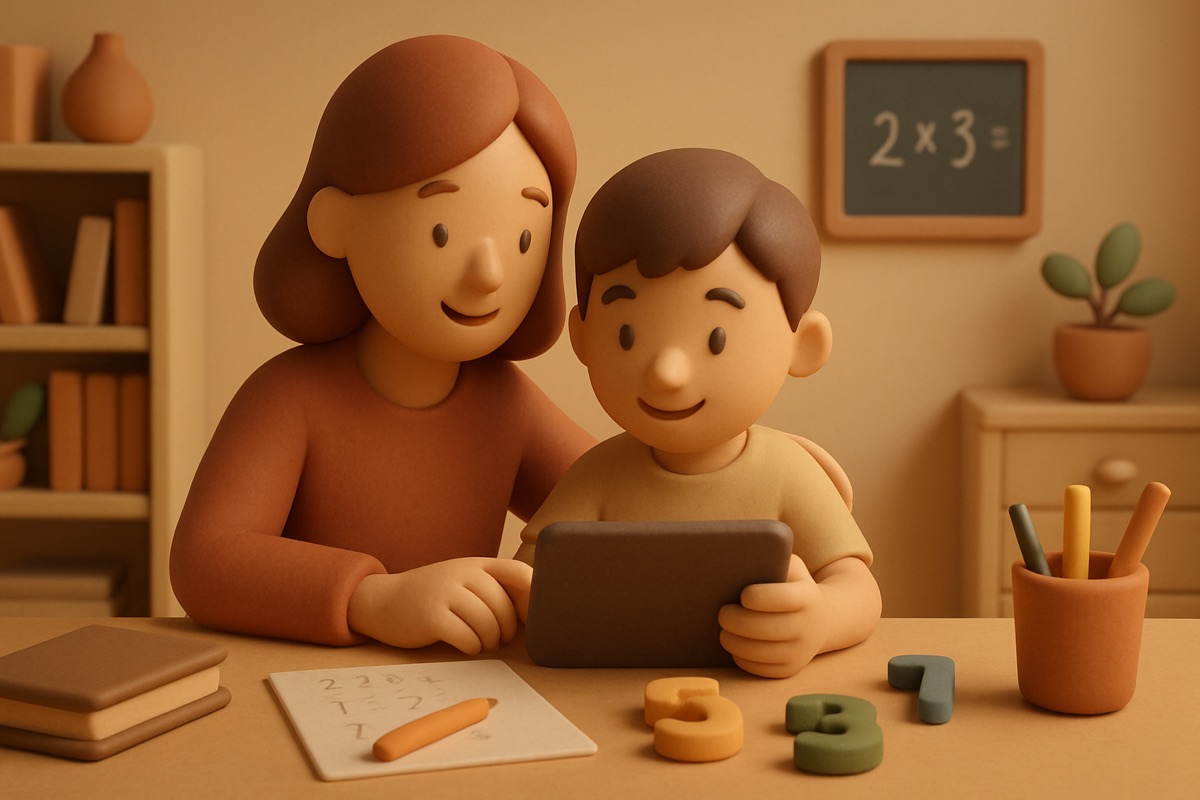
Two kids can spend the exact same twenty minutes on the exact same iPad and come away in totally different shape. One watched a stranger open toy eggs. The other built a bridge in a game, watched it collapse, and rebuilt it three times until it held. Same screen. Same clock. The difference is active versus passive screen time, and once you can see it, you can't unsee it.
I've watched this in my own classroom and in my own living room. The device isn't the villain most parenting advice makes it out to be. What matters far more is whether your child's brain is on or off while they use it. This is a guide to flipping that switch, on the same device, without confiscating anything.
What actually separates active from passive
Passive screen time is consumption. Something happens on the screen and your child receives it. Videos, most short clips, endless scrolling. Their eyes move. Their mind mostly coasts. It can be genuinely relaxing, and there's a place for it, but it doesn't ask anything of them.
Active screen time makes a demand. Your child has to decide, try, fail, adjust. A drawing app where they choose every line. A math game where a wrong answer means they rethink and try again. A building game where they have to plan. The tell is simple: if the screen keeps going whether or not your kid does anything, it's passive. If the screen waits for them, it's active.
Here's the part that surprises parents. A slick educational video can be almost entirely passive. Your kid can watch someone explain long division beautifully and absorb close to nothing, because watching a skill and doing a skill are different acts. The kid who pauses to try a problem is learning. The kid who just watches is being entertained by the idea of learning.
Why the switch is worth the effort
A seven year old watching math facts is a spectator. A seven year old answering math facts, getting some wrong, and figuring out why, is doing the work that actually builds the skill. The effort is the point. When something is a little hard and your child pushes through it, that's when the learning sticks.
This is also why I'm skeptical of any app or program that keeps a kid grinding through the same easy content for a reward. If it's not making them think, it's just dressed up passive time with points attached. The goal isn't screen time that looks educational. It's screen time where your child is genuinely working at something slightly beyond what they can already do.
How to make the shift, on the same device
You don't need a new tablet or a lockdown. You need to change what's easy to reach and how you frame it. A few things that work in real homes:
- Move the active stuff to the front. Put the drawing app, the math game, the building game on the home screen. Bury the video apps in a folder two swipes away. Kids default to whatever's closest.
- Trade watching minutes for doing minutes, not the reverse. Instead of "finish your game, then you can watch," try "ten minutes of the math game, then ten of your show." The doing comes first, when they're fresh.
- Sit next to them for the active part sometimes. Not to hover. Just to notice out loud. "Whoa, how did you get past that level?" Attention makes the active thing more rewarding than the passive thing.
- Ask one question after passive time. "What was that video actually about?" If they can't say, they were coasting, and they'll start to notice it too.
The move that changed things most in my house was small. My daughter would watch other people play a game she owned, on the same tablet, for half an hour. Actual footage of a stranger playing. I stopped saying "turn that off" and started saying "you have this game, go beat that level yourself." Same device, same game, same time budget. But now she was doing it instead of watching someone else do it, and she was proud of the levels she cleared in a way no video ever gave her.
What to keep, and what to let go
None of this means passive time is banned. A tired kid at the end of a long day watching a favorite show is fine, and pretending otherwise just makes you the bad guy for no reason. The problem isn't a single relaxing video. It's when watching becomes the default setting, hours of it, and the doing never gets a turn.
So aim for a ratio, not a ban. In our house the loose rule is that the bulk of screen time should be the kind where the screen waits for you. Some watching is allowed and welcome. But the first and best minutes go to something that asks my kid to think.
Watch your own child for a week with this one lens. Notice which minutes leave them buzzing to show you something they made or beat, and which ones leave them slack-jawed and grumpy when the time's up. The active minutes are almost always the first kind. Once you can see the difference, steering toward more of it stops feeling like a rule you're enforcing and starts feeling obvious.
And go easy on yourself while you're at it. You're not aiming for a perfect ledger of active and passive minutes. You're just tilting the day, a little at a time, toward the kind of screen use that leaves your kid better off than it found them.