Place Value Games That Make Big Numbers Make Sense
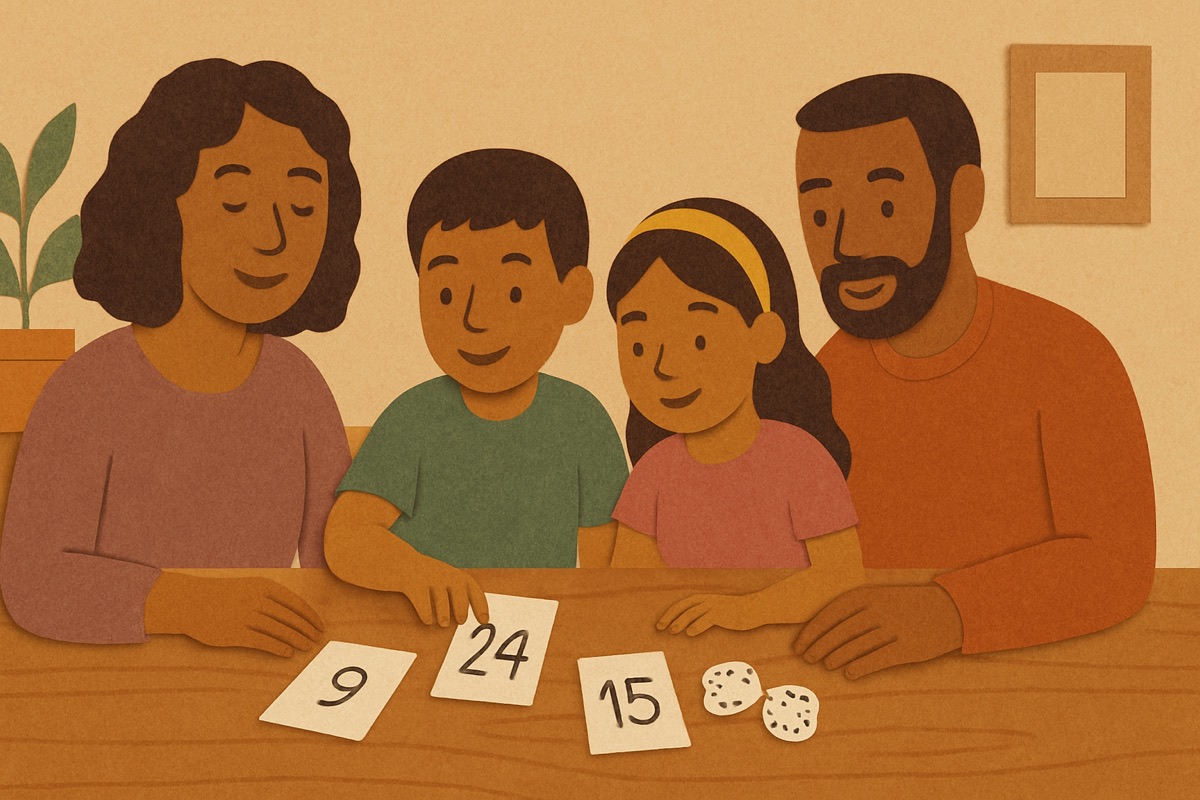
A second grader once read the number 407 out loud to me perfectly, then wrote it as 4007 when I asked her to. She heard "four hundred" and "seven" and put both down exactly as she said them. She wasn't careless. She just didn't yet feel that the 4 in 407 means four hundreds, and that the empty tens spot needs a zero to hold the seven in its place. Reading the number and understanding the number are two different things, and worksheets tend to only test the first one.
That gap is exactly what good place value games are for. When a kid physically trades ten ones for one ten, or watches a number balloon by moving a digit one spot to the left, the whole hundreds-tens-ones system stops being a rule to memorize and starts being something they've felt in their hands. Below are the games I've used for years. They need almost nothing, and they beat a stack of worksheets because the kid is doing the thinking instead of filling in blanks.
Why place value trips kids up
Our number system is quietly strange. The digit 5 can mean five, or fifty, or five hundred, and the only way to tell is where it's sitting. Kids spend their first years learning that a 5 is a 5. Then we tell them, actually, it depends where it lives. That's a genuinely hard idea, and no amount of "say the number" practice fixes it.
What fixes it is watching value change based on position. That's the one thing every game below is secretly teaching, whether it's with dice, cards, or the coins in your pocket.
Race to 100 with dice and trading
This is the game that does the most work for the least effort. You need two dice and something to count with in three sizes. Pennies for ones, dimes for tens, and a dollar bill or a note card for a hundred works fine.
- Roll both dice and take that many pennies.
- The moment you have ten pennies, you must trade them for one dime. This is the rule that matters. No hoarding pennies.
- Ten dimes get traded for the hundred.
- First to reach one hundred wins.
The trading is the whole lesson. When a kid physically hands you ten pennies and gets a single dime back, they feel that ten ones and one ten are the same amount wearing different clothes. That regrouping is the exact skill they'll need for carrying in addition, and here it just feels like the rules of a game. Play it backwards too, starting at 100 and racing down, and you've got subtraction with borrowing.
Build the biggest number
All you need is a deck of cards with the face cards pulled out. Aces are ones.
Each player draws cards one at a time and decides where to place each one in a three- or four-digit slot, hundreds down to ones. Here's the catch: once you place a card, you can't move it. So when you draw a 9 on your first pick, do you gamble it into the hundreds spot hoping for a small number next, or play it safe? Biggest final number wins.
Kids learn fast that a 9 in the hundreds place is worth a whole lot more than a 9 in the ones place. They start groaning when they're forced to put a big card in a small spot, which is the sound of place value clicking. It's the same idea the second grader with the 407 was missing, except now they're begging to get the digit in the right slot instead of ignoring it.
The ten-times-bigger jump
This one's less a game and more a two-minute trick that lands. Write a number like 34 on paper. Ask your kid what happens if you slide the 3 and the 4 one spot to the left and drop a 0 in behind them. Now it's 340.
Then say it plainly: every spot to the left is worth ten times more. Move a digit one place left and it gets ten times bigger. Have them do it a few times with a calculator so they can watch 34 become 340 become 3,400. There's a satisfying "whoa" the first time a kid realizes moving that same digit made the number ten times as large without changing the digit at all. That's the heart of the whole base-ten system in one motion.
Pocket-change place value
You already carry a place value manipulative. It's your loose change, plus a dollar bill. Dump some coins and a bill on the table and ask your kid to build a specific amount, say $1.47.
They have to figure out one hundred, four tens, seven ones, using a dollar, four dimes, seven pennies. Money is the version of place value kids are most motivated to understand, because it's real and it buys things. A kid who's shaky on abstract hundreds and tens will often nail it the second there's a snack on the line. Use that.
Keep it short and let them win sometimes
A few honest notes after years of this. Ten minutes is plenty. These games get boring if you stretch them, and a bored kid learns nothing, so quit while it's still fun. Let your kid win a fair share, because a kid who always loses stops playing and the whole point is to keep them at the table. And resist turning it into a quiz. The moment "Race to 100" becomes "okay now tell me how many tens are in 70," it's a worksheet again and the magic leaks out.
The second grader who wrote 4007 got there in the end, and it wasn't from more practice writing numbers. It was from a couple of weeks of trading pennies for dimes until the zeros stopped being a mystery. Let the games do the teaching. Your kid will feel the size of big numbers long before they could explain it, and feeling it first is exactly how it's supposed to go.