New Year Math: Goal Setting With Charts and Streaks
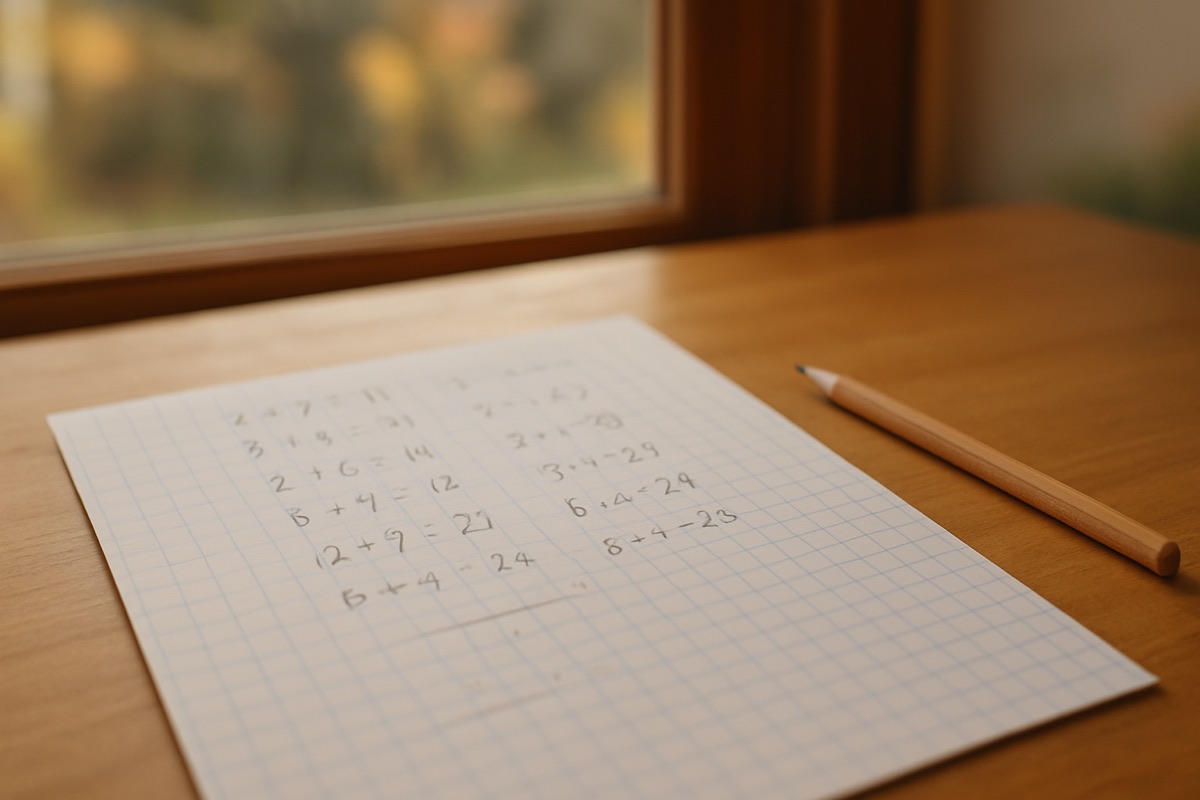
On the first Monday back after winter break, a third grader in my class announced that his new year resolution was to "get good at the times tables that aren't the sevens." I asked why the sevens got a pass. He said the sevens were a lost cause and he'd rather win the war than die on that hill. I laughed, but honestly, that is a better goal than most adults set. It was specific, it was his, and it was small enough to actually finish.
That is the whole secret to new year math activities kids will stick with. The calendar flipping over is a fine excuse to start something. What keeps it going is a goal the kid chose, a way to see progress, and a streak that celebrates showing up without punishing a rough day. Charts and streaks get a bad name because they are usually done to kids instead of with them. Done right, they work.
Start with one goal the kid actually picks
The fastest way to kill a resolution is to hand it to someone. If you tell your daughter her goal is to master all her multiplication facts by spring, you have set your goal and assigned her the work. She will treat it like a chore, because it is one.
Instead, sit down for five minutes and ask what she wants to get better at. You will get answers like "I want to stop counting on my fingers for adding" or "I want to not freak out on the timed test." Those are real, and they are hers. Your job is to shrink the goal until it is winnable. "Master multiplication" is a mountain. "Learn the sixes and eights by Valentine's Day" is a hill you can climb.
Good new year math goals tend to share a few traits:
- Specific enough to know when it's done (the sixes, not "multiplication")
- Small enough to finish in a few weeks, not the whole year
- Tied to something the kid already noticed bugs them
- Measured by getting it right, not by minutes spent staring at a page
Build a chart your kid can see and touch
I am a fan of paper for this. A chart taped to the fridge or the back of a bedroom door does something a screen does not. It sits in the room and reminds the kid without anyone nagging. My own kids used a plain sheet of graph paper with the days of the month drawn in as boxes, and they colored a box when they practiced.
Keep the chart about the goal, not about time served. A box should get filled when your kid does the thing, ten minutes of the sixes and eights, not when a timer runs out. This matters more than it sounds. A chart that rewards minutes teaches a kid to sit there and wait out the clock. A chart that rewards a completed set of problems teaches them to actually do the work and finish.
Let the kid own the marker. Let them design the chart if they want stars or a rocket climbing toward a planet. The more it feels like theirs, the more the filled boxes feel like a personal scoreboard instead of your surveillance system.
Make the streak forgiving on purpose
Here is where most streak systems go wrong. They treat one missed day as a total reset, and they make that reset loud and painful. Your kid gets the flu, misses two days, and comes back to a broken streak and a message that basically says you failed. That is how a motivating idea turns into a source of dread.
A streak should reward consistency, not demand perfection. In our house the rule was simple. Practice most days, and the streak lives. Everybody gets a couple of "life happened" days a week with no penalty. The point was never an unbroken chain. The point was a habit that survived busy weeks, sick days, and grandma visiting.
If you use an app for the streak, check how it handles a missed day before you trust it with your kid's motivation. Some apps use the streak as a leash, with countdown timers and warnings designed to make a child anxious about breaking it at midnight. That is not goal setting. That is a slot machine wearing a calendar. You want a streak that says "nice, you came back," not one that punishes the day off.
Check in weekly, and let the goal change
Once a week, spend two minutes looking at the chart together. Not a performance review. Just a glance. What went well, what got skipped, does the goal still fit. Sometimes a kid blows past a goal in ten days and needs a new one. Sometimes a goal turns out to be too big and needs splitting. Both are fine. A goal that changes because the kid learned something is a goal that is working.
The point of new year math activities is not the chart or the streak. Those are just tools to make progress visible. The point is that your kid ends up a little more in charge of their own learning, choosing what to fix and watching themselves fix it. My times-tables kid did conquer the sixes and eights by February. He never did make peace with the sevens. But he learned that he could set a target and hit it, and that turned out to be the thing worth keeping long after the new year feeling wore off.