Garden Math: Measuring, Spacing, and Counting the Harvest
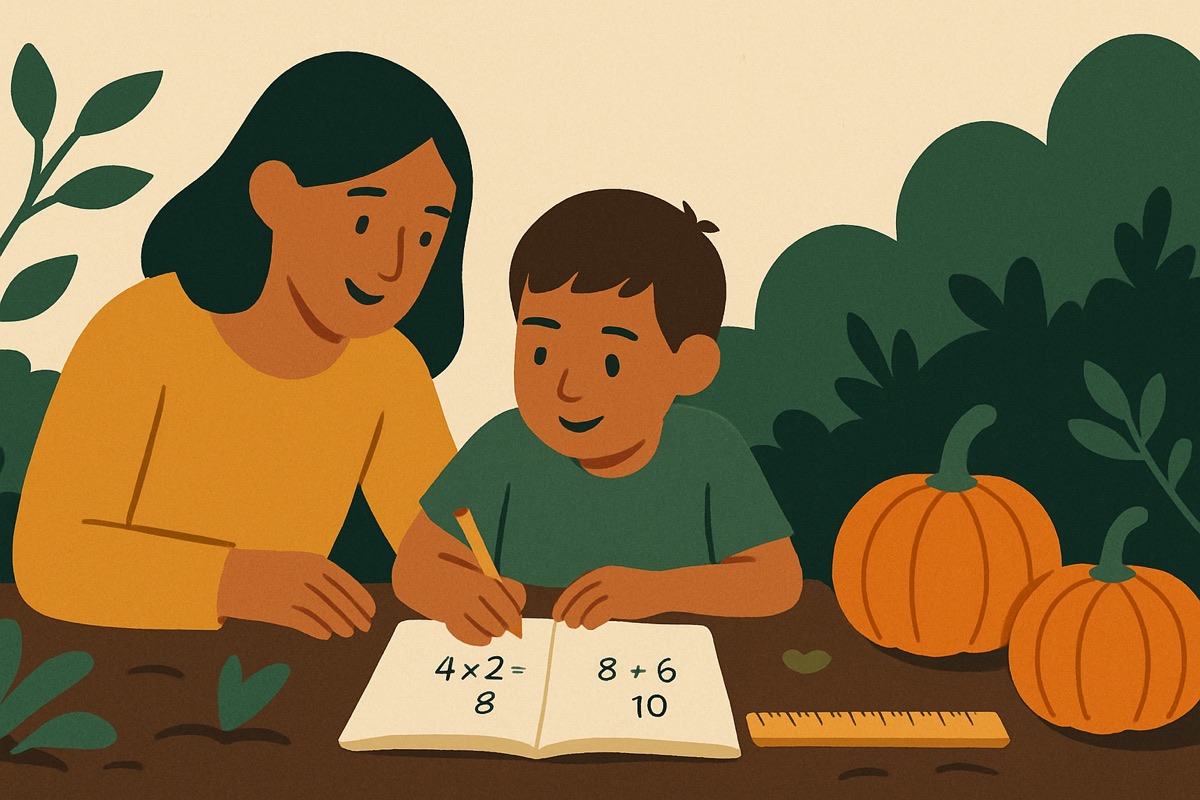
Last spring a family in my class planted a four-foot row of carrots and got a wall of tangled greens with almost no carrots underneath. The kid was crushed. When we pulled the seed packet back out, the fix was right there on the back: thin to three inches apart. They'd sown the whole packet into one crowded row. That failure taught more about spacing and division than any worksheet I could have handed them. Garden math activities for kids work because the plants don't lie. If the math is off, the garden shows you.
You don't need acreage or a green thumb. A single raised bed, a few pots on a step, or a strip of dirt along the fence is plenty. The math is baked into the whole process, from the seed packet to the harvest basket.
The seed packet is a word problem
Flip over almost any seed packet and you're holding a set of real numbers with real consequences. Plant seeds 1 inch deep. Space plants 6 inches apart. Rows 18 inches apart. Days to maturity: 60.
Hand that packet to your kid and let him do the figuring instead of you.
- "This bed is 36 inches long. If beans go 6 inches apart, how many can we fit?" That's division with a purpose. Thirty-six divided by six is six plants, and getting it wrong means crowded, unhappy beans.
- "The packet says 60 days. If we plant today, when do we eat?" Now he's counting forward on a calendar, which is time and addition wrapped together.
- "Seeds go an inch deep. Show me an inch on the ruler." Small kids genuinely don't know how big an inch is until they've dug one.
The point is that the numbers matter here. Get the spacing wrong and you see the result in July. That stake is exactly what a worksheet can't offer, and it's why the kid remembers.
Measuring, for real, with a tape
A garden is a measuring machine. Kids who groan at the ruler on a worksheet will happily measure a whole garden bed because there's a reason to.
Give your child the tape measure and the actual jobs. How long is the bed? How wide? If we want three rows across the width, how far apart is each one? Have him mark the spots with popsicle sticks or little stones. That's spacing, division, and estimation happening at the same time, outdoors, with dirt under his nails.
When the carrots or radishes come up too close together, that's the best lesson of all. Thinning teaches a kid that "3 inches apart" wasn't a suggestion. Pulling every other sprout so the survivors have room is a concrete, slightly sad little demonstration of what spacing means. Nobody forgets that one.
I'd also nudge you to let a kid measure how tall the plants get over a few weeks. Same sunflower, measured every Saturday, written on a scrap of paper. That's a data set. "It grew 4 inches this week and 3 last week. How much taller is it than when we started?" Real growth, real subtraction, real reason to care about the number.
Counting and grouping at harvest
Harvest is where the counting gets fun, because now you're counting things the kid grew and wants to eat.
Picking green beans turns into skip-counting fast. Group them by tens as you go and you've got a natural ten-frame in a colander. "We have four full groups of ten and six extra. How many beans total?" That's place value, and the kid is holding the evidence.
Cherry tomatoes are perfect for multiplication. "You picked 5 tomatoes off each of 4 plants. How many did we get?" He can lay them out in rows to check the answer, which is an array made of actual food. Divide the harvest evenly onto plates for dinner and you've done division, remainders and all. Seventeen strawberries split among three people is five each with two left to argue over.
None of this needs to feel like school. You're just narrating the numbers that are already there while you pick.
Money and planning, if you want to stretch it
For older kids, the planning stage holds plenty of math too.
Seed packets have prices. So do the little starter plants at the nursery. Let a kid compare. A packet of 40 seeds for two dollars versus a single tomato start for four. Which is the better deal per plant, if enough seeds come up? That's a genuine cost comparison, the kind of everyday money math that actually shows up in adult life.
You can go further and have him sketch the bed on graph paper before you plant, one square per few inches, deciding where each crop goes and whether it all fits. That's area, planning, and scale drawing, and it saves you from the crowded-carrot disaster before it happens.
Let the garden do the teaching
The best part of garden math is how little you have to force it. You're not running a lesson. You're planting a garden and saying the numbers out loud while you do it. The measuring, the spacing, the counting all have to happen anyway, so the math has a job instead of being busywork.
Keep it loose. If your kid wants to just dig and squish worms one afternoon, let him. The math will still be waiting at the next watering. What you're really building over a season is the sense that numbers describe the real world and that getting them right actually pays off, in this case in something you get to eat. A kid who has thinned his own carrots understands division in a way no timed quiz will ever reach. Plant a small bed this spring, hand over the tape measure and the seed packet, and let the dirt teach for you.